
The Tangible Ocean
A physical oceanographer trades data screens for open ocean — and finds the sea full of life, light, and scale too vast for any map.
6/5/2026
I’m a second‑year PhD student in observational physical oceanography, and I’ve been an ocean researcher for about four years. Having grown up in rural Upstate NY, I’m not much of a beach person—I’ve never snorkeled, SCUBA‑dived, or fished in the ocean. Until this cruise, the ocean for me mostly existed as data on a computer screen. Now I get to experience the ocean as a physical place which controls the rhythms of each day.
At sea, nothing is steady. The surface rolls in waves, the air gathers into blowing breezes, clouds gather and break across the sky, and the ship rocks with it all. The only thing that seems fixed is the horizon — a thin, constant line that suggests land is always just beyond reach.
But right now, it’s quite far from reach. We’re over 1,000 miles from the nearest landmass, or about four times farther than astronauts on the International Space Station are from Earth’s surface. By the time this cruise is done, we will have sailed roughly one third of the planet’s circumference. That immensity is hard to grasp on a map; it becomes real only when you stare at the unchanging horizon for weeks and see nothing but deep blue and breaking waves.
Unlike the horizon, the sky is always changing. There are beautiful sunsets that seem to transform every second, with shifting colors that reflect off the water and the clouds and the ship until it feels like everything is bathed in the golden warmth of the fleeing sun. There are storms that bring gentle rain or strong winds or rocking waves. Some nights are quite cloudy and the only visible light is from the ship. Others are perfectly clear and you can see the sky full of twinkling stars and planets, and the moon which waxes and wanes as we sail onward to Panama.
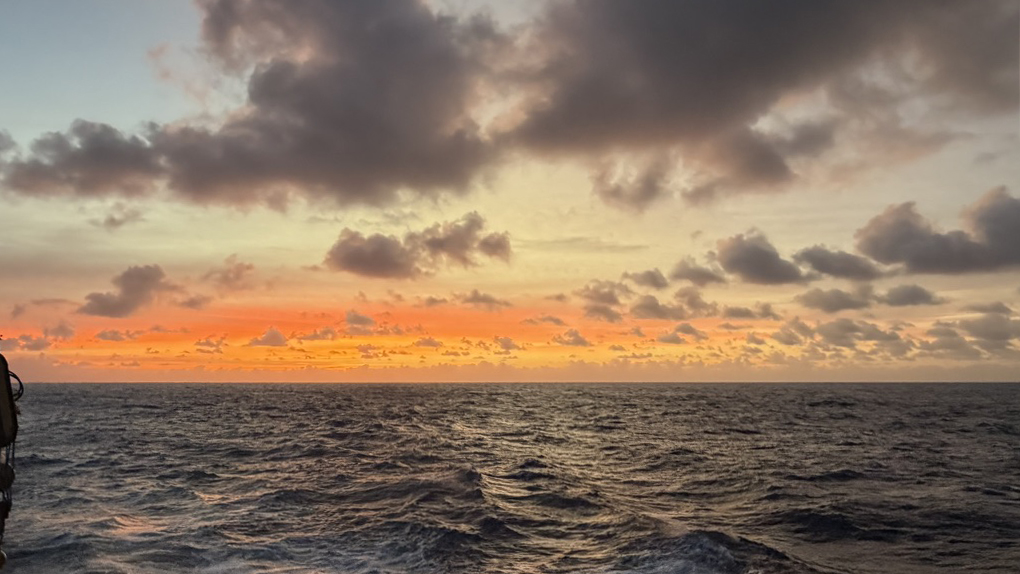
Sunset over water. Photo by Andrew Marshall Fagerheim
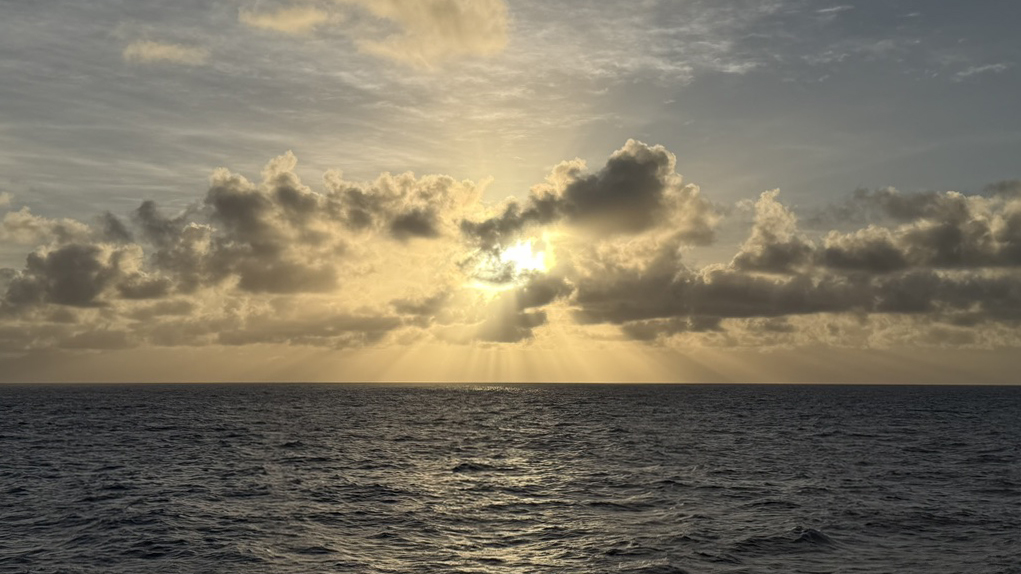
Sun’s rays over the water. Photo by Andrew Marshall Fagerheim
And we aren’t the only ones to observe the sky and the light and the water. Sea birds circle overhead by day, soaring and swooping around the ship before diving into the water to catch fish swimming along at the surface. At night, peering over the railing reveals water packed with life: little fish jumping out of the water, squid darting around in quick pursuit, and sharks gliding slowly in search of a meal.
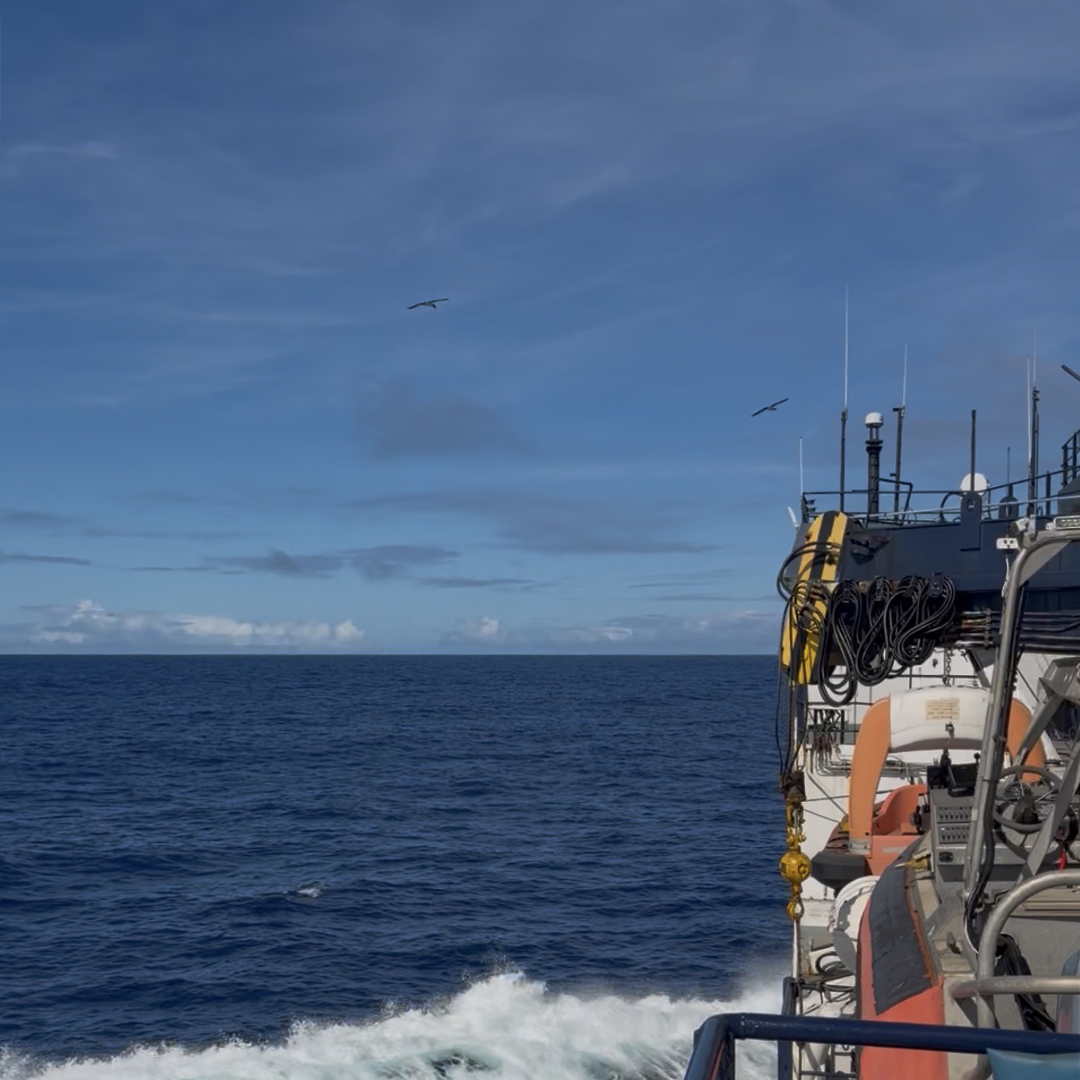
Birds flying over the ship. Photo by Andrew Marshall Fagerheim
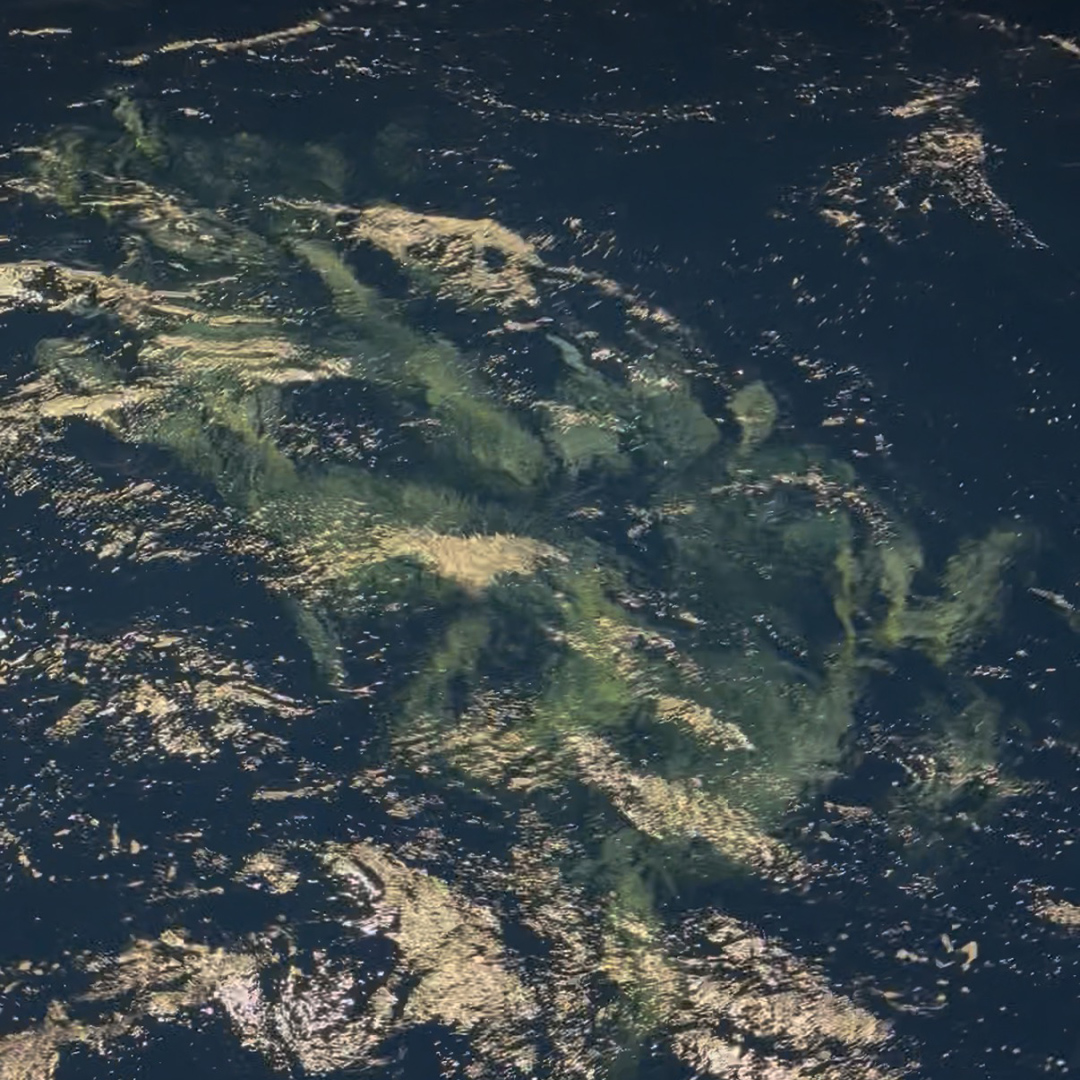
School of fish. Photo by Andrew Marshall Fagerheim
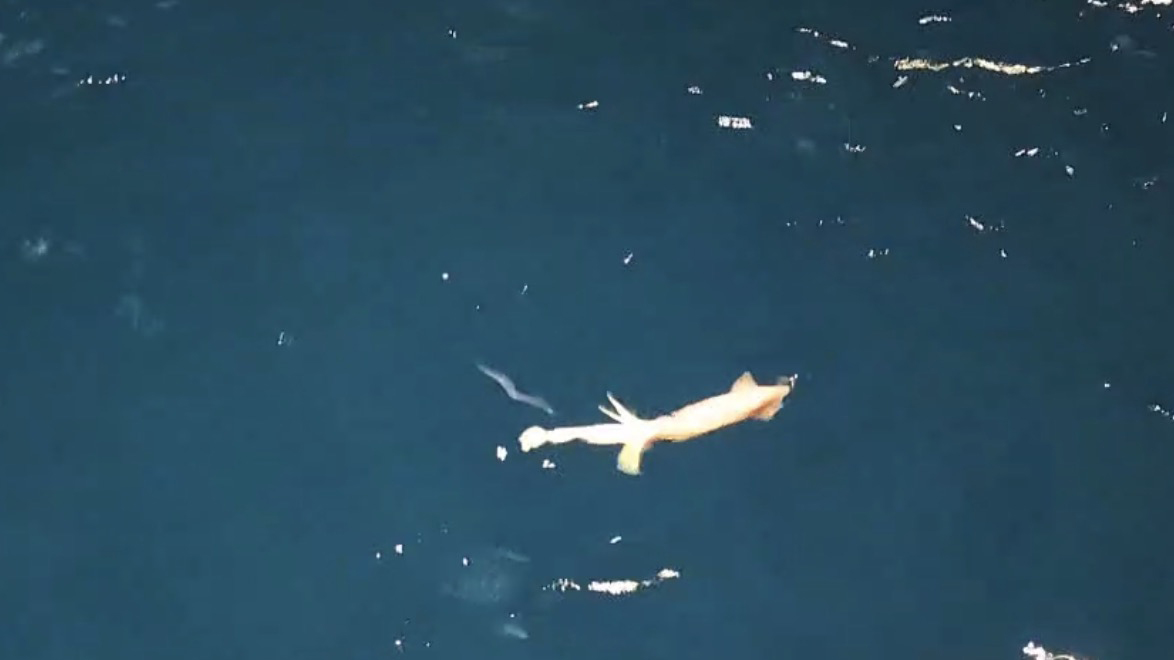
Squid eating a fish. Photo by Riley Ames
Here’s to many more days of birds overhead, many more striking sunsets, many more fish‑filled nights, and many more weeks to experience the real, tangible, changing ocean until we’re back on land again.
About the Author—Andrew Marshall Fagerheim is a second-year PhD student at Lamont-Doherty Earth Observatory and the LADCP operator on P04E. For work he studies ocean stirring and mixing using Argo float data, and for fun he enjoys crafting, playing board games, and seeing Broadway musicals.