
Sampling Dissolved Oxygen in the Pacific
Join oceanographer Maija Zidek as she measures dissolved oxygen and uncovers a pronounced Oxygen Minimum Zone in the Pacific
6/20/2026
Inhale- exhale. Inhale again- exhale again. What you just experienced was oxygen entering your lungs and then being released back into the atmosphere. Ok, yeah, it actually was 78% nitrogen, and only 20% oxygen, but still! There is no denying the importance of oxygen and its role both on land, and in the ocean.
My name is Maija Zidek, and you guessed it! Elisa Aitoro and I are the two people sampling and measuring the concentrations of dissolved oxygen in the middle of the Pacific Ocean, aboard the R/V Langseth for P04E. Oxygen is a very finicky chemical that can change very easily – even one bubble can completely change the oxygen levels in a sample of water. Bubbles are actually my number one enemy aboard this vessel, and I sample water from the CTD in a very particular way to avoid bubbles getting in any of my samples. After collecting my samples completely bubble-free, I quickly add reagents to react with the oxygen in the sample to fix the concentration so the levels stop changing, and then I can accurately measure how much O₂ is in the water column of the Pacific Ocean.
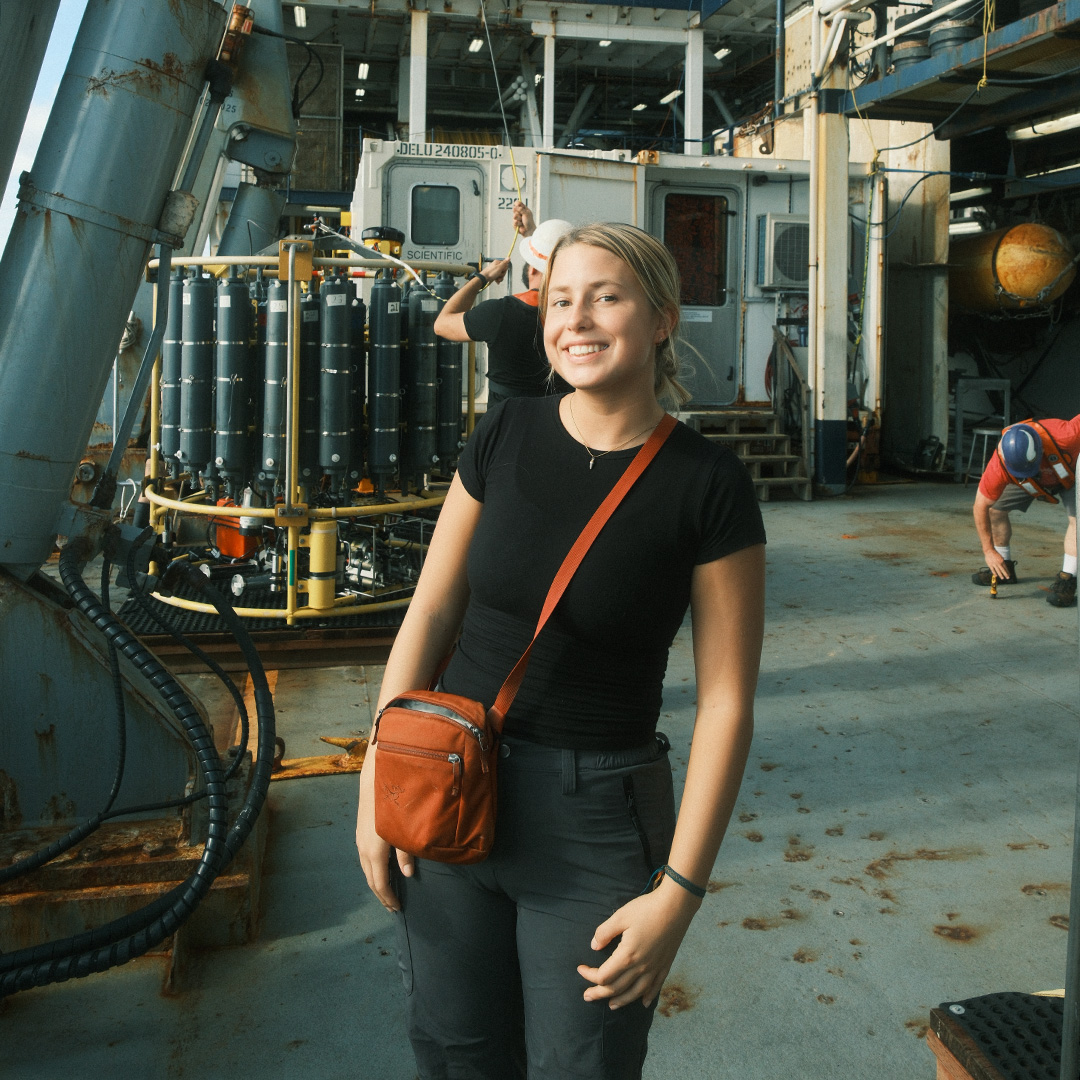
Maija Zidek about to sample dissolved oxygen from the CTD featured in the background. Credit: Andrew Marshall Fagerheim.
Dissolved oxygen is the form of O₂ that life in the ocean uses – for example, fish obtain oxygen from the seawater by pushing water over their gills, and absorbing it. Oxygen actually varies quite a bit in the ocean, and this is caused by a lot of different things, including light availability and phytoplankton presence, but also currents and density. Surface waters tend to have high oxygen concentrations because phytoplankton produce oxygen through photosynthetic processes. Oxygen levels at intermediate depths lessen as organisms consume oxygen through respiration, and release organic carbon. At even deeper depths, oxygen concentrations increase again as cold, dense waters formed near the poles transport oxygen-rich water throughout the deep ocean. Gases like oxygen are much more soluble in colder temperatures, which is why some of these cold currents tend to have so much more oxygen carried with them. The profile kind of acts like an “oxygen sandwich” with more abundant levels at the surface and at the bottom of the ocean floor, and low levels sitting at the middle regions, called the Oxygen Minimum Zone. While sampling in the Pacific Ocean, we have observed these oxygen concentrations get as low as approximately 2 μmol/kg within these zones, emphasizing the presence of a pronounced Oxygen Minimum Zone in the Pacific.
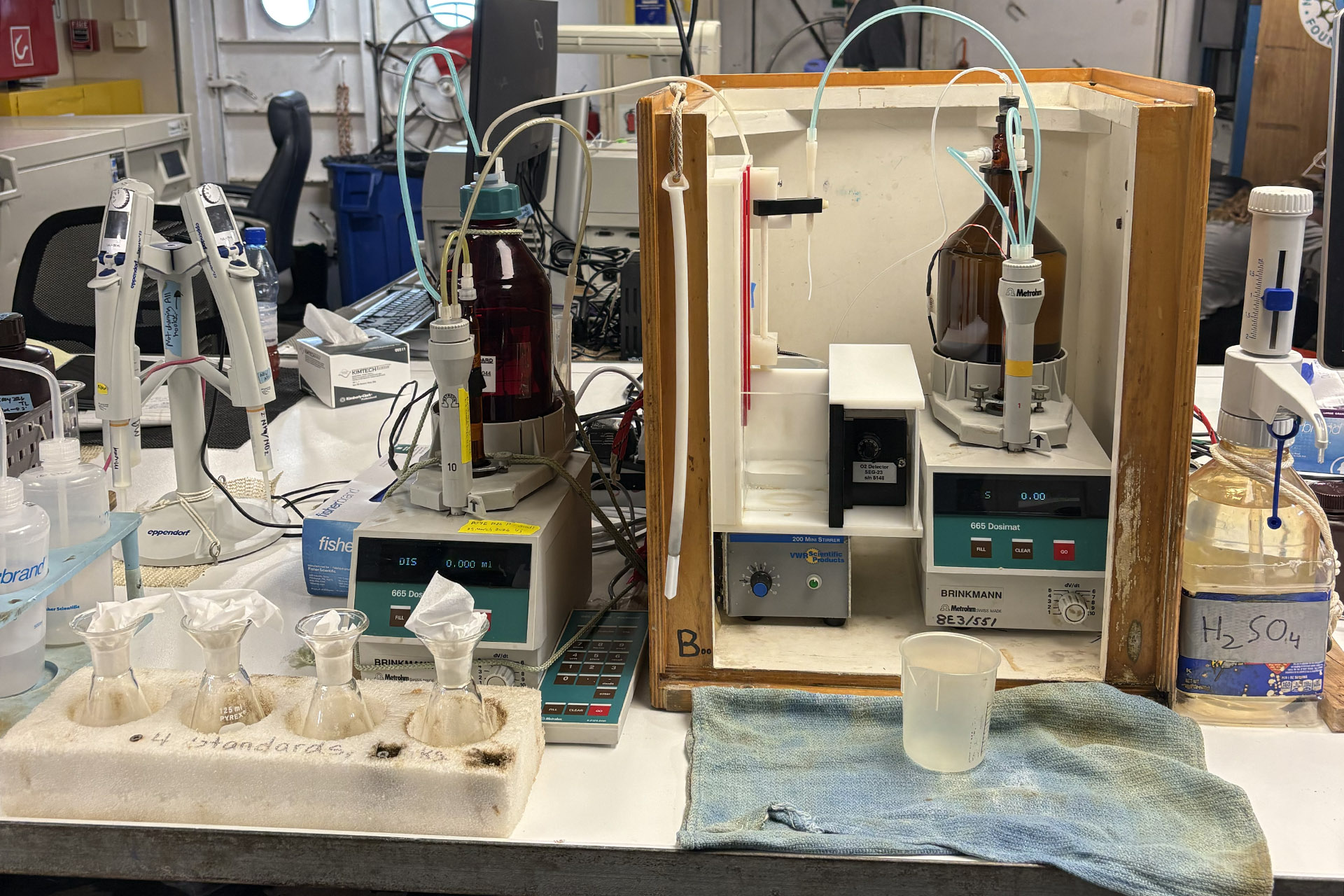
The oxygen titrator system that we use to measure amounts of dissolved oxygen. Chemicals are added to the samples in a Winkler Reaction, which turns the oxygen into a measurable form: iodide. The UV light in the system measures the light absorbance, which corresponds to the abundance of oxygen in the sample.
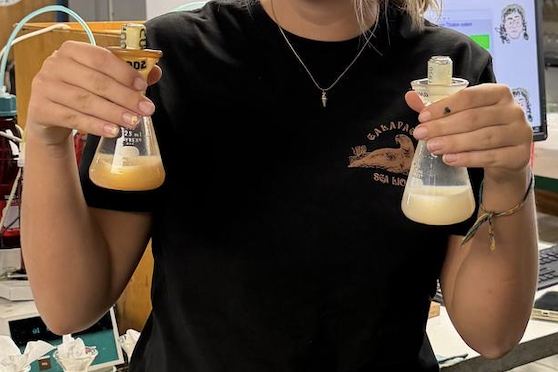
Maija Zidek holding a flask with significantly more oxygen (left flask); and the paler colored flask on the right holding significantly less oxygen. Credit: Maija Zidek
Oxygen is super cool to sample and talk about, but it isn’t the only thing I have been doing while out at sea! When you’re aboard a ship for approximately two months, you find lots of ways to fill your time, and you start to pick up lots of new hobbies. I gave my best attempt at creating the beaded fish that are all the rage aboard the R/V Langseth, but after many frustrating hours I realized it’s not something that I am very good at.
I decided to move away from beaded fish, and started to learn the guitar! Turns out I enjoy playing the guitar quite a bit, and with the help of some much more musically talented crew members (Parker Hansen I am talking about you!), I have started to pick up quite a few songs! I have also been spending a great amount of time in the gym, just working on my fitness, she’s my witness: big shoutout to Zoe Fricker, my most dedicated gym buddy and constant source of motivation.
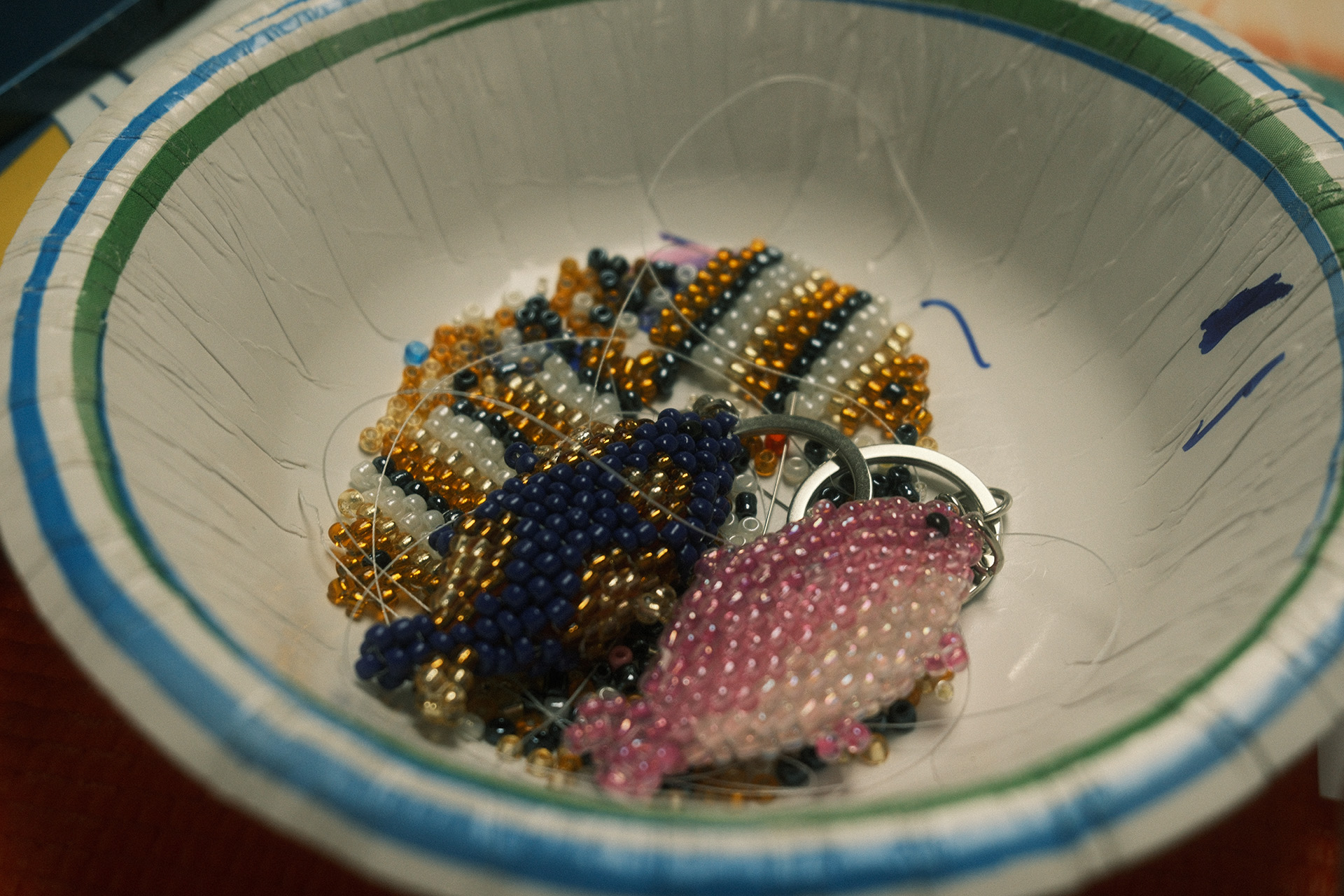
In-progress beaded fish attempts taken on Allen Smith’s camera.
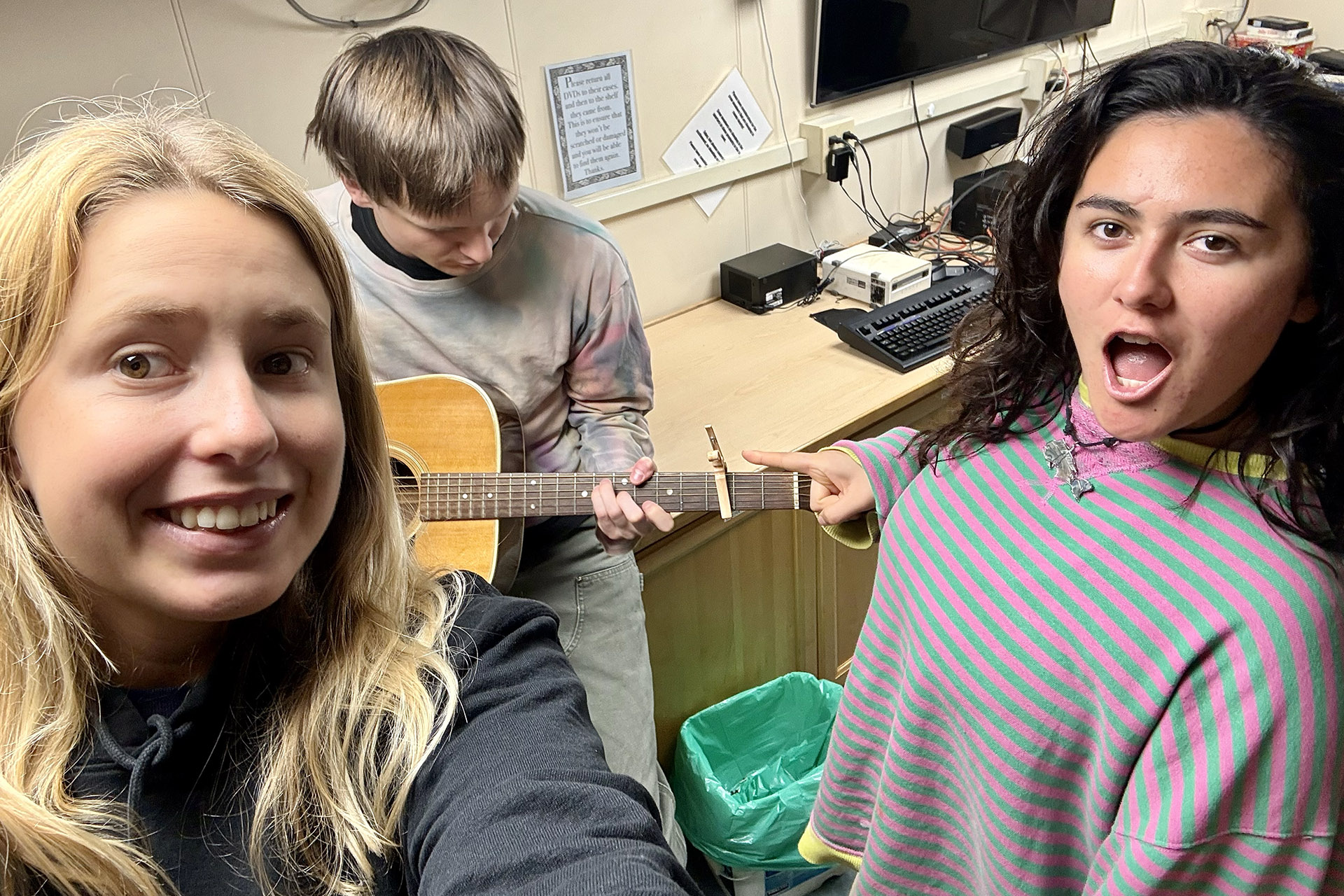
Parker Hansen & Roxanna Bragança featured with the guitar. Credit: Maija Zidek
I also decided to steal Allen Smith’s camera for the day, to practice my photography skills (photos featured below), and also take pictures for Roxanna Bragança’s graduation! Congratulations Roxanna! And thank you Allen! Overall, life aboard the R/V Langseth has been going smoothly, and while oxygen concentrations get lower, I seem to gain more hobbies, talents, and skills. As we begin planning our exciting travels through Panama after demobilization, I can’t help but find peace in the routine of life at sea and appreciate every sunset on the horizon. Each day seems to pass by faster than the last, making me even more grateful for the opportunity to be here.
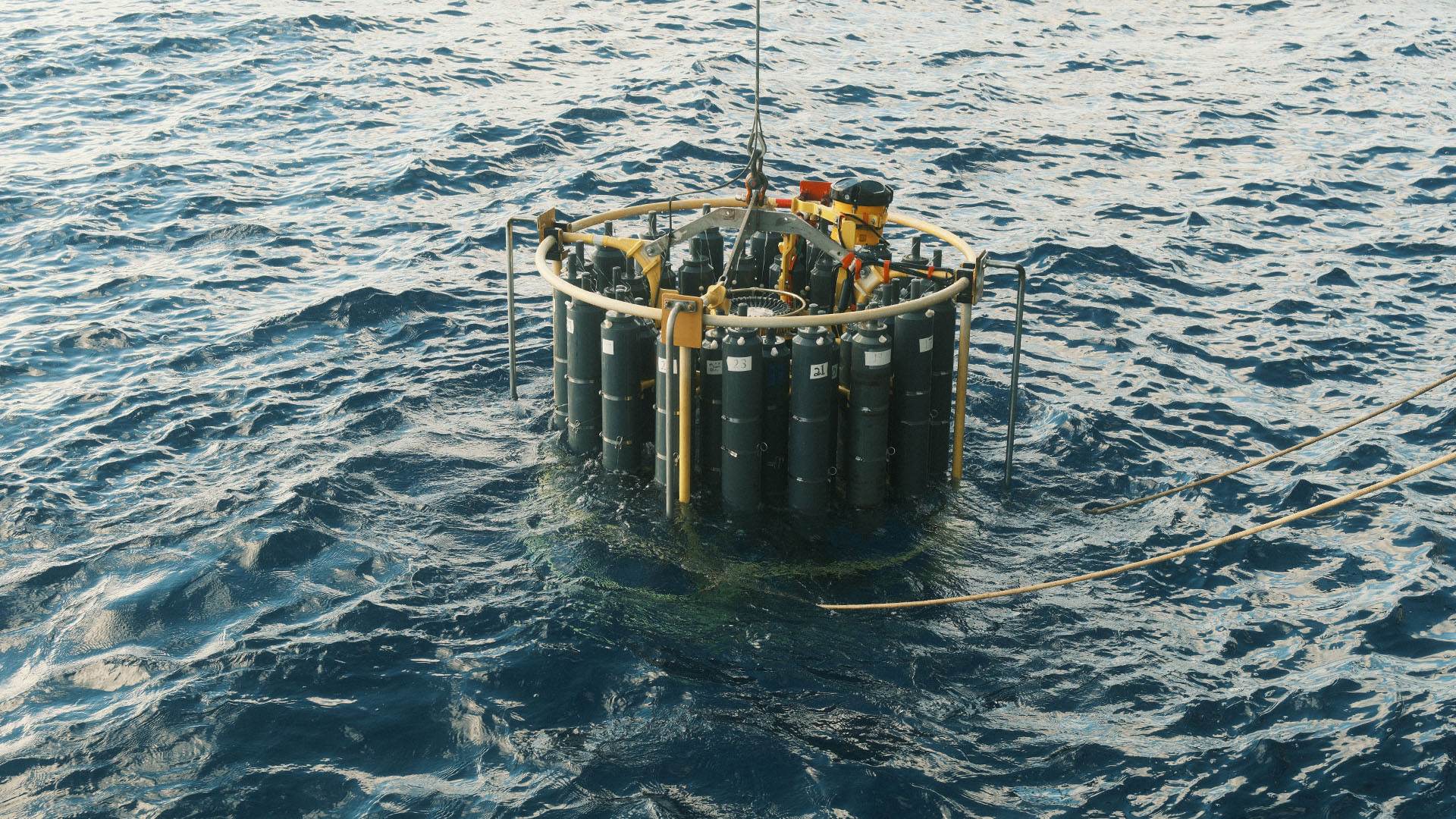
CTD, Credit Maija Zidek
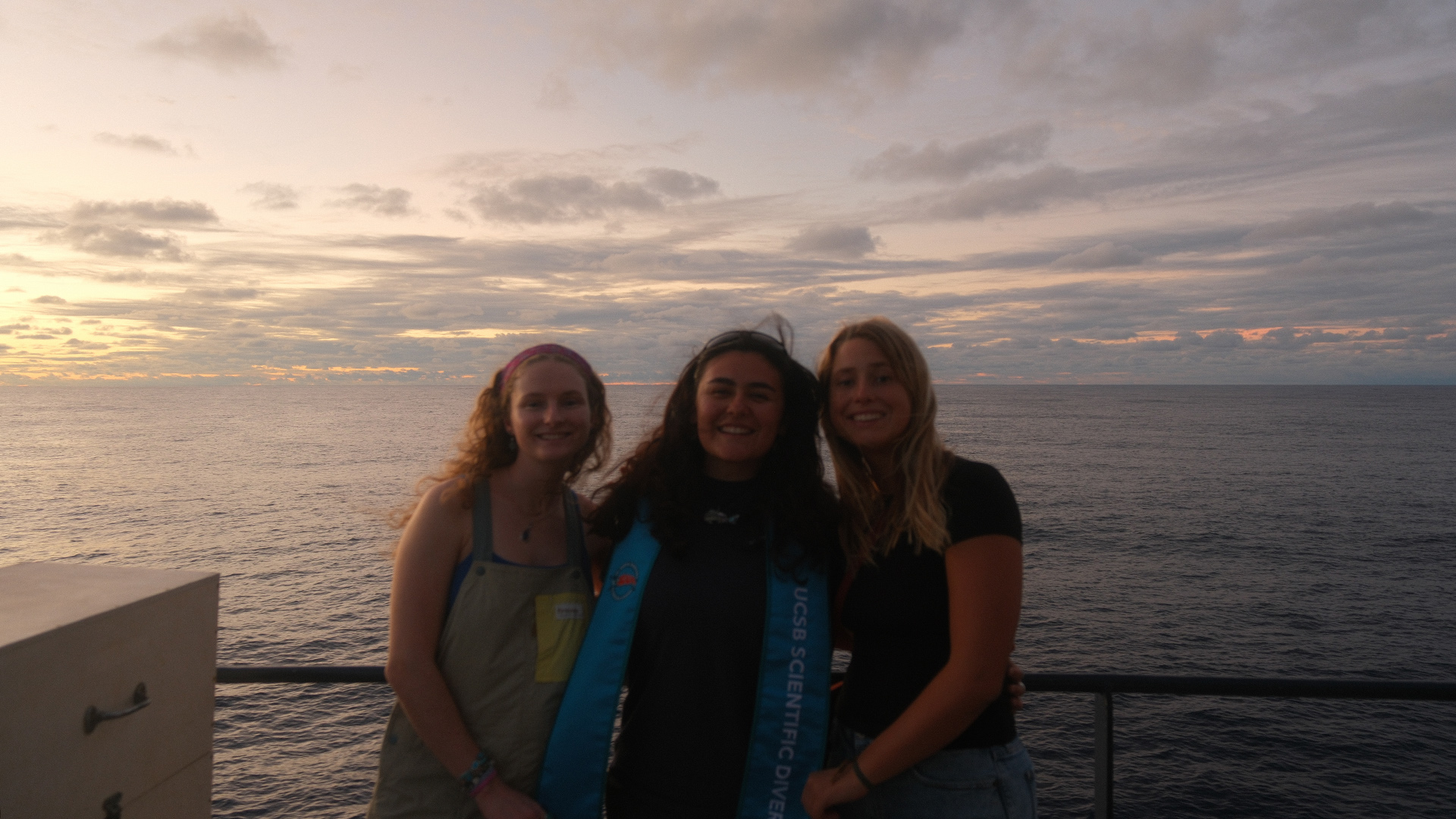
Credit: Parker Hansen
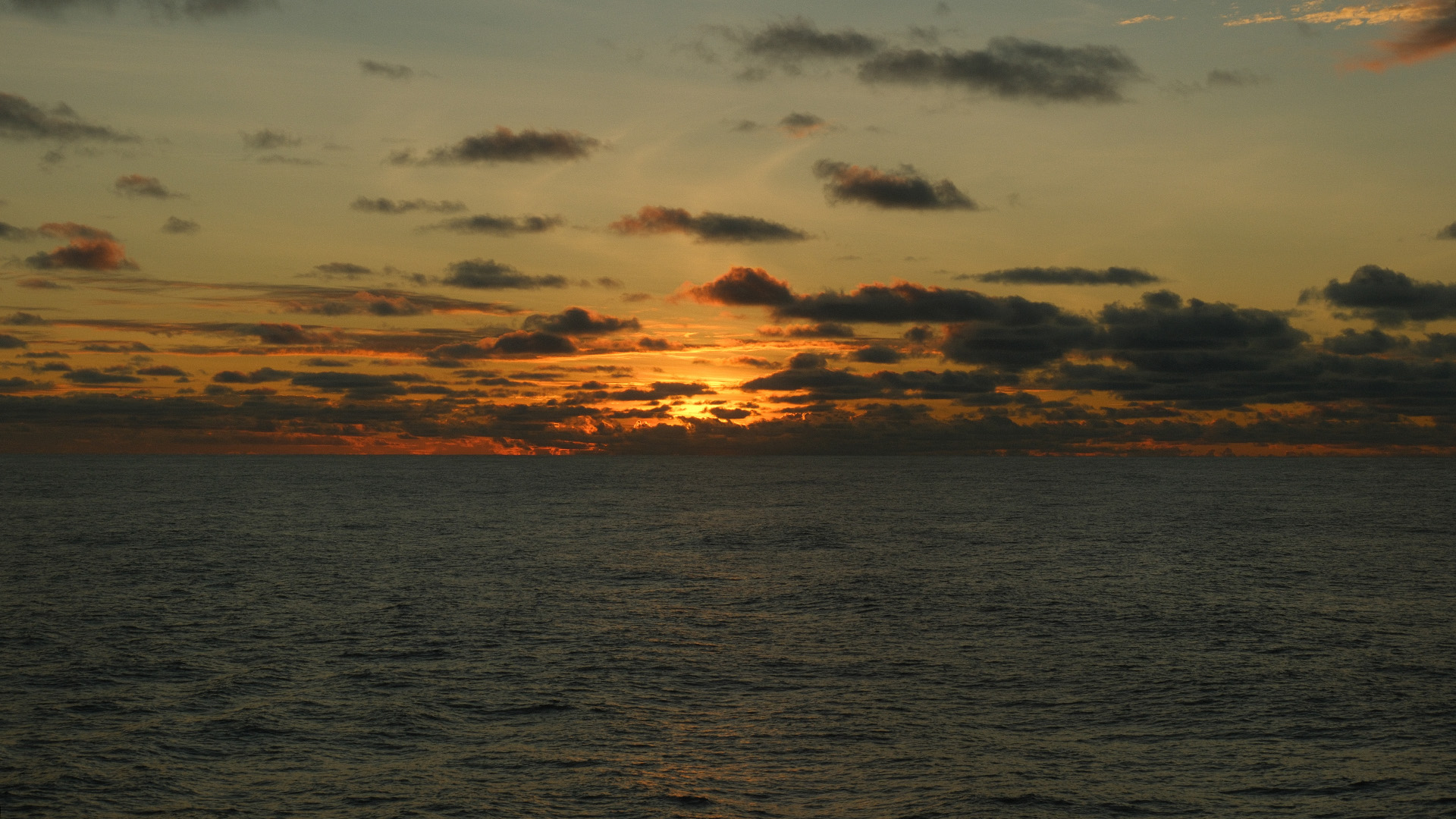
Sunset, Credit: Maija Zidek
About the Author—Maija Zidek is a senior at the University of Miami, where she also works at the Atlantic Oceanographic & Meteorological Laboratory. Aboard the R/V Langseth, she measures dissolved oxygen, while she searches for her future PhD in carbon cycling and biogeochemistry.