
Tracing Ocean Circulation with CFCs
CFC analyst Riley Ames explains how scientists use gas chromatography to “date” seawater and trace ocean circulation
6/28/2026
Ahoy there! My name is Riley Ames, and I am measuring trace gases for P04E onboard the R/V Langseth. We’ve been at sea for about seven weeks after setting sail from Majuro, with only a week left before we make port in Panama City!
Being at sea for this length of time has allowed our scientists to settle into some type of routine; now, most of our time and attention is dedicated to collecting and analyzing seawater samples. In the trace gases lab, we have been operating almost 24/7 as CTD casts get closer together and we approach the end of the cruise.
I sample 1-3 CTD casts daily, collecting water from the rosette at various depths. Between stations, I spend my time analyzing the collected samples. We use an analytical technique called gas chromatography to separate, identify, and quantify the trace gases in a seawater sample – in other words, we are able to separate out individual gases, including chlorofluorocarbons (or CFCs).
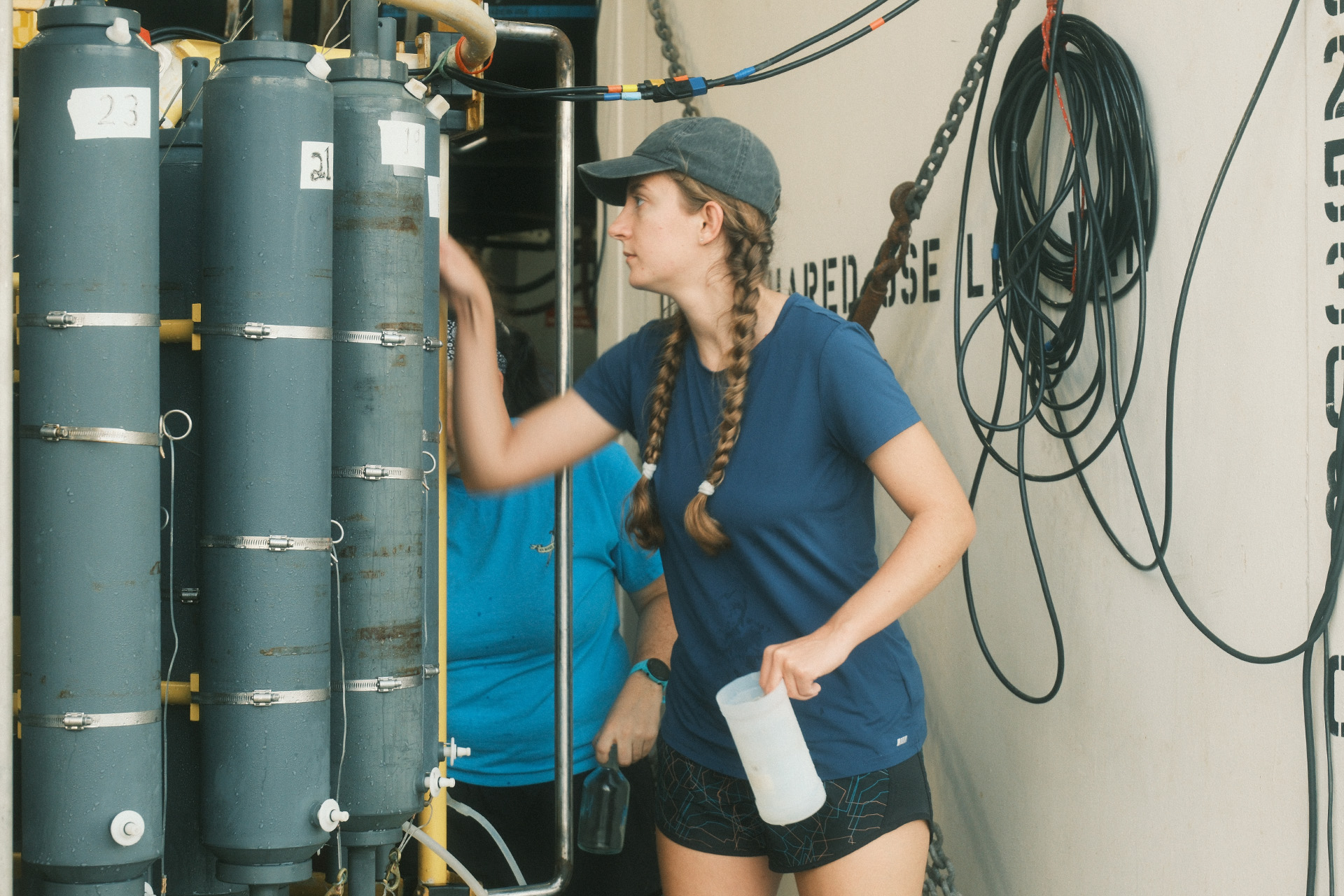
CFC analyst Riley Ames collecting water from the CTD. Photo Credit: Allen Smith
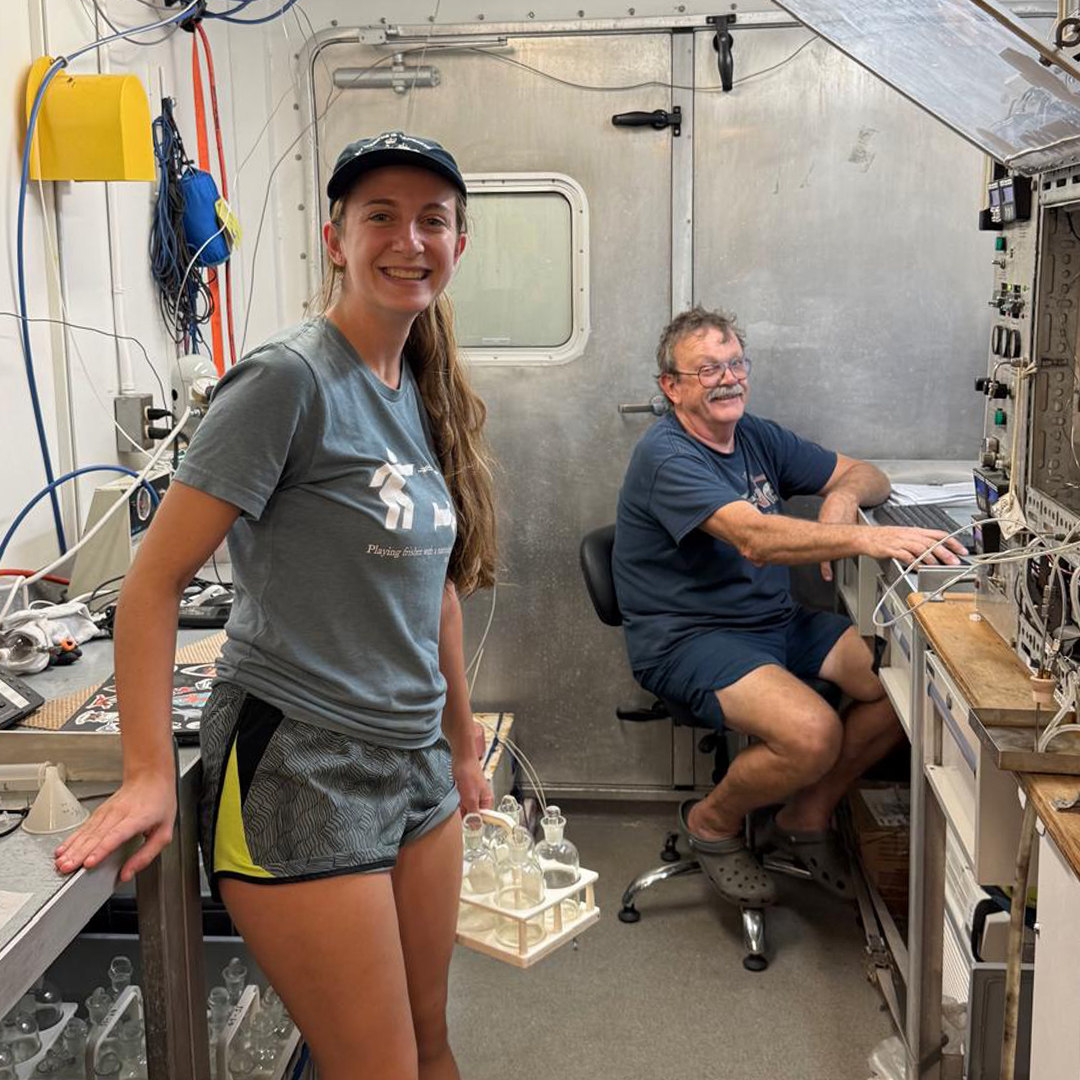
CFC analyst Riley Ames and CFC PI Jim Happell preparing to sample a CTD cast. Photo Credit: Todd Jensvold
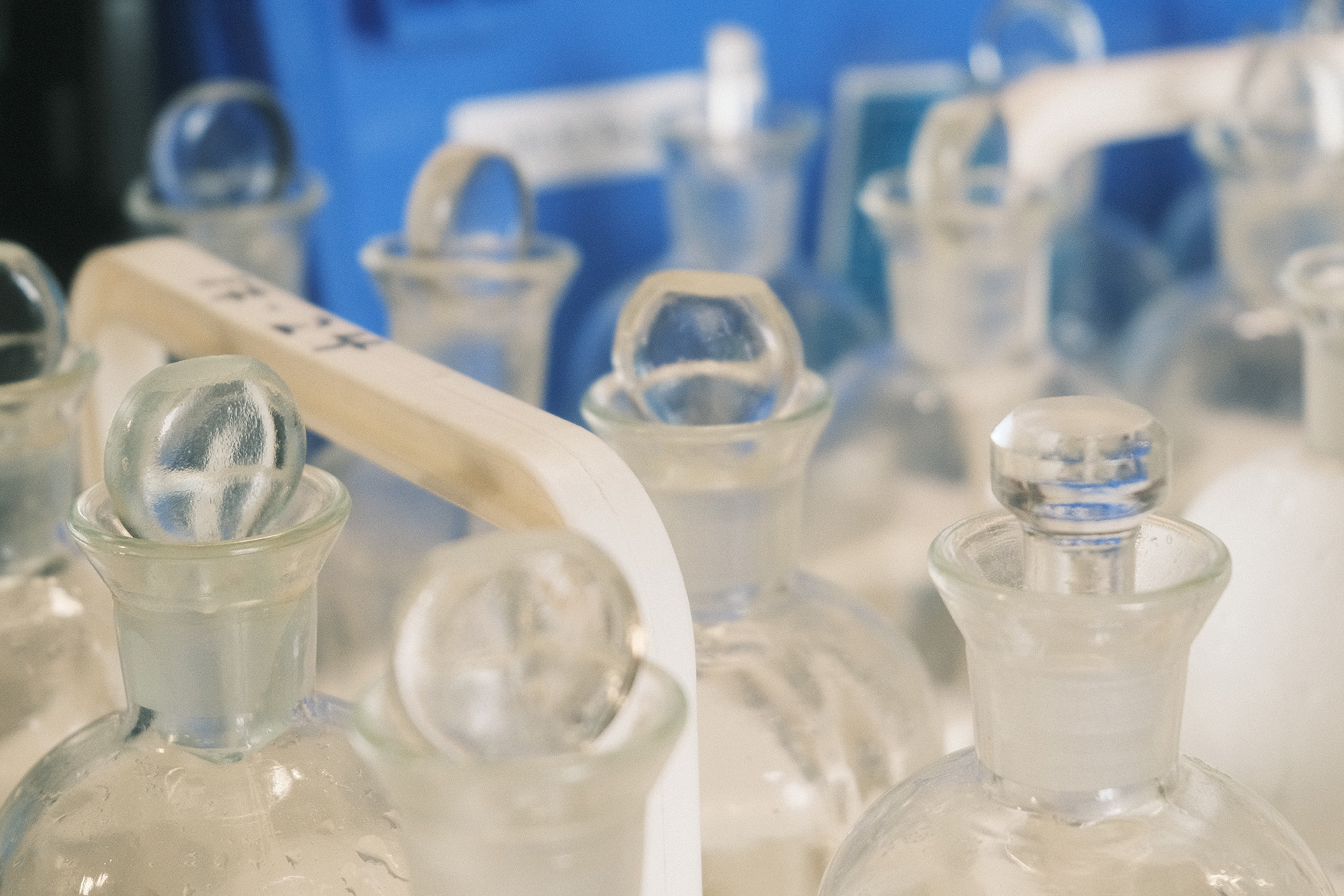
CFC bottles during sampling. Photo Credit: Allen Smith
While CFCs exist in the ocean in relatively small quantities, they have a few unique features that make them an important parameter to measure. For one, they are synthetically produced – meaning that they do not occur naturally in the environment. Do you remember the hole in the ozone layer? Yeah, that was CFCs (not so good). However, the fact that they exist in the atmosphere and are not produced in the ocean makes them a perfect tracer. By measuring CFCs (and other similar trace gases), we can “date” seawater; the concentrations of CFCs in seawater serve as an indicator of when that water has last been in contact with the atmosphere. This information helps scientists study ocean circulation and ventilation, including the mapping of large-scale ocean currents.
So essentially, my days consist of sampling seawater, analyzing it using gas chromatography, and then sampling the next station – wash, rinse, repeat. Repetitive, but I find plenty of ways to fill the time. Lately, there have been a lot of one (or two, or three) person Broadway productions in my lab – which is, thankfully for everyone else onboard, soundproof.
I have plenty of fun in my off time as well! Lately, I’ve been playing a lot of increasingly competitive card games, enjoying beautiful sunsets, marathoning the Star Wars films (can you believe some people have never seen them!?), and consuming copious amounts of hot chocolate.
We’re looking forward to sampling our last few stations before making port in Panama – while the R/V Langseth has been my home for the past seven weeks, I’m excited for my Panamanian travels and to see family and friends back on dry land!
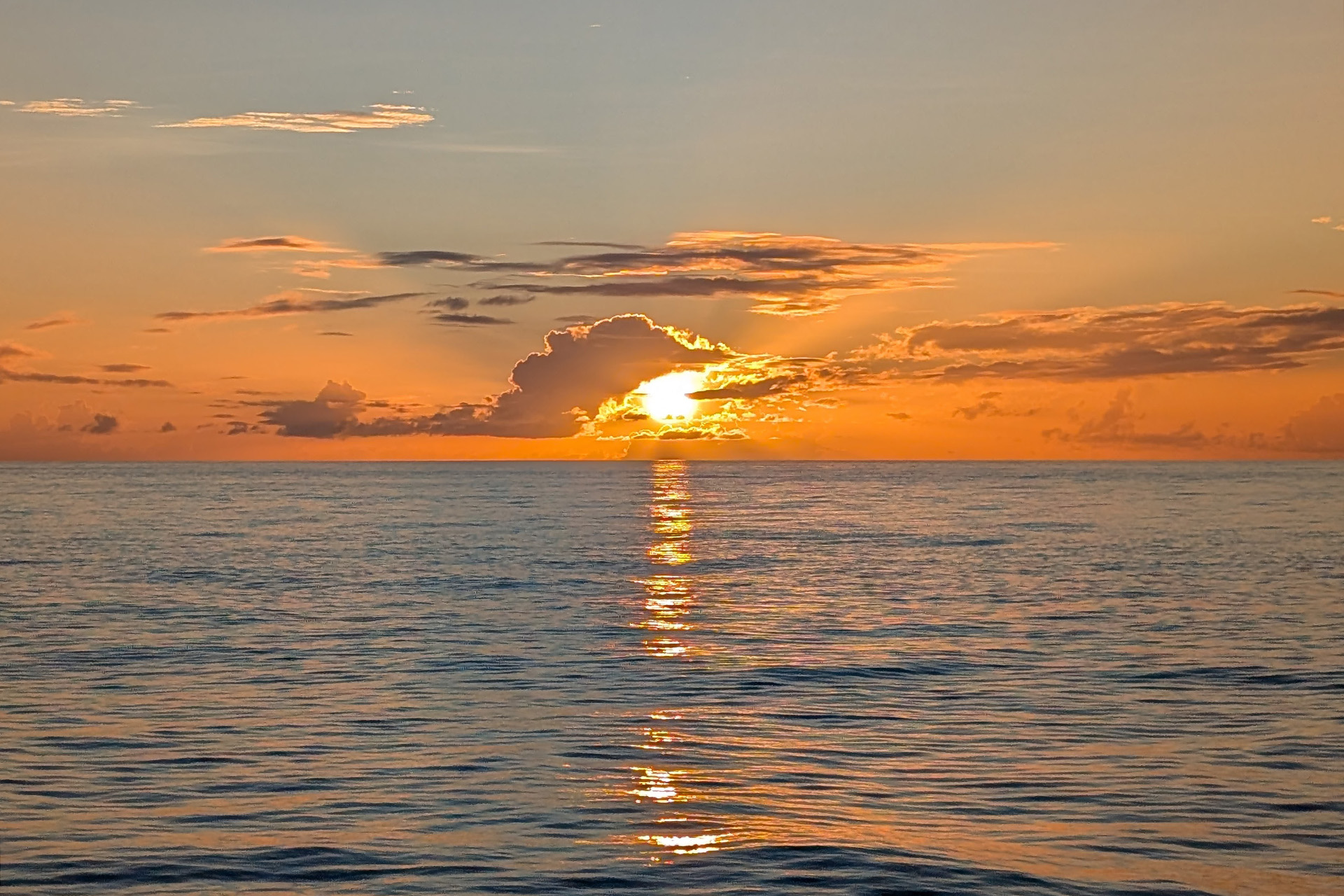
A sunset captured from the MMO deck. Photo Credit: Riley Ames
About the Author— Riley Ames is a CFC analyst aboard the R/V Langseth. She recently graduated from the University of Miami with her Bachelors in Oceanography and is headed to Texas A&M to pursue her PhD. In her free time she enjoys hiking, reading, and spending time with her family.