
6/12/2026
We arrived on station for the first CTD cast and float deployment on June 11th a little before midday. This is called a ‘shake-down’ for the CTD, which serves as an initial test deployment of the equipment to ensure everything works properly. It took about two hours for the CTD to get to the deepest point of its profile, 1500 meters, then come back to the surface, stopping periodically to take water samples on the way. I collected water samples from the Niskin bottles on the CTD rosette for nutrients, HPLC, and POC, which will be used to validate some of the biogeochemical parameters measured by the float after it’s deployed.
And of course, we deployed the first BGC Argo float, which is quite heavy and went over using a crane on the aft (back) deck of the ship. This float was decorated with help from some members of the ship’s science party, its name – Copepod – chosen by students at Minuteman Regional Vocational Technical High School in Lexington, MA.
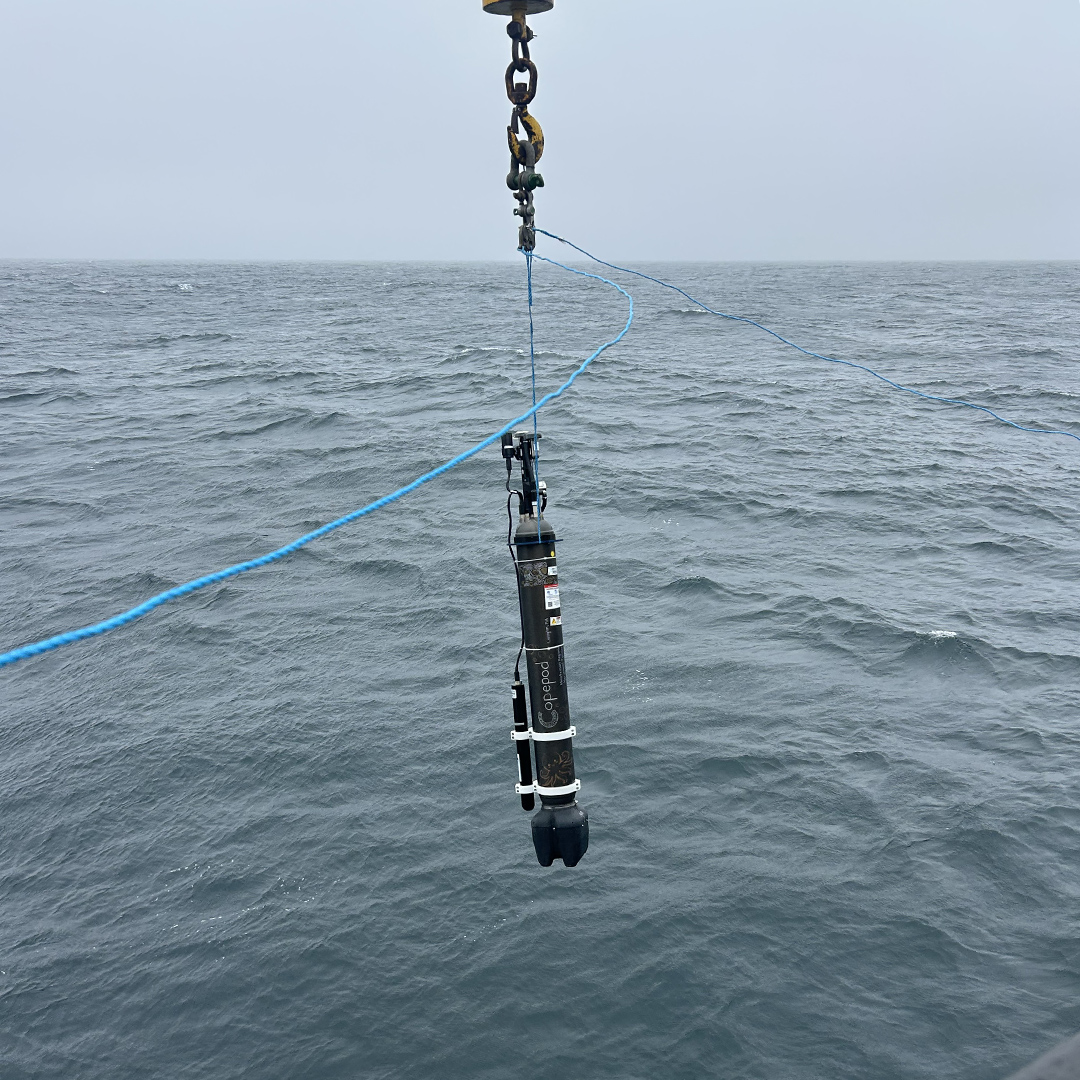
Deploying BGC Argo float, ‘Copepod’ off the aft deck of the ship.
The second station was less than a day from the first, adjusting to pre-dawn casts (and subsequent float deployments) for scientists requiring samples before the sun starts influencing biology in the surface ocean (more to come on this as I myself learn more about the research conducted on the cruise). With an early morning, we deployed the second BGC Argo float (Scoopy by students at the College of Coastal Georgia) and the first UK Core float. Bye floats!
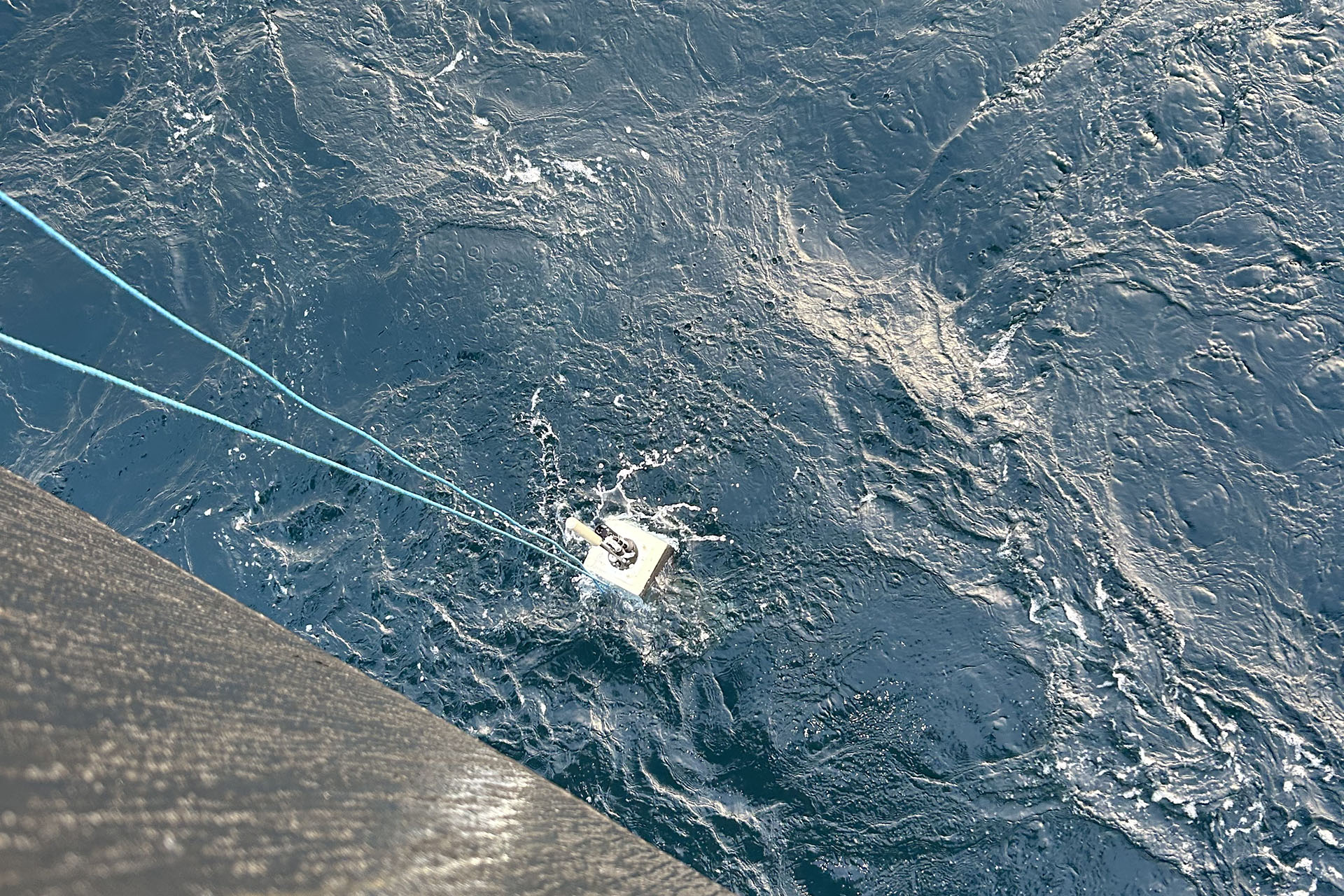
The UK Core float was light enough to lower into the water by hand from a rope off the back of the ship.
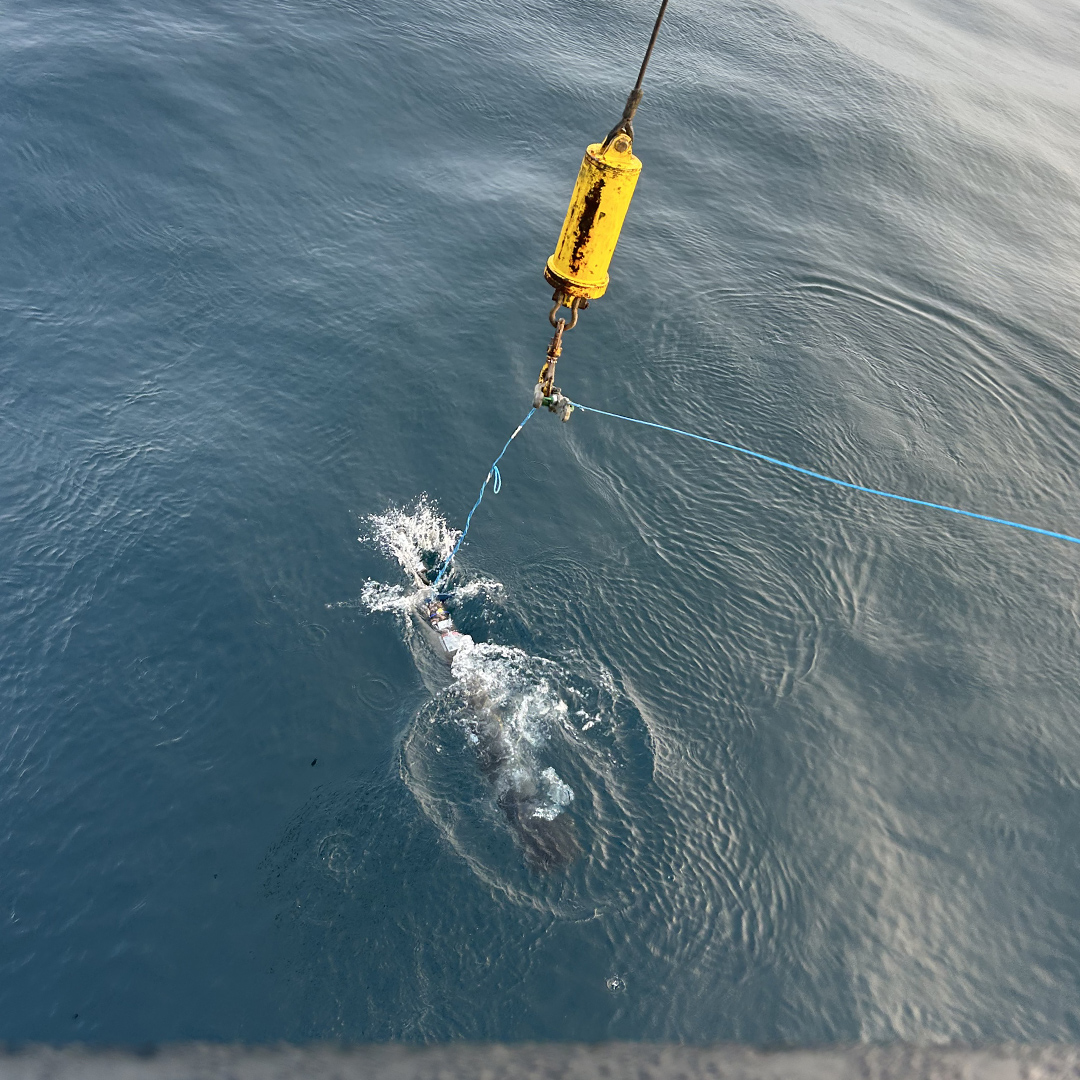
Scoopy entering the water during deployment.
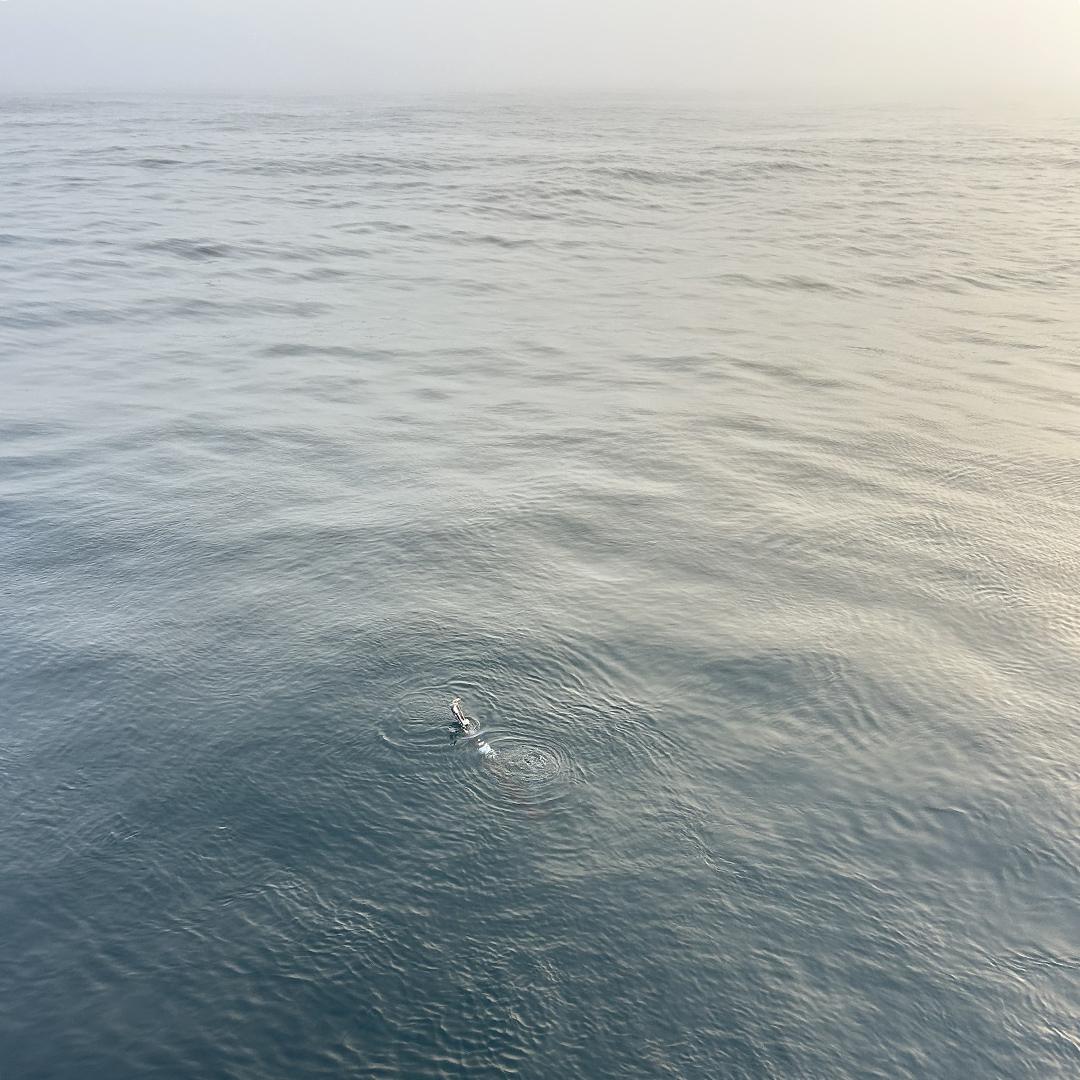
Watching the BGC Argo float drift away (it will soon sink below the surface) as we move on toward the next station.
It’s a little wistful watching the float drift from the ship as we pull away from the station – have a good journey little float!
Aside from the spectacle of the float deployments, we were also visited by a pod of dolphins and a morning rainbow! 
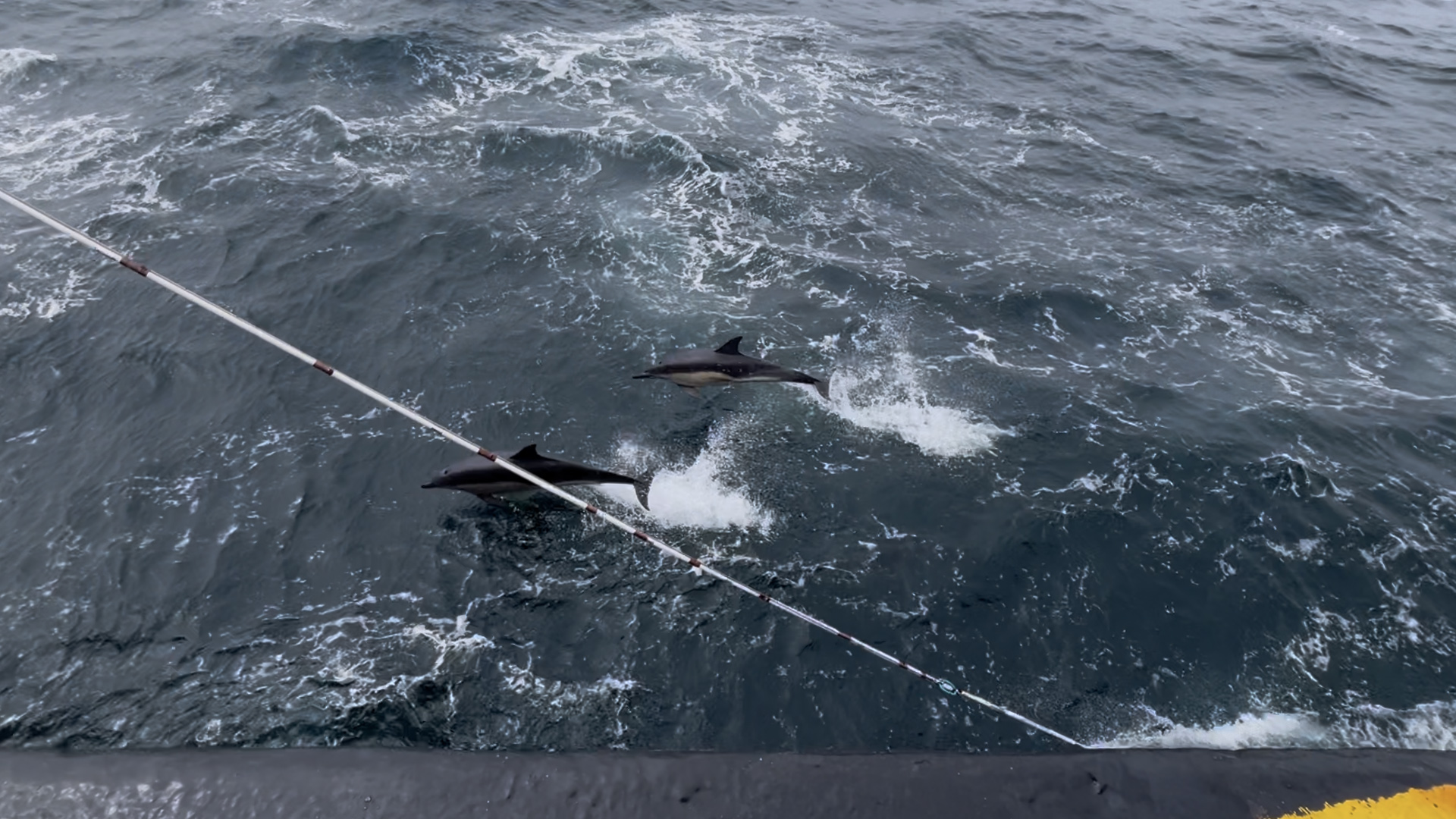
A pod of dolphins followed along with the ship for an impressive distance.
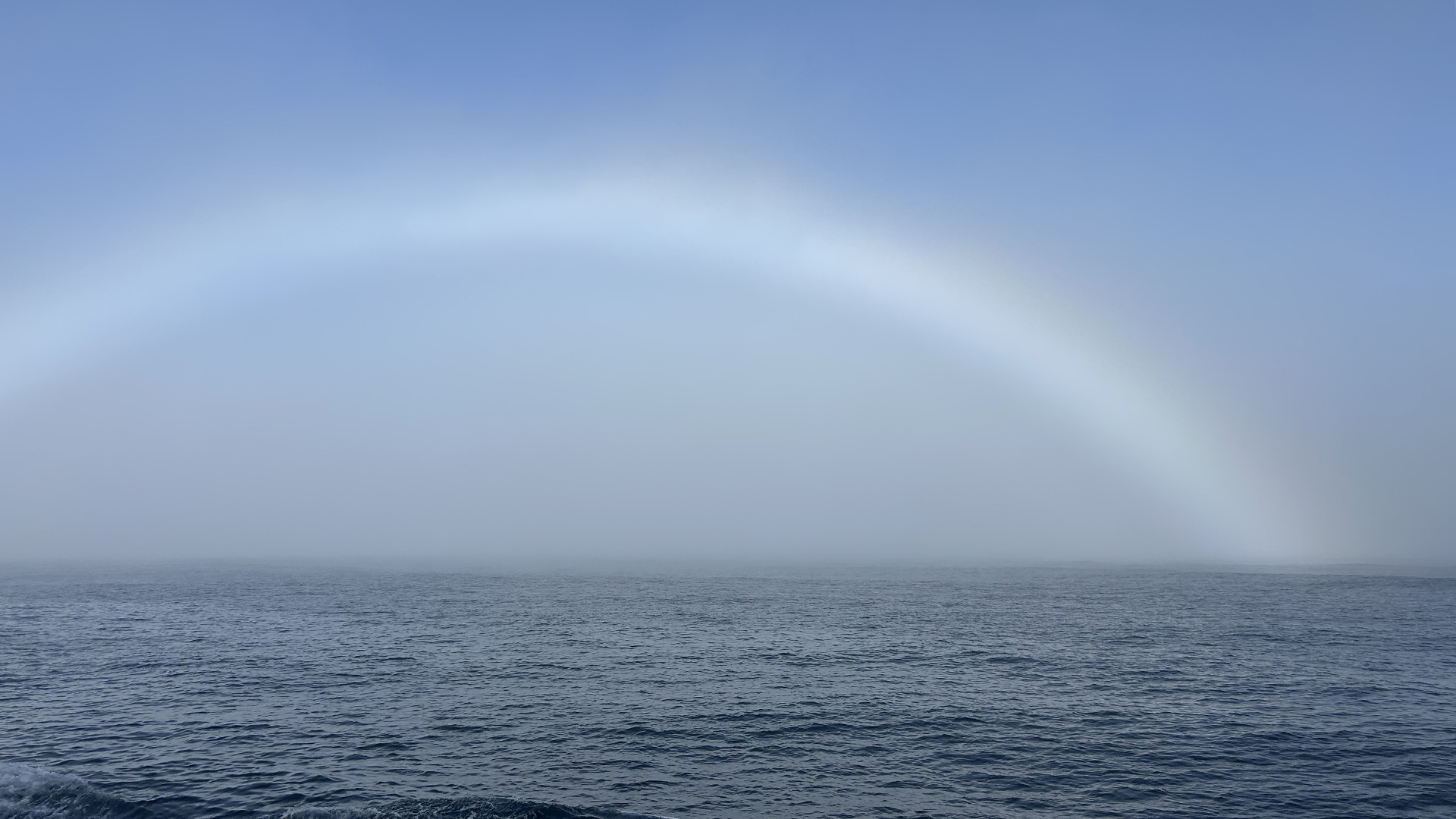
A rainbow came along with the clearing morning mist after the pre-dawn CTD cast.
About the Author— Amanda Pinson is a PhD student at Massachusetts Institute of Technology and Woods Hole Oceanographic Institution (MIT-WHOI Joint Program in Oceanography) as part of the Biogeochemical Ocean Observing and Modeling (BOOM) lab, and is onboard as the the Argo float ‘wrangler’ for this cruise.