
2026 DY212 COCO-VOC
Closing the budget in marine atmospheric Oxidative Capacity through the quantification of Oceanic VOC emissions
GO-BGC joins this cruise of opportunity to deploy 5 Navis biogeochemical floats between Southampton and the work area near Cape Verde in the North Atlantic Ocean.
The cruise objectives are to measure volatile organic compounds (VOCs) in the lower atmosphere and near surface seawater. Background marine VOCs significantly controls the atmospheric oxidative capacity (total OH reactivity), which is important for climate (e.g. through CH4 lifetime), aerosols and clouds (e.g. productions of sulfate from DMS, secondary organic aerosols), and coastal air quality (e.g. ozone).
CTD rosette casts will be performed and water samples collected that will help validate the float sensors for nutrients, HPLC, and POC.
Please join along on the journey by following the expedition blog!
Dates: June 8 – July 15, 2026
Ports: Southampton, UK (round trip)
Chief Scientist: Mingxi Yang (Plymouth Marine Laboratory)
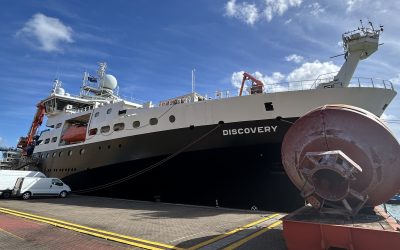
Ship: RRS Discovery (National Oceanography Centre (NOC))
Ship rider: Amanda Pinson (WHOI)
Image of RRS Discovery courtesy of (National Oceanography Centre (NOC))
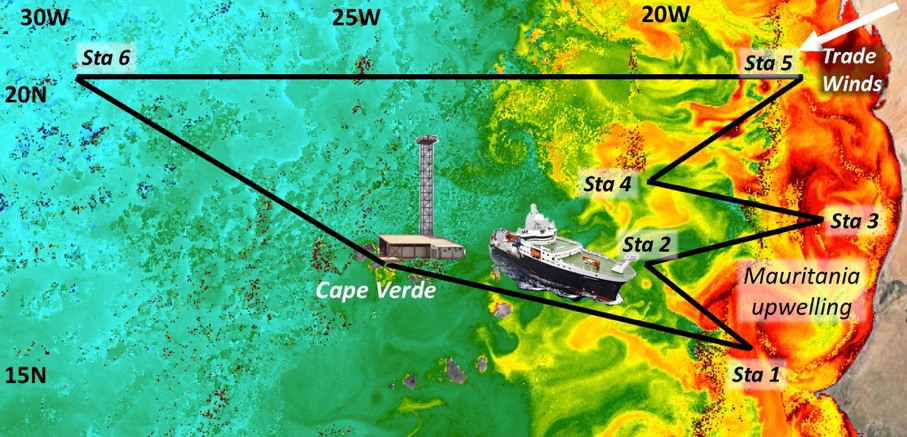
Map showing the fieldwork location near Cape Verde taking place in summer 2026
2026 DY212 COCO-VOC Expedition Logs
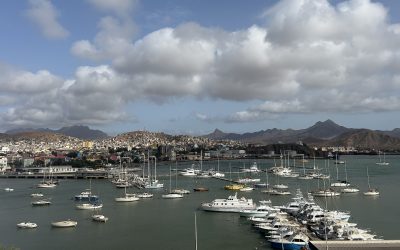
Disembarking
Leaving the ship, saying goodbye at the Mindelo port call, and some more wildlife spotted.6/28/2026 After three weeks on the open ocean, we’ve made it to Mindelo in Cape Verde, Africa. Here is where myself and a couple others will leave the ship to head home, while...
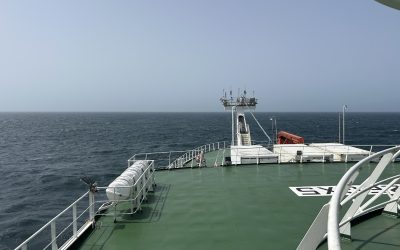
Just Out Here
Learning new things on the COCO-VOC cruise until disembarking.6/28/2026 All the floats have been deployed and I’m now just a passenger on the Discovery until our port call in Mindelo. One highlight for me has been meals on the ship. We have warm and cold buffet-style...
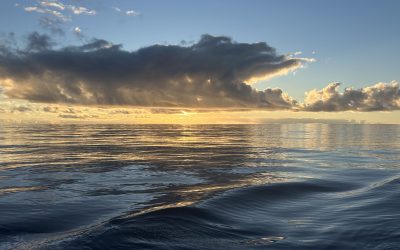
Wrapping Up
All five BGC Argo floats have been deployed, I have mostly been staring at the sky.6/17/2026 It’s been a little over a week since the first BGC float was deployed and we’ve just waved goodbye to the final float. With each pre-dawn CTD cast and float deployment came...
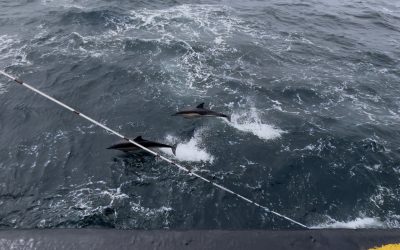
First Floats
Back-to-back CTD stations and float deployments, plus some sight seeing6/12/2026 We arrived on station for the first CTD cast and float deployment on June 11th a little before midday. This is called a ‘shake-down’ for the CTD, which serves as an initial test...
Heading Out
Amanda Pinson is sailing aboard the RRS Discovery COCO-VOC cruise to deploy BGC Argo floats6/11/2026 After a one-day delay, the RRS Discovery departed from Southampton, UK for the COCO-VOC cruise on Tuesday, June 9th. I’m Amanda, a graduate student in the MIT-WHOI...