
Wrapping up float deployments
All five BGC Argo floats have been deployed, I have mostly been staring at the sky.
6/17/2026
It’s been a little over a week since the first BGC float was deployed and we’ve just waved goodbye to the final float. With each pre-dawn CTD cast and float deployment came another beautiful sunrise and, when I stayed up in time, beautiful sunsets in turn. As we’ve transected south toward Cape Verde, the seas have been calm, sometimes with low enough wind that the sea surface gets a surreal glassy texture. Cloudless nights reveal what feels like the whole galaxy and beyond – it’s just ocean around us, meaning there’s no influence of light pollution out here.
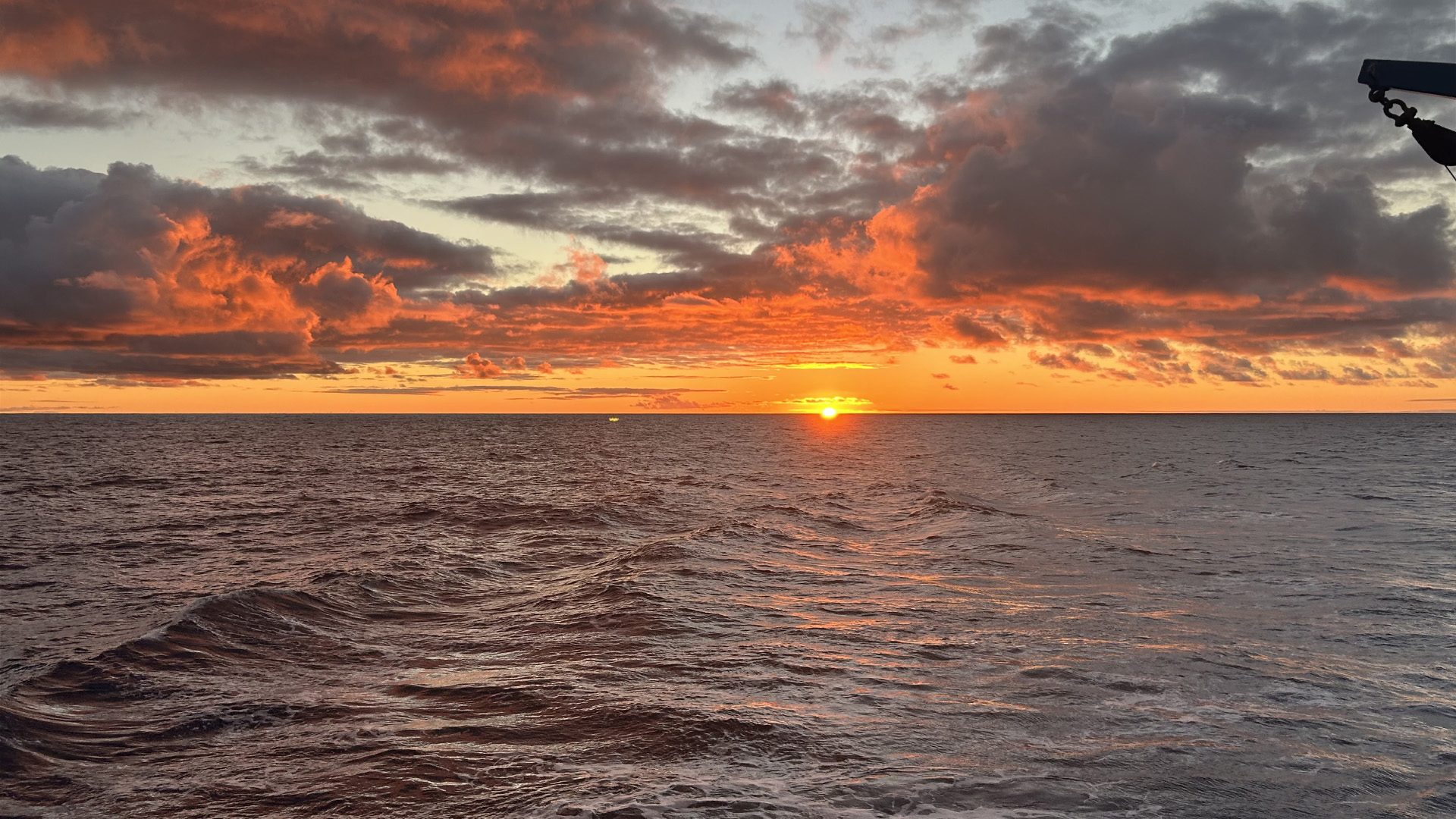
The timing of the CTD cast before sunrise means once the rosette is back on deck and the floats deployed, the sun is just starting to poke above the horizon.
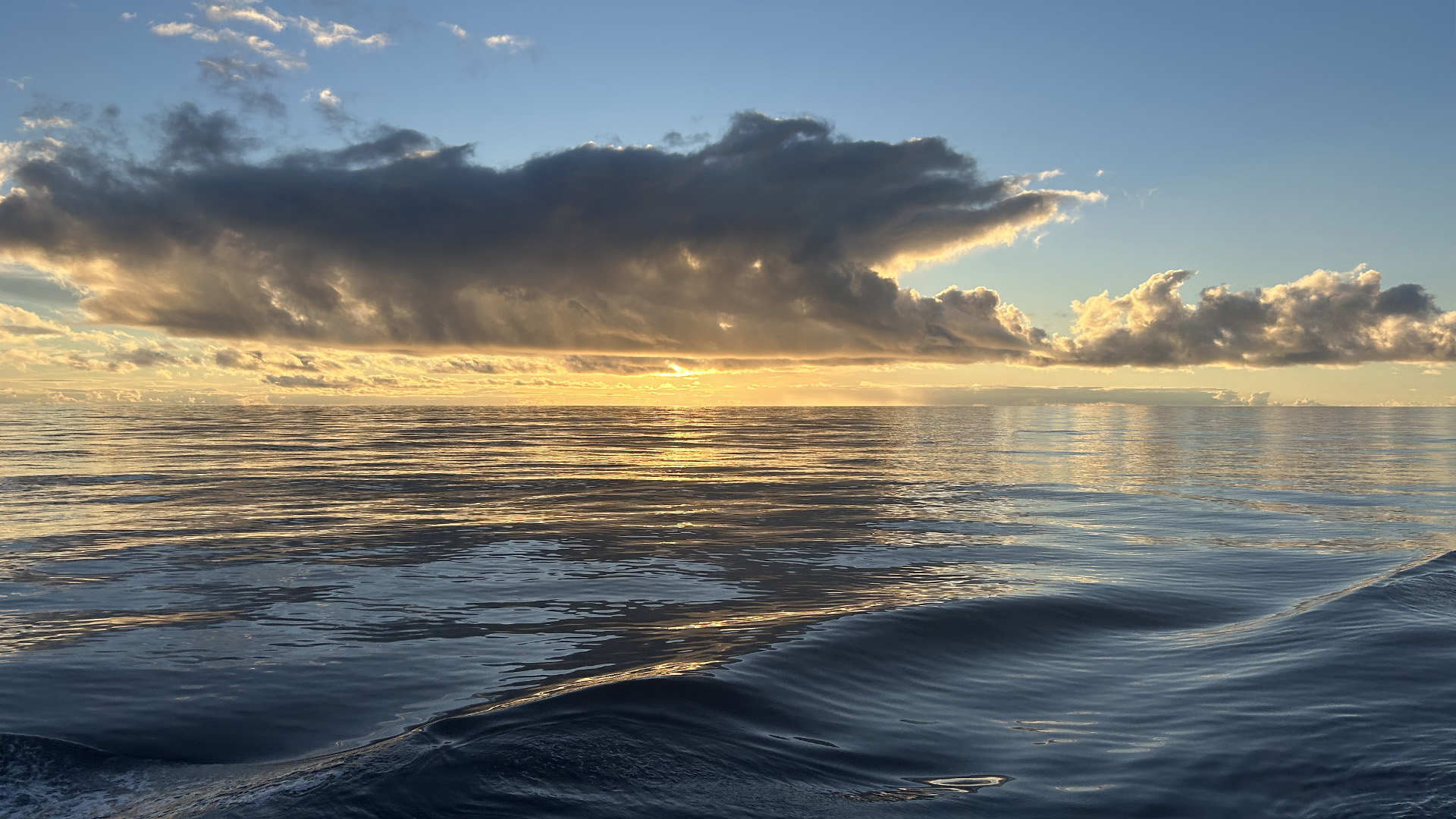
Low winds as we steam south lead to practically flat seas, making sunsets like this one especially impressive.
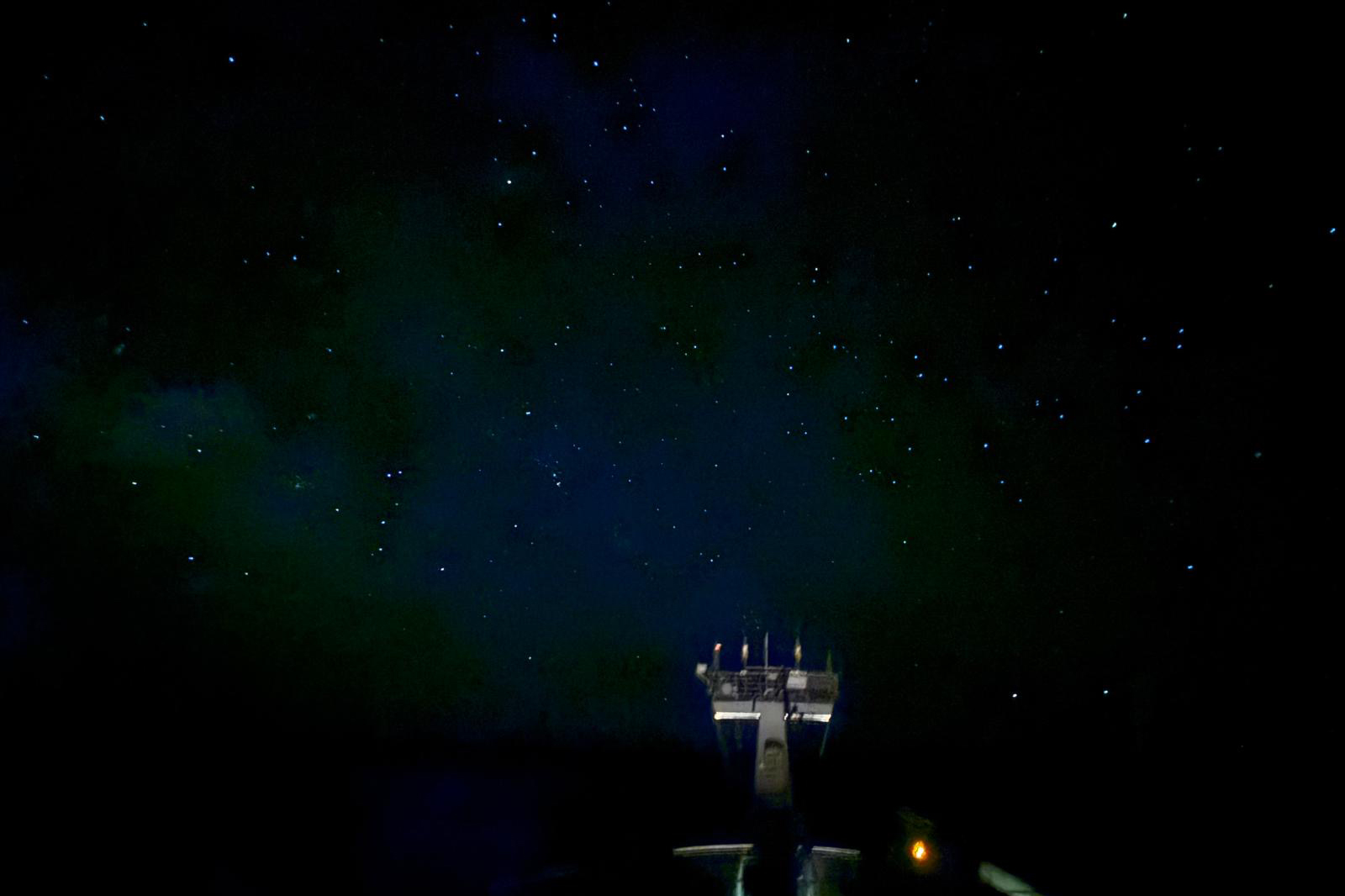
When nights are clear, we can see all the stars from the fore deck of the ship. Photo credit: Dr. Marvin Shaw.
Also along this transect, as we’ve ventured out into the open ocean and the edge of the North Atlantic subtropical gyre, the concentrations of nutrients and subsequent productivity by phytoplankton have decreased substantially. Without as much ‘stuff’ in the water, the filtering for HPLC and POC has gone quite quickly and, notably, the actual color of the water has become a quintessential ocean blue, uninfluenced by biology, which can dull or alter the color. One of the instruments being used during the COCO-VOC cruise actually looks at this. It’s called a So-Rad and uses hyperspectral imaging of ocean color, looking out from the very front of the ship, to compare against analyses of pigments which indicate different phytoplankton species. The general motivation of this is to get an idea of the relationship between color and phytoplankton to ground-truth images from NASA’s PACE satellite!
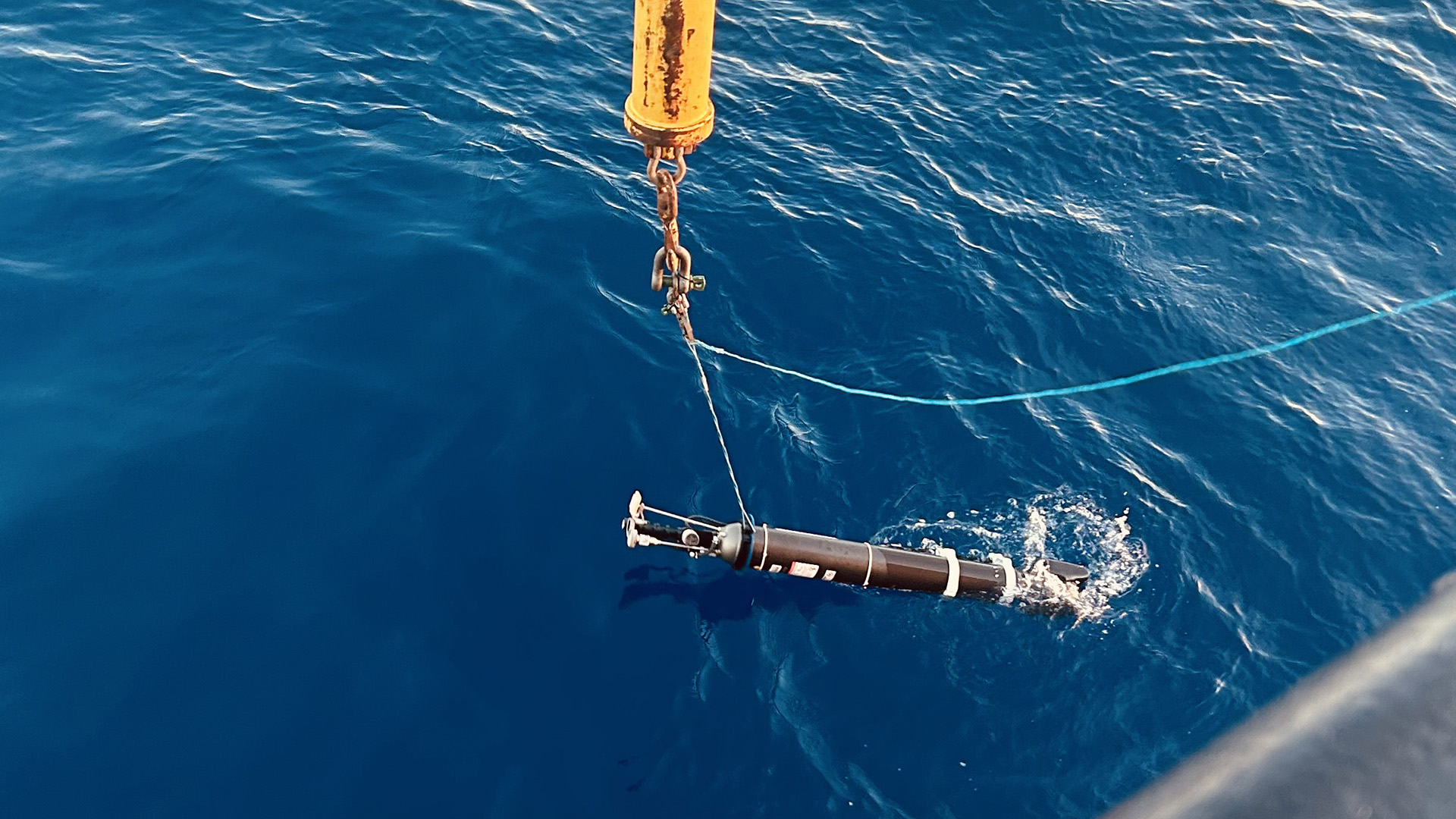
As we deploy one of the BGC Argo floats, the deep blue nutrient poor water makes a great backdrop.
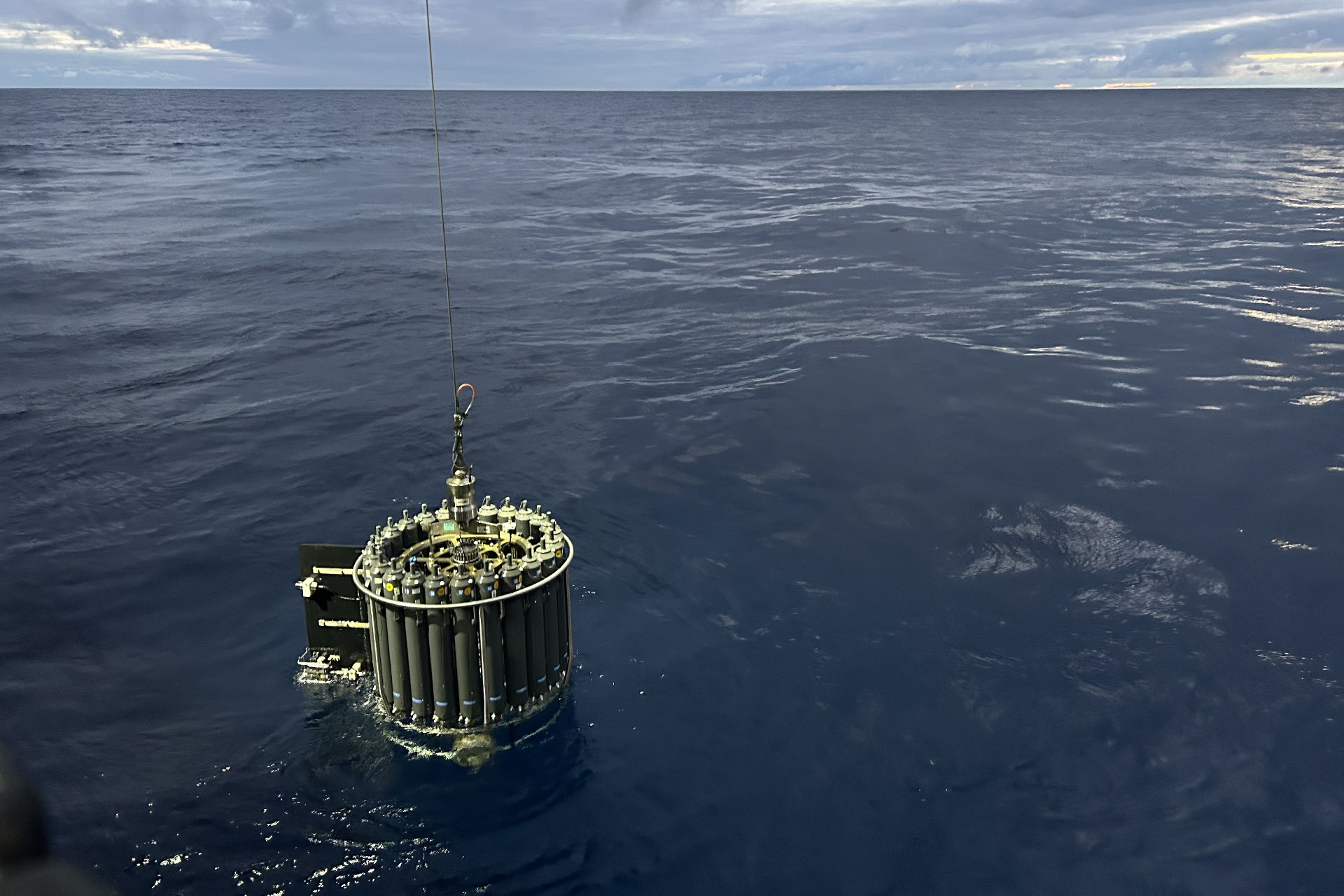
CTD rosette being pulled from the water after profiling down to 1000 meters and collecting water at certain depths on its way back up.
The final three floats we deployed included ‘Submarino Amarillo’ and, one of my favorites, ‘David Buoy’, both named by students at the Centro Educativo Costa Ballena in Osa, Puntarenas, Costa Rica. The last float, ‘Trailblazer Current’, was chosen by students at Richlands High School in North Carolina, tying in the global connectivity of ocean currents and making a fitting final float as we wrap up our contribution from this cruise to the global biogeochemical Argo float network.
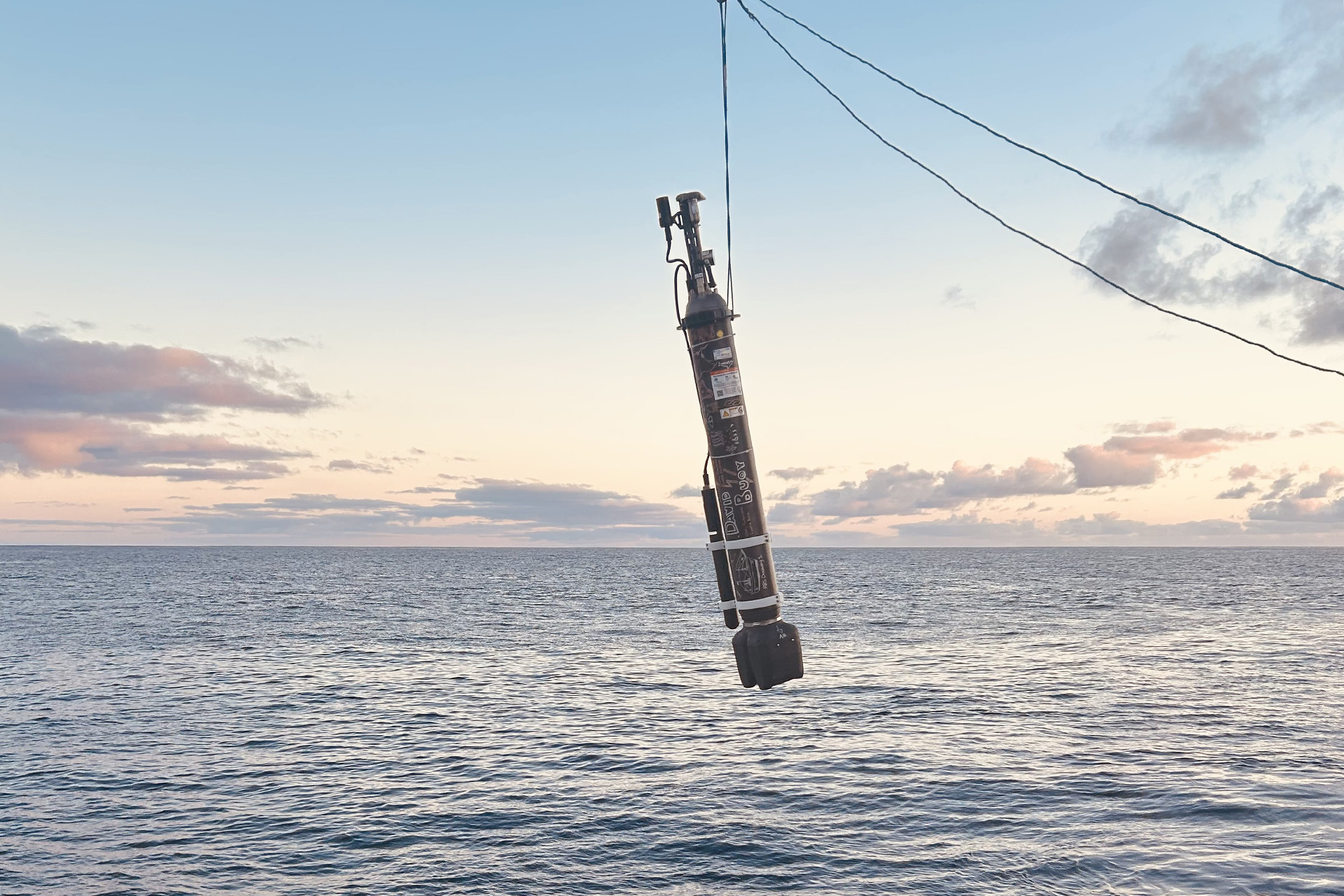
BGC float ‘David Buoy’ deployed as the sun just starts to rise.
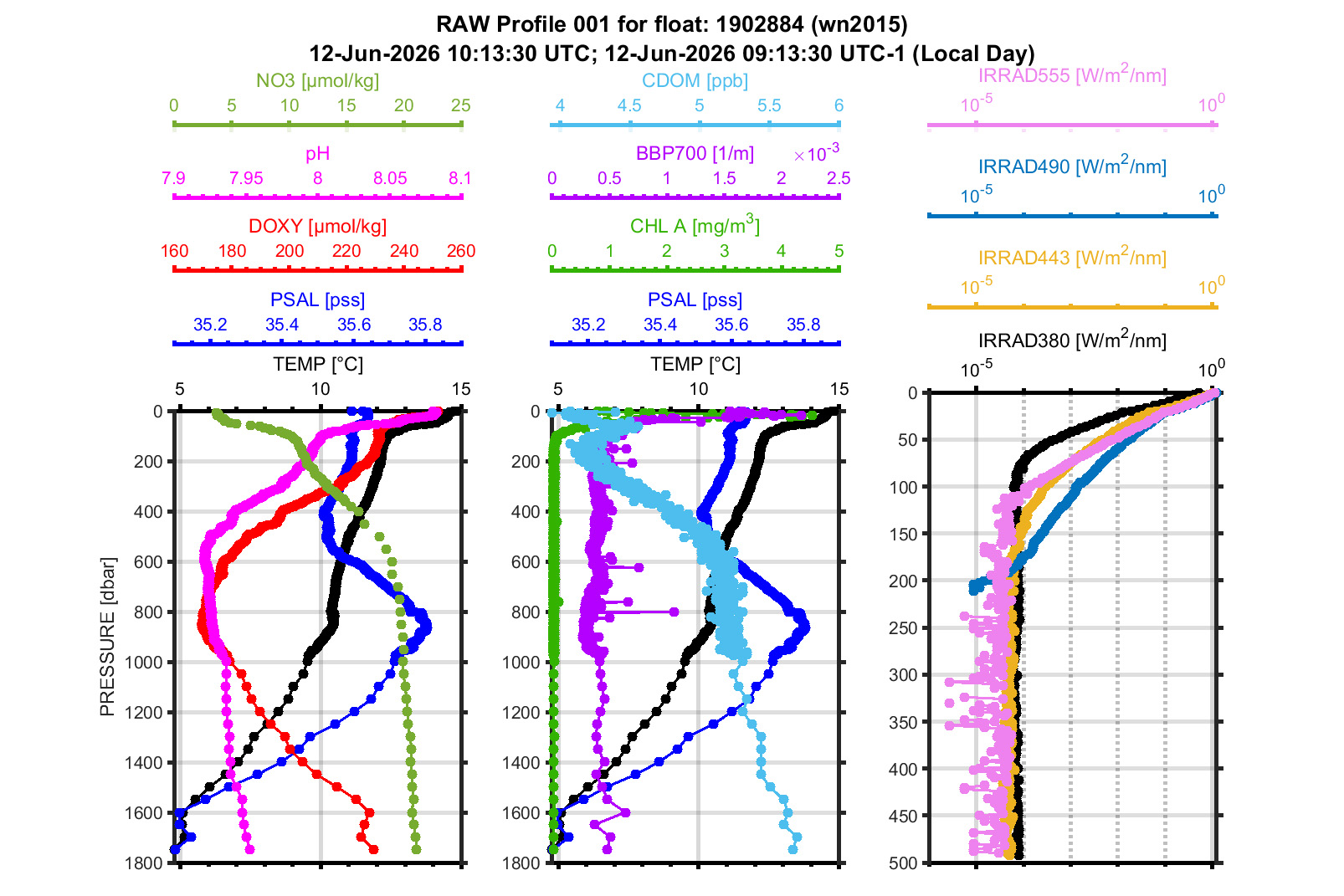
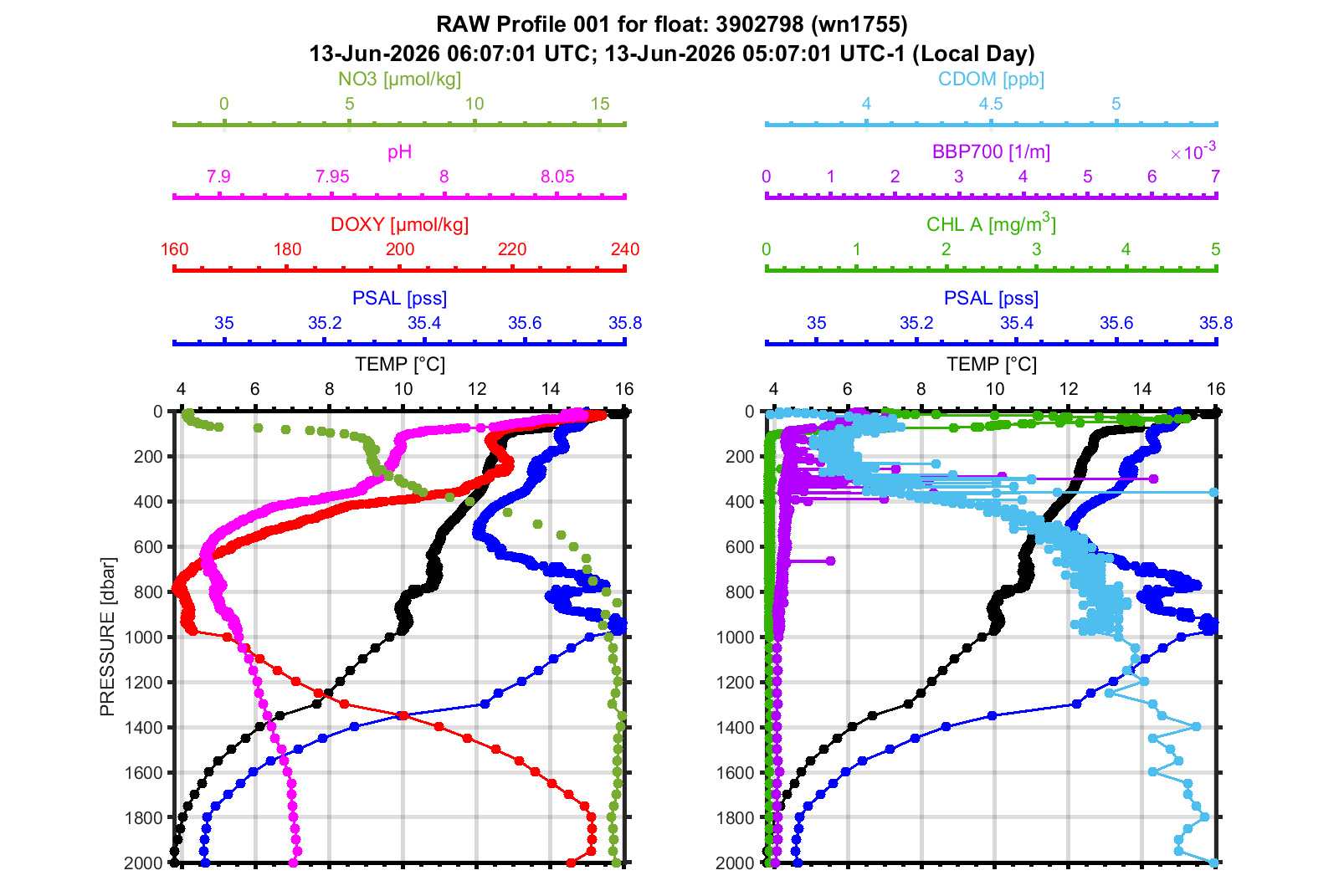
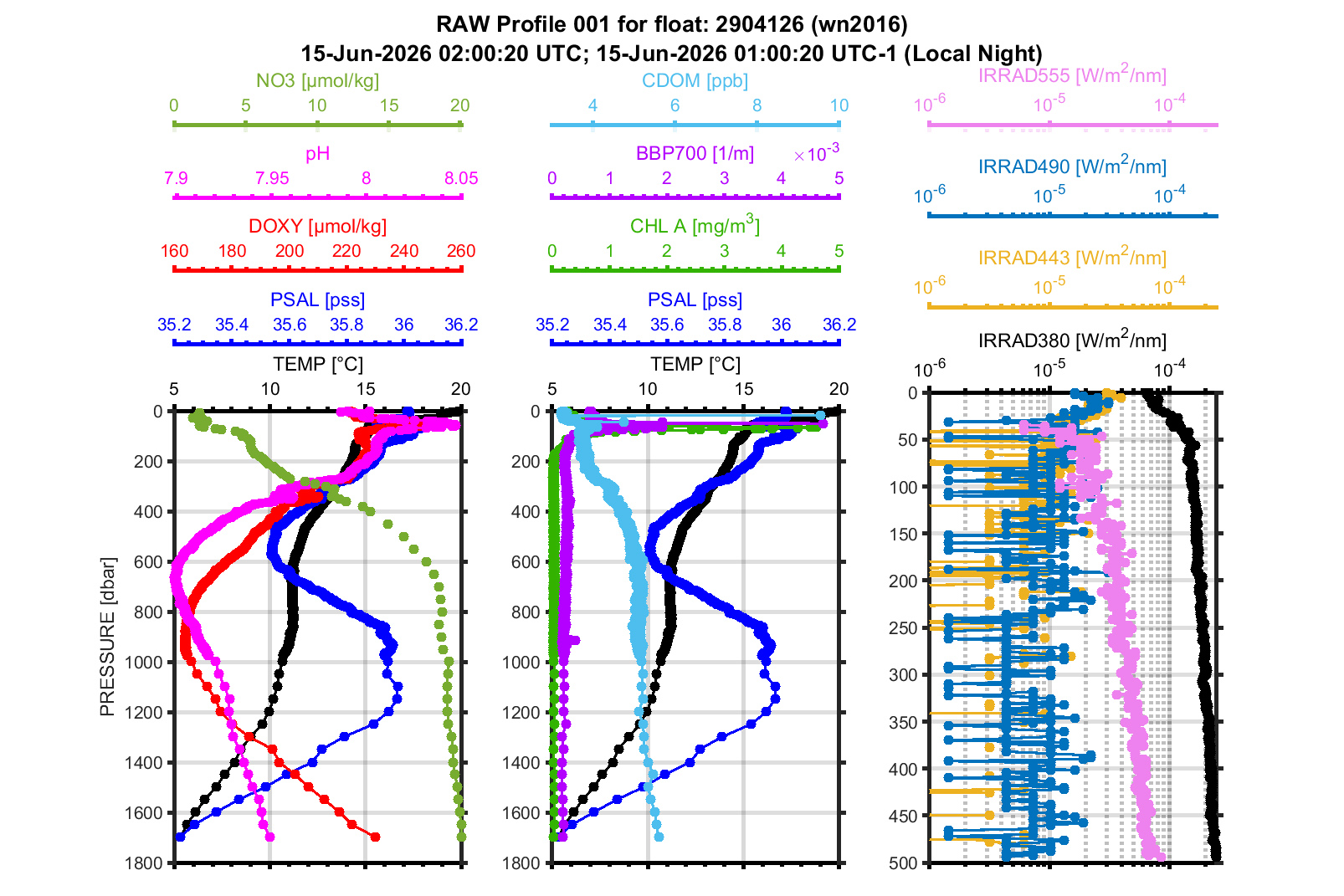
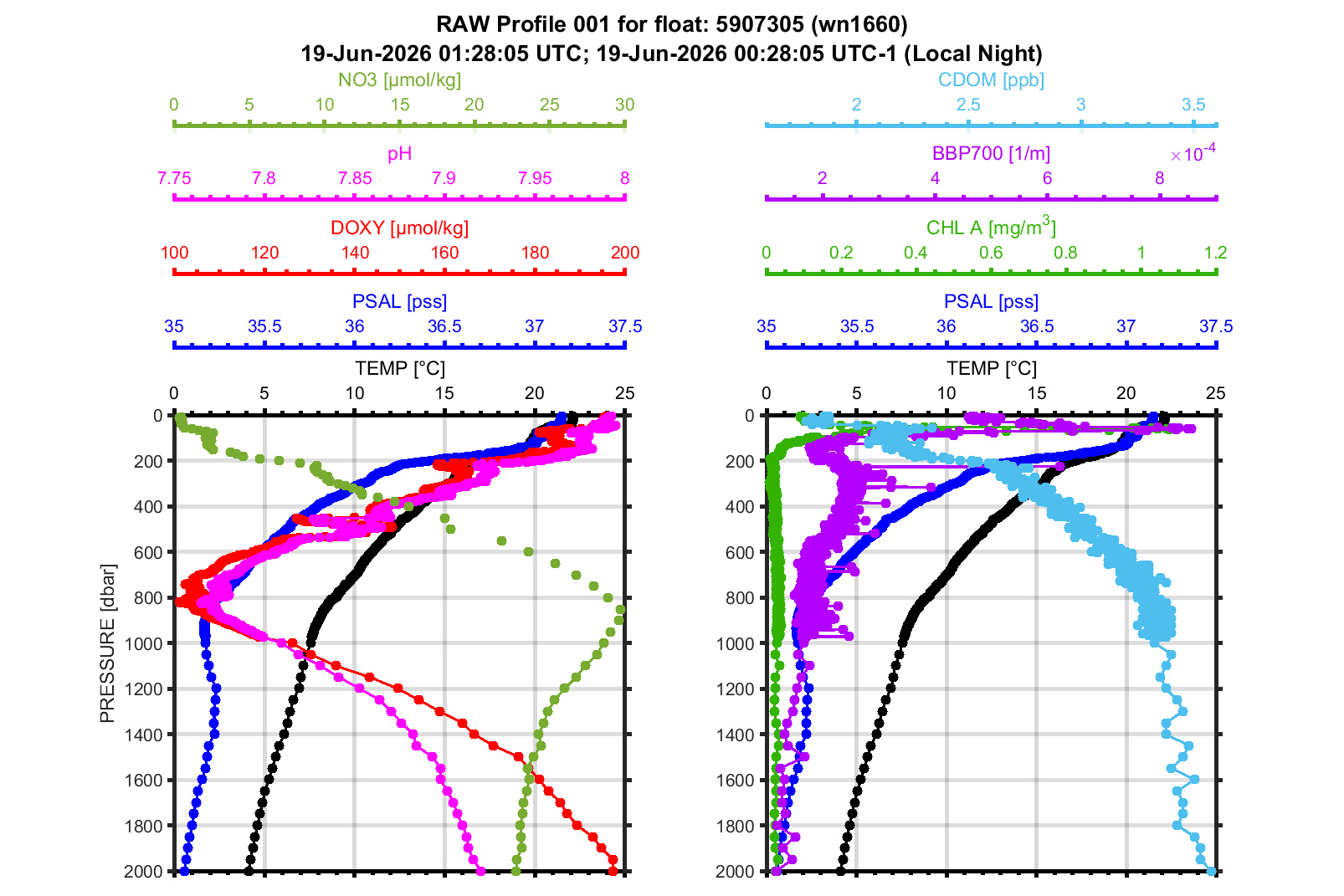
After each float is deployed, it will complete a full 2000 meter profile of the water column before coming to rest at 1000 meters for ten days, meaning we can look at what each float is up to soon after it begins its journey. Warm and nutrient poor surface waters, shallow mixed layers, oxygen minimum zones, stratification, and deep chlorophyll maximums are just some of the features we can pick out from the float profiles, which can inform all kinds of research questions from how the ocean’s biogeochemistry is changing to tracking productivity and carbon sequestration at large scales.
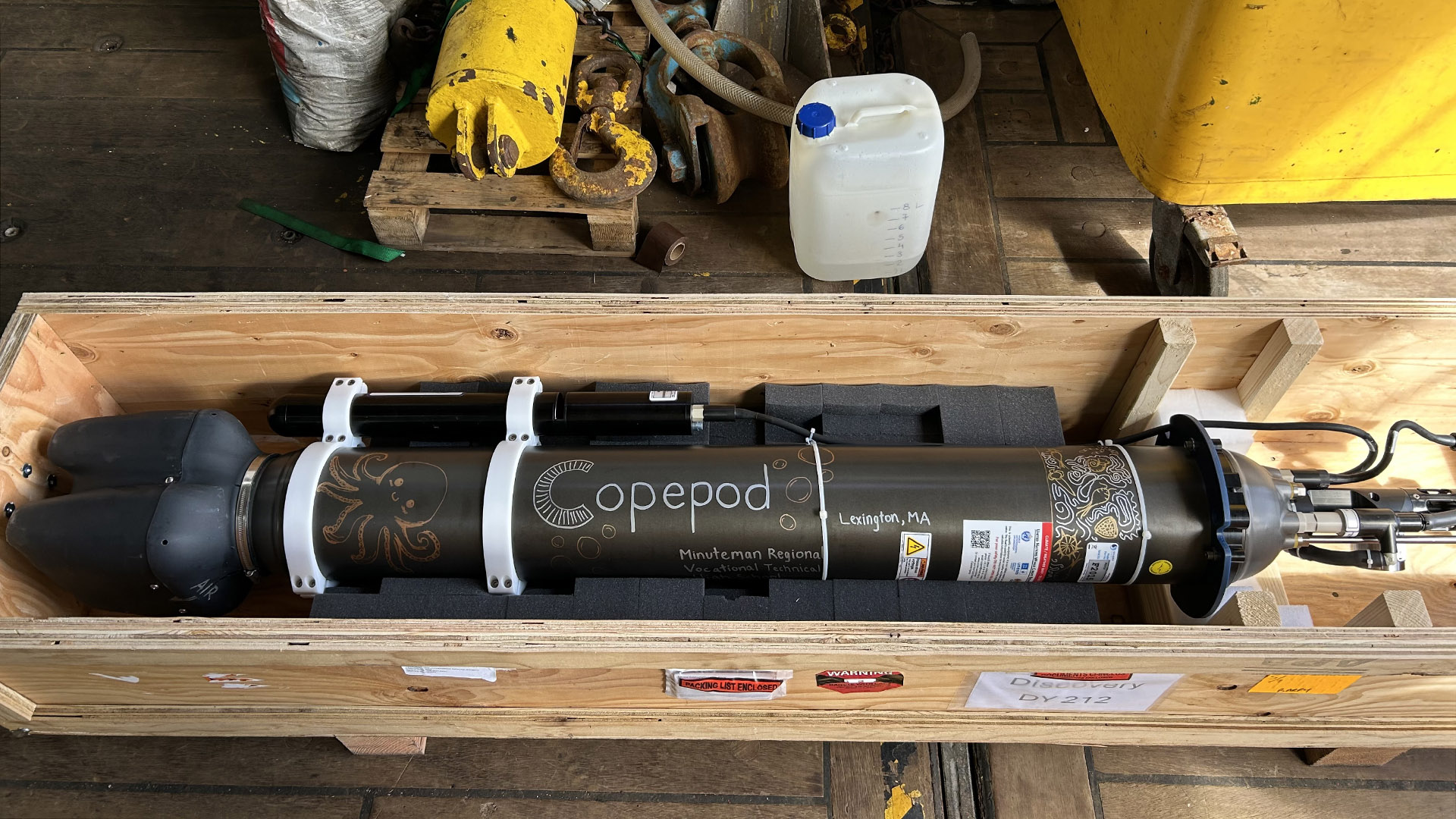
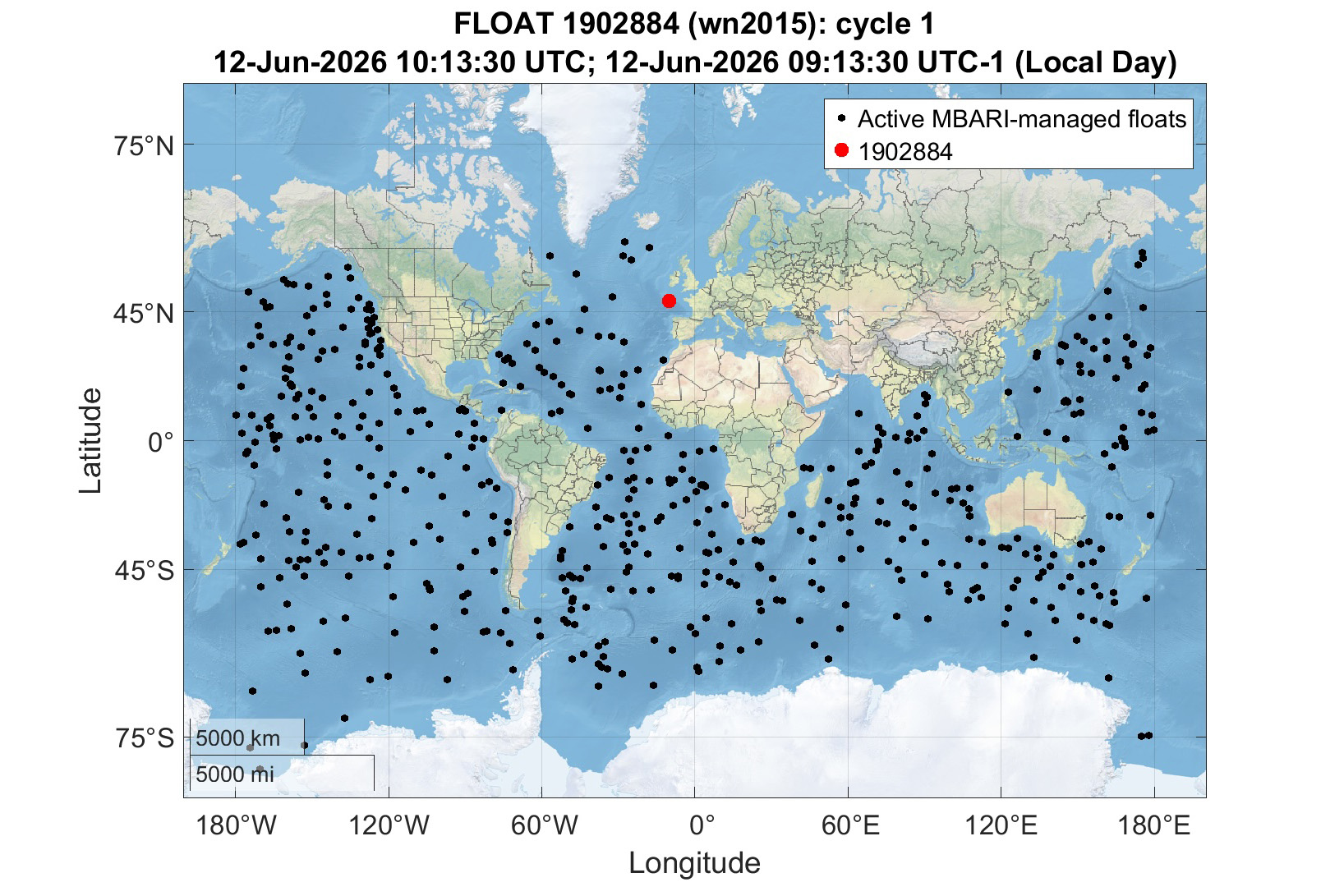
The first BGC float, ‘Copepod’ by students at Minuteman Regional Technical Vocational High School in Lexington, MA. In Copepod’s first profile (below right), we can see a deep salinity maximum that is likely Mediterranean water. Within the top 50 or 100 meters, there’s a peak in chlorophyll a fluorescence, known as the deep chlorophyll maximum.
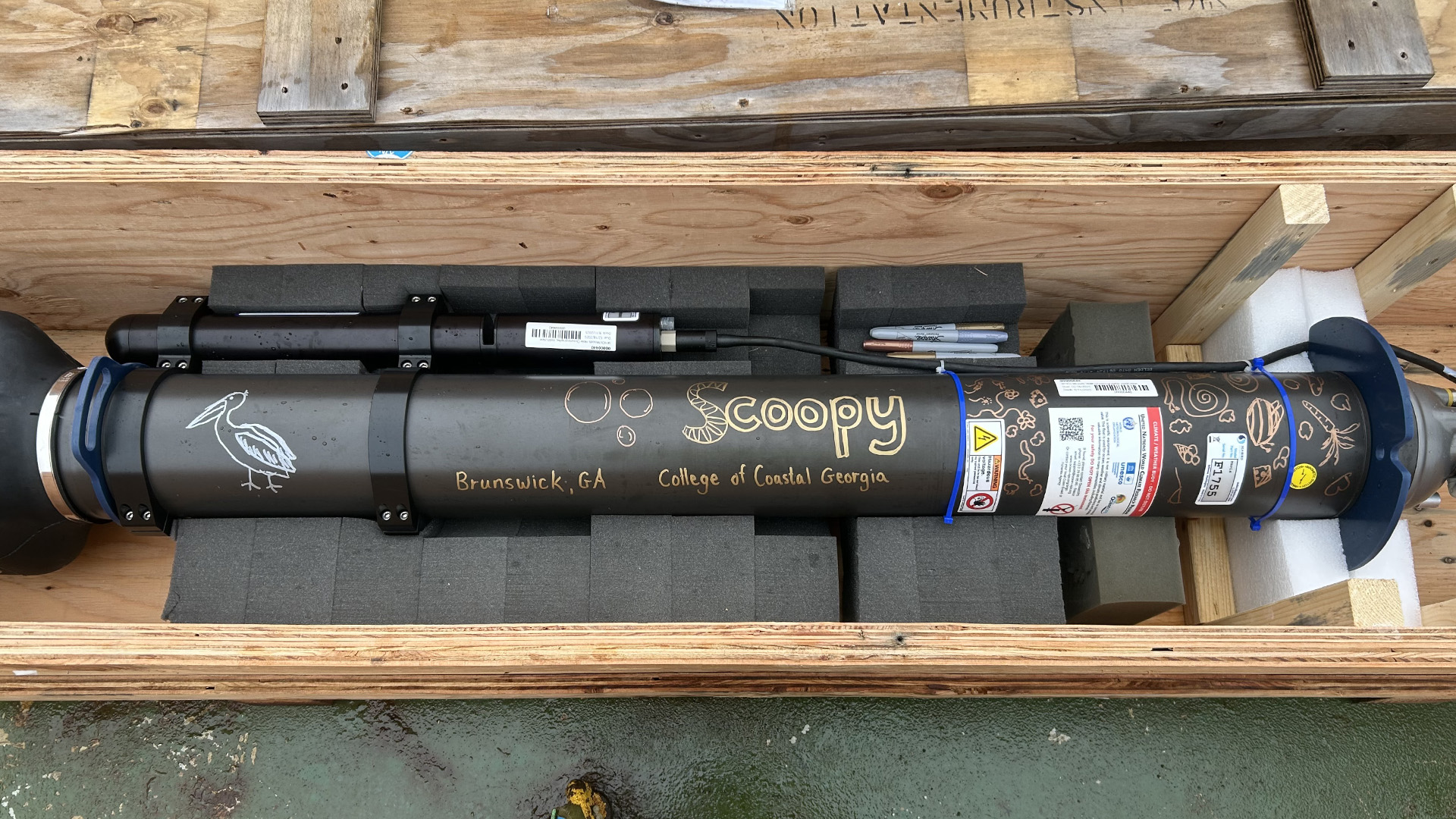
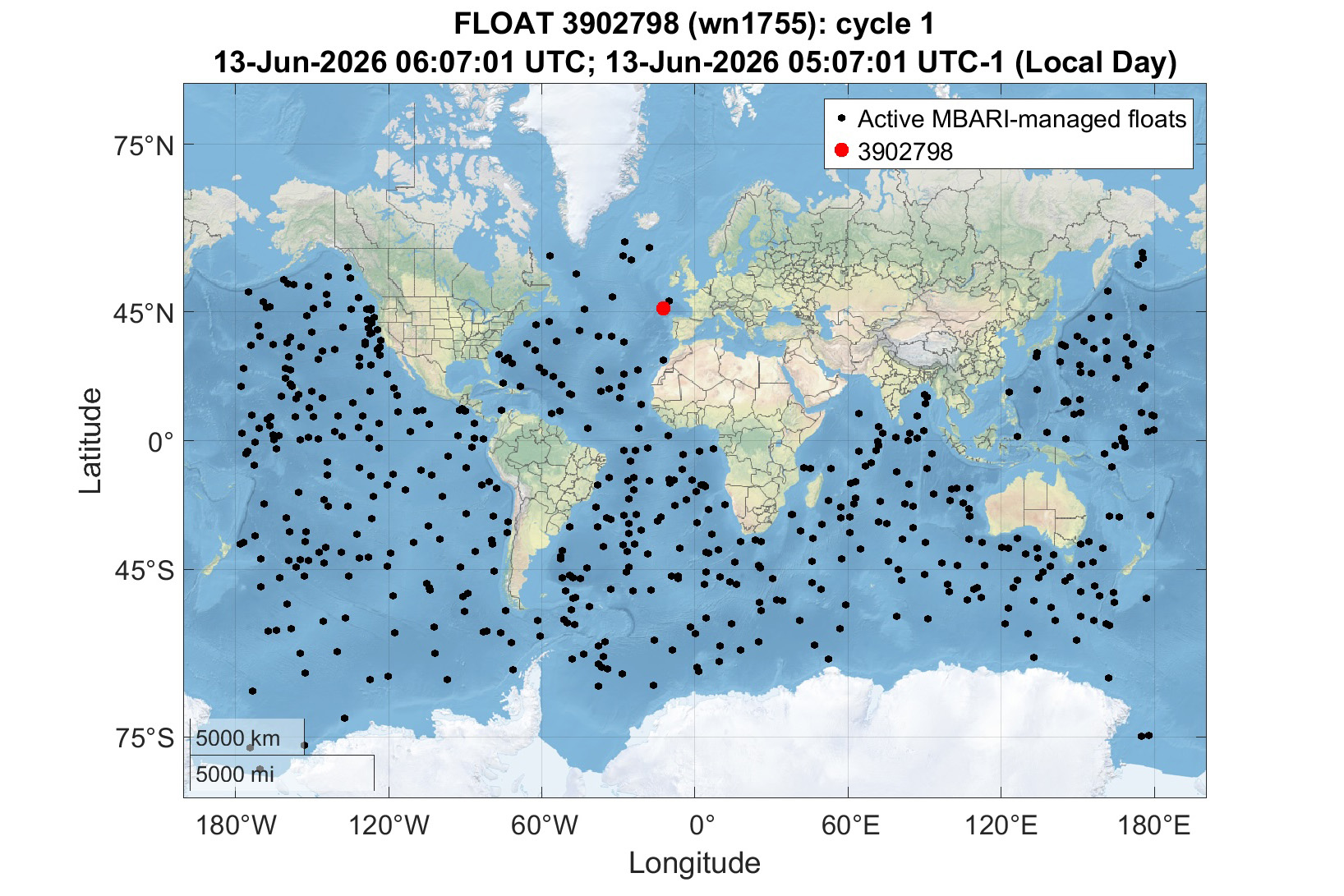
The second BGC float, ‘Scoopy’ by students at the College of Coastal Georgia in Brunswick, GA. In Scoopy’s first profile (below right), there’s a clear oxygen minimum around 800 meters, this was fairly consistent throughout the transect.
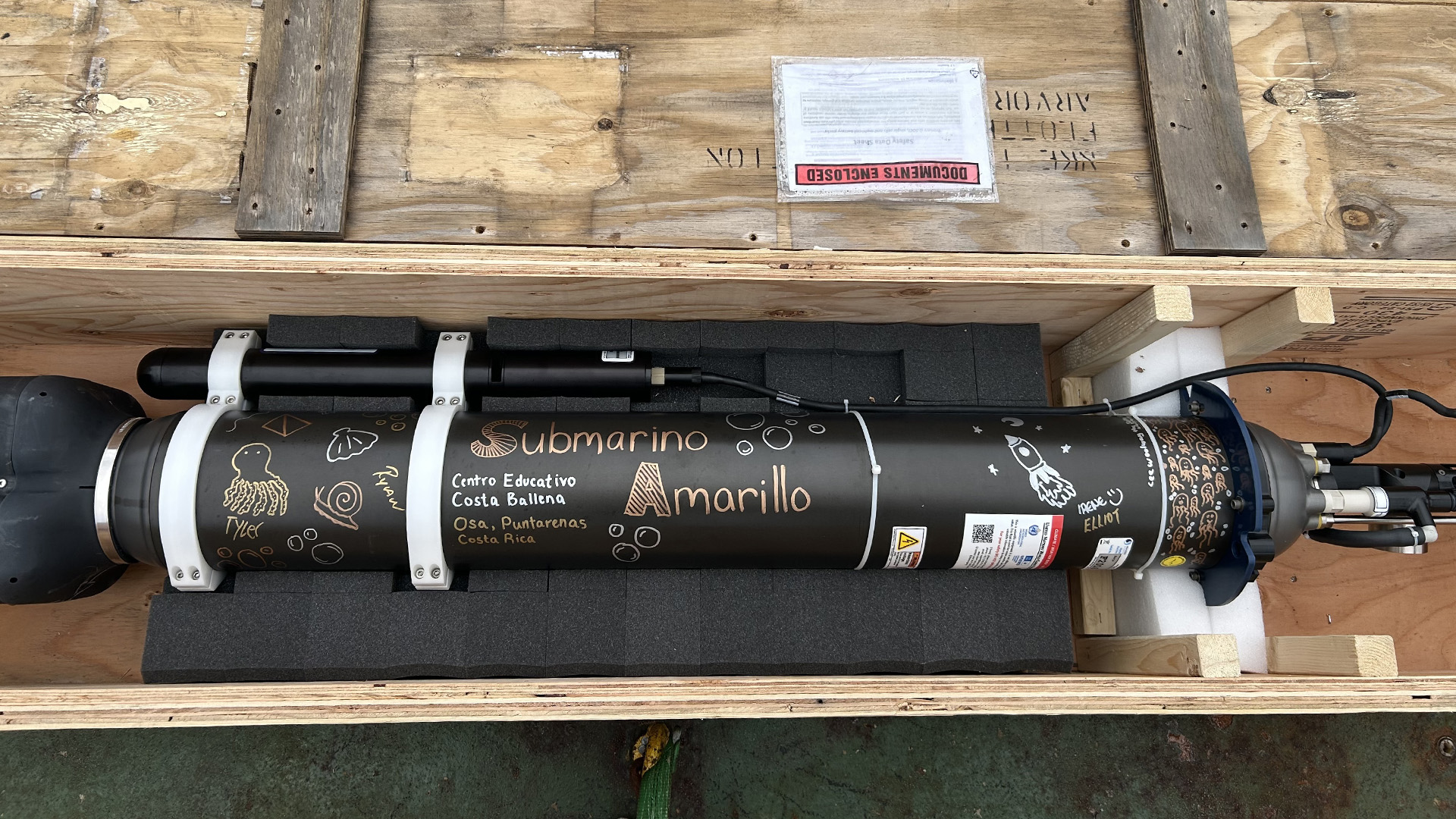
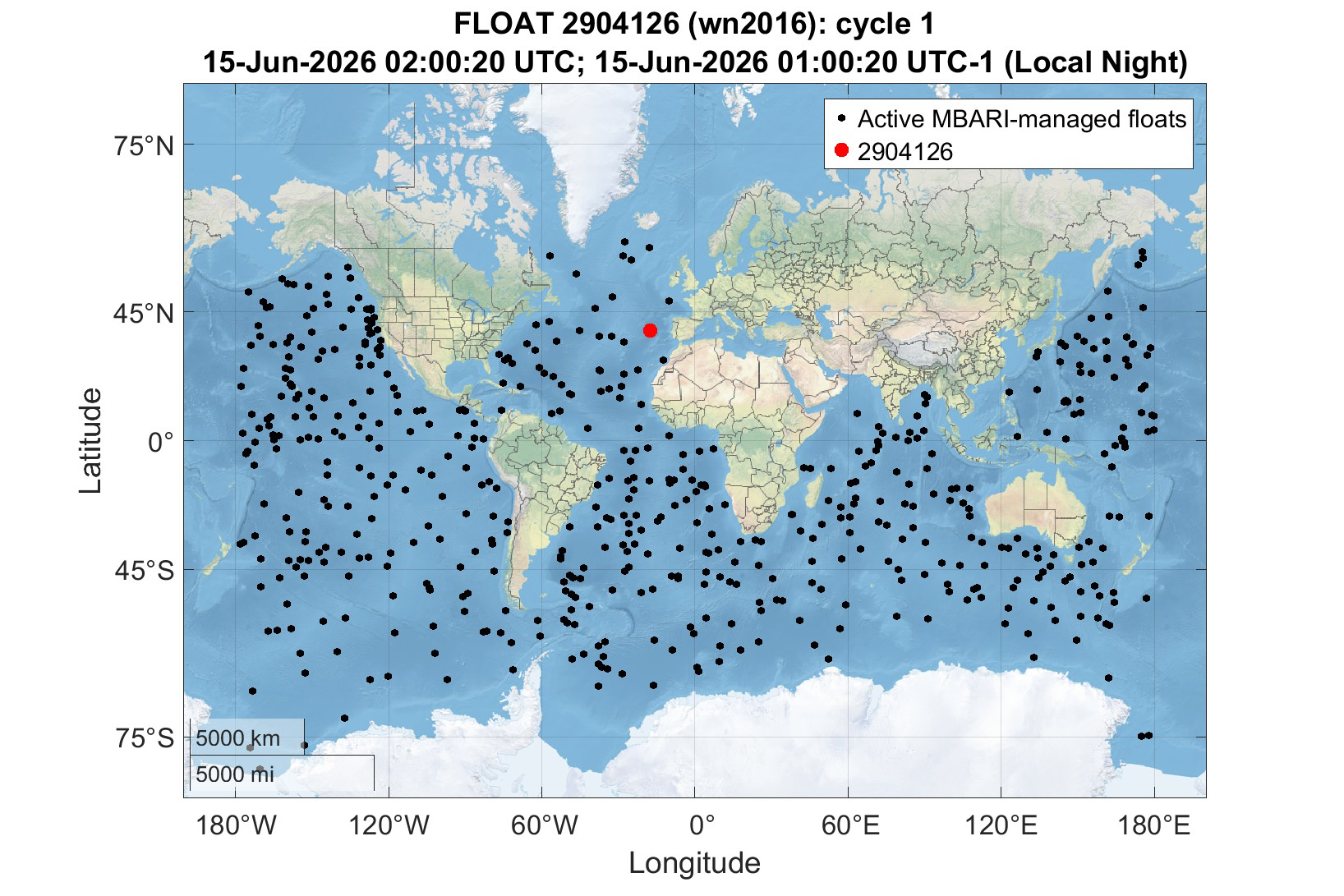
The third BGC float, ‘Submarino Amarillo’ by students at the Centro Educativo Costa Ballena in Osa, Puntarenas, Costa Rica. One notable feature in Submarino Amarillo’s first profile (below right) is what’s called the ‘nutricline,’ where nutrients at the surface are depleted by photosynthesizers and are replenished at depth by remineralization of organic matter.
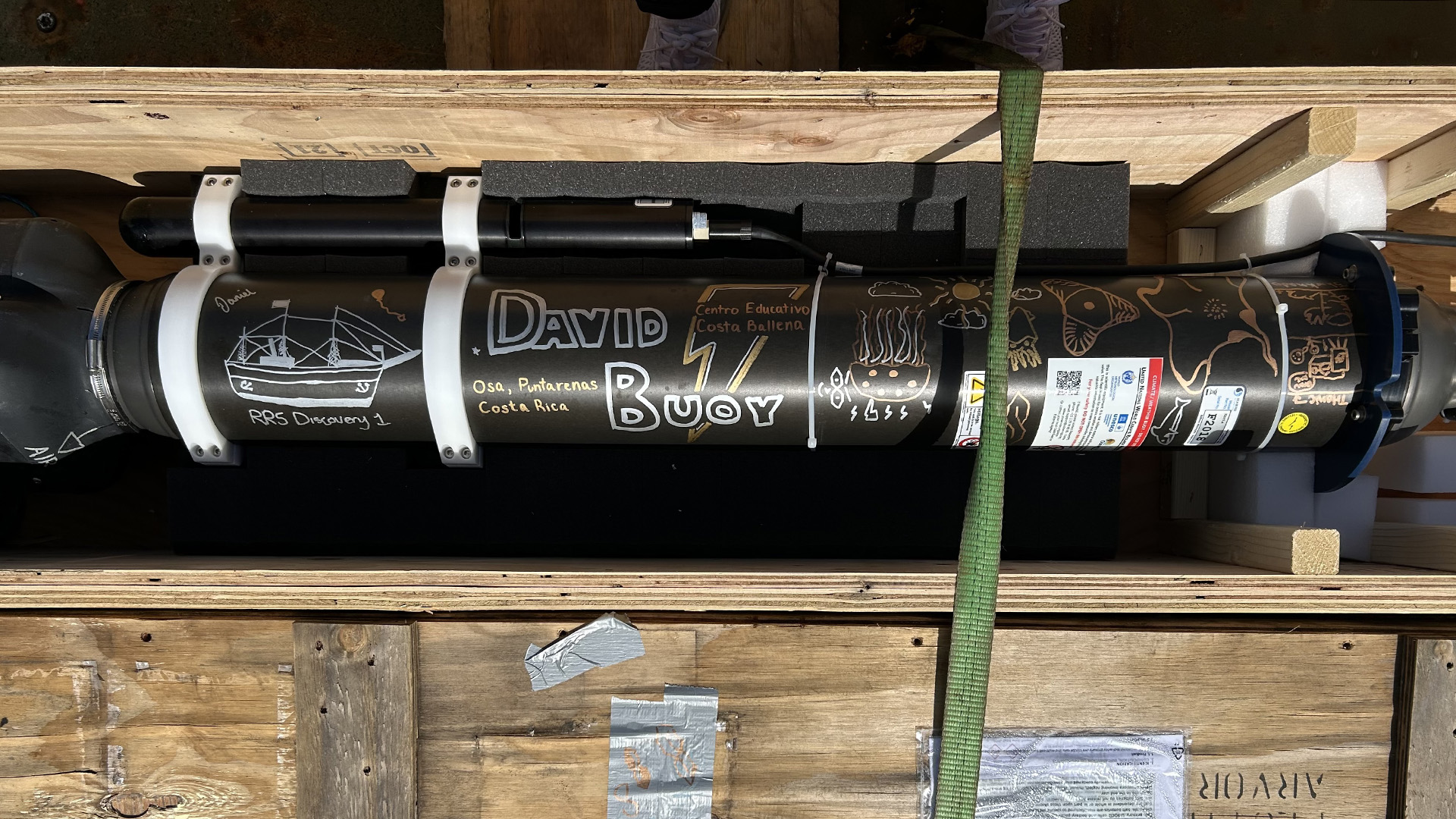
The fourth BGC float, ‘David Buoy’ also by students at the Centro Educativo Costa Ballena in Osa, Puntarenas, Costa Rica. David Buoy’s first profile (below right) demonstrates the nutrient poor, or ‘oligotrophic’ character of the water, where the chlorophyll a fluorescence peaks at a lower value than at other deployment locations.
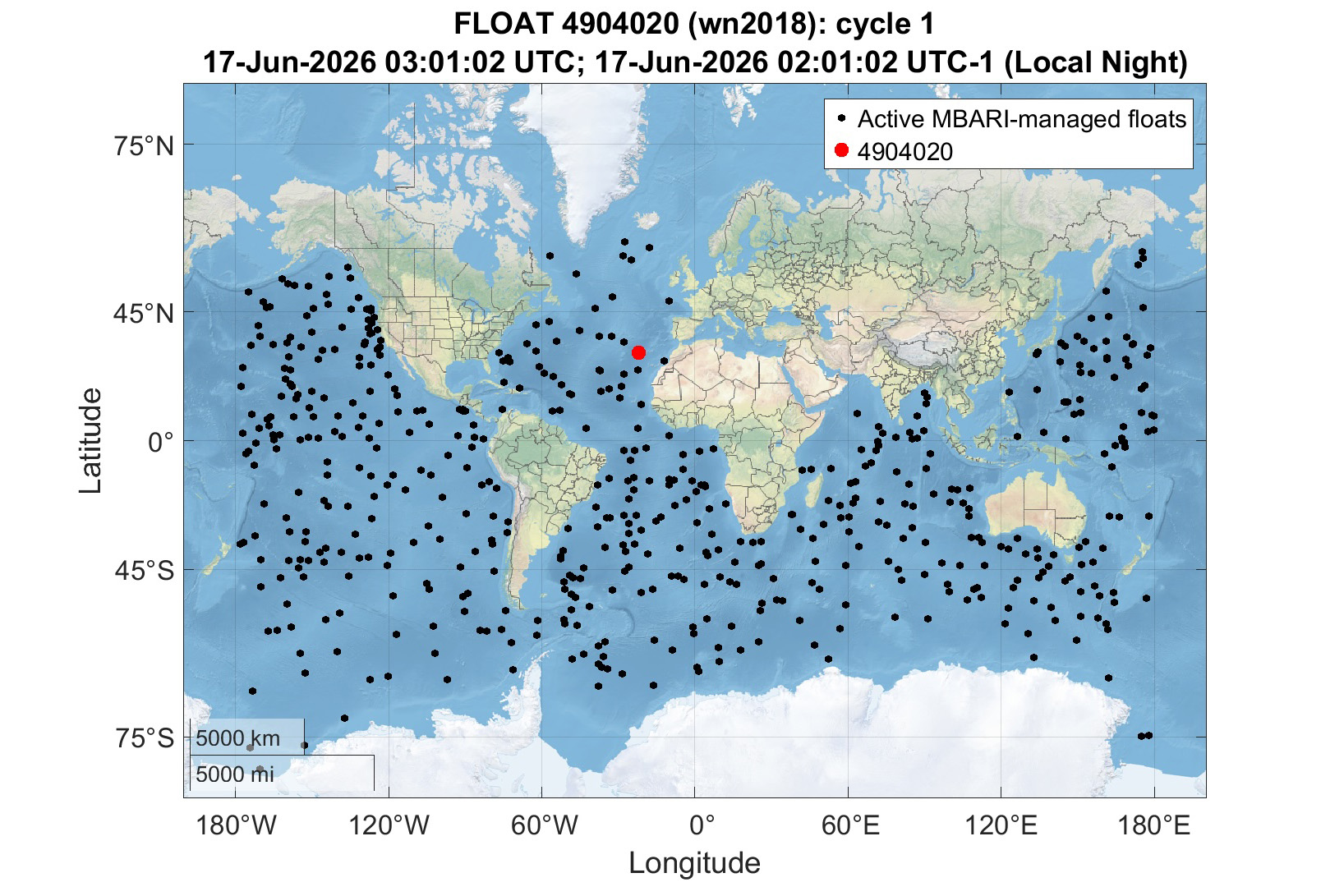
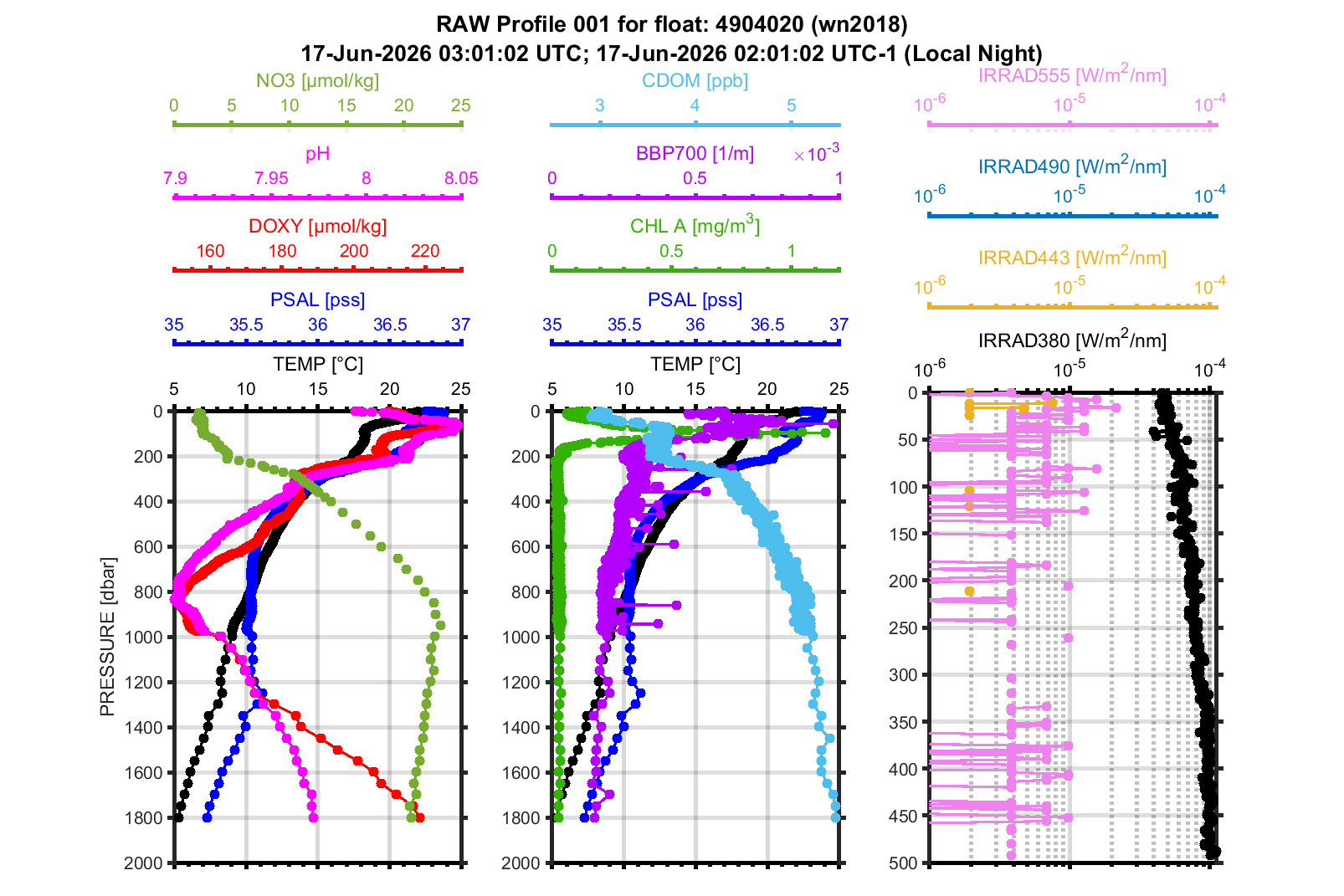
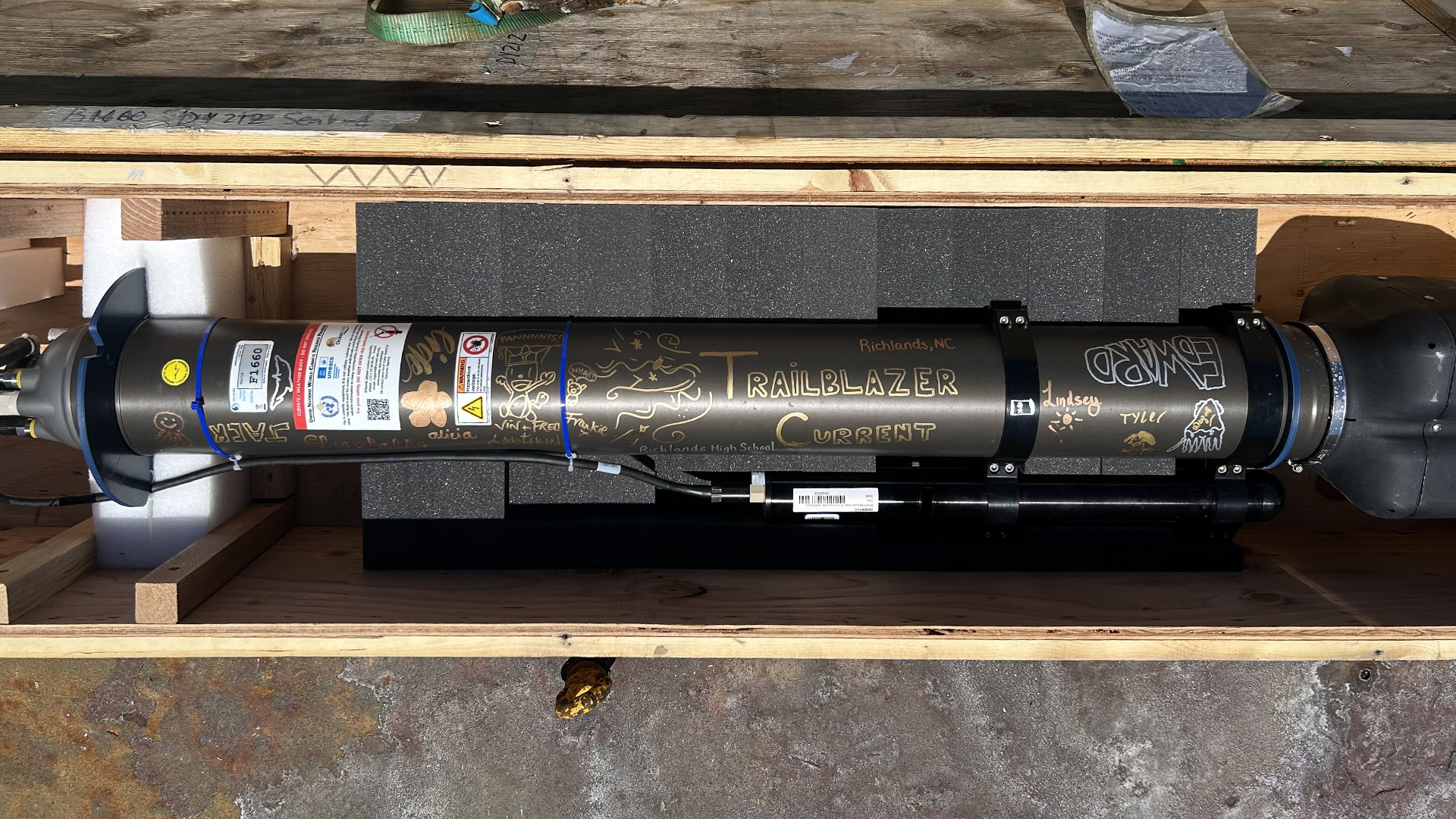
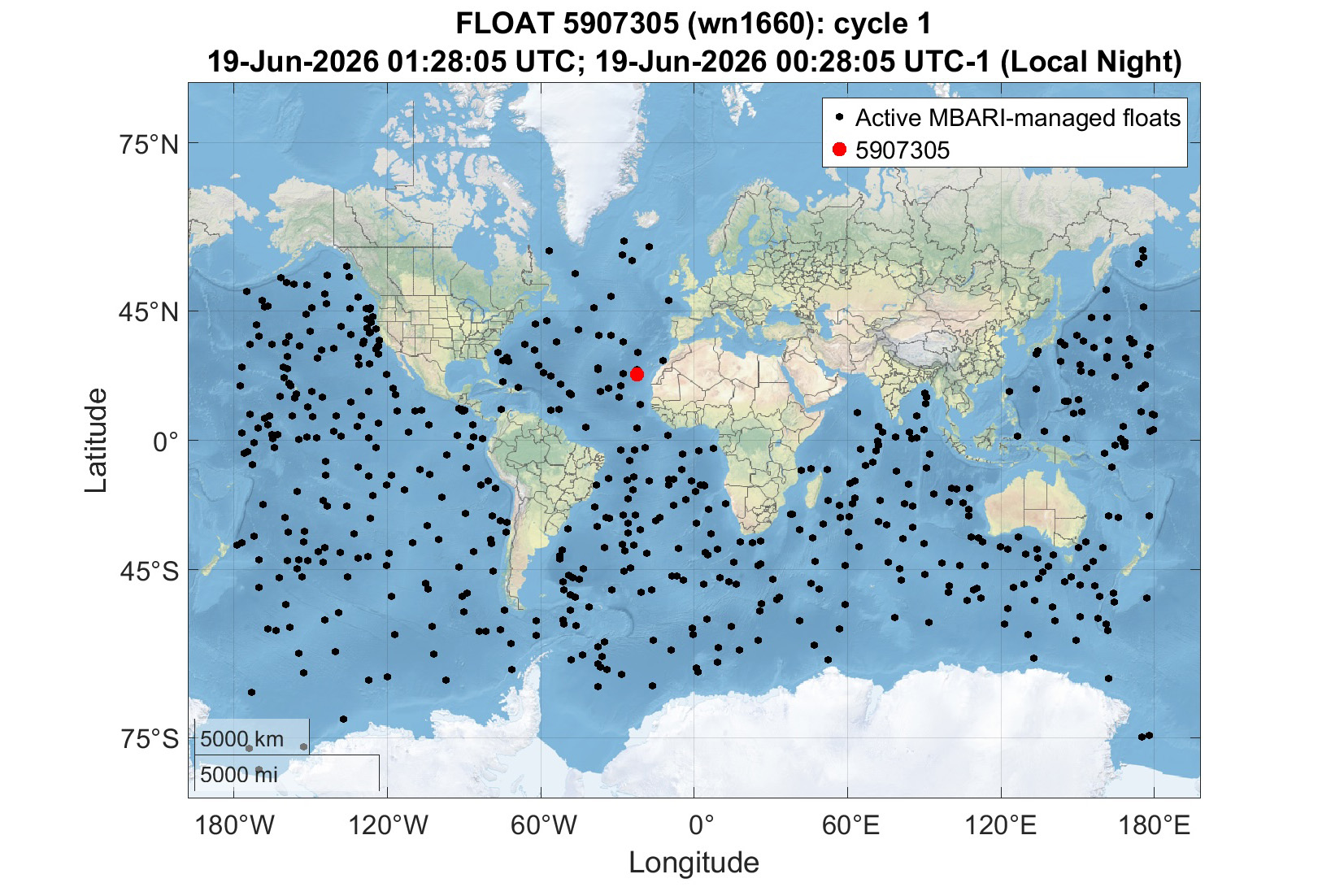
The fifth and final BGC float, ‘Trailblazer Current’ by students at Richlands High School in Richlands, NC. In Trailblazer Current’s first profile (below right), we see similar trends in pH and oxygen signals, owing to their interconnection via photosynthesis and respiration.
A huge thank you also to everyone on the COCO-VOC cruise who put on their artist’s caps helped decorate the floats!
About the Author— Amanda Pinson is a PhD student at Massachusetts Institute of Technology and Woods Hole Oceanographic Institution (MIT-WHOI Joint Program in Oceanography) as part of the Biogeochemical Ocean Observing and Modeling (BOOM) lab, and is onboard as the the Argo float ‘wrangler’ for this cruise.