
A Fourth Float in the Water
Our fourth float, adopted by Downingtown East High School and named “Bea’s Betta,” was deployed on May 4th
On May 4th I got the chance to deploy another float. This float adopted by Downingtown East High School and named “Bea’s Betta” was deployed around 9:00 PM on a clear night, and without many waves this deployment went very smoothly. Ion, a graduate student who was on watch at the time and I deployed this float off the stern of the boat while the crew and technicians watched. It has been amazing to interact with the crew and watch as scientists are allowed to do more hands on work the more time we spend on board.
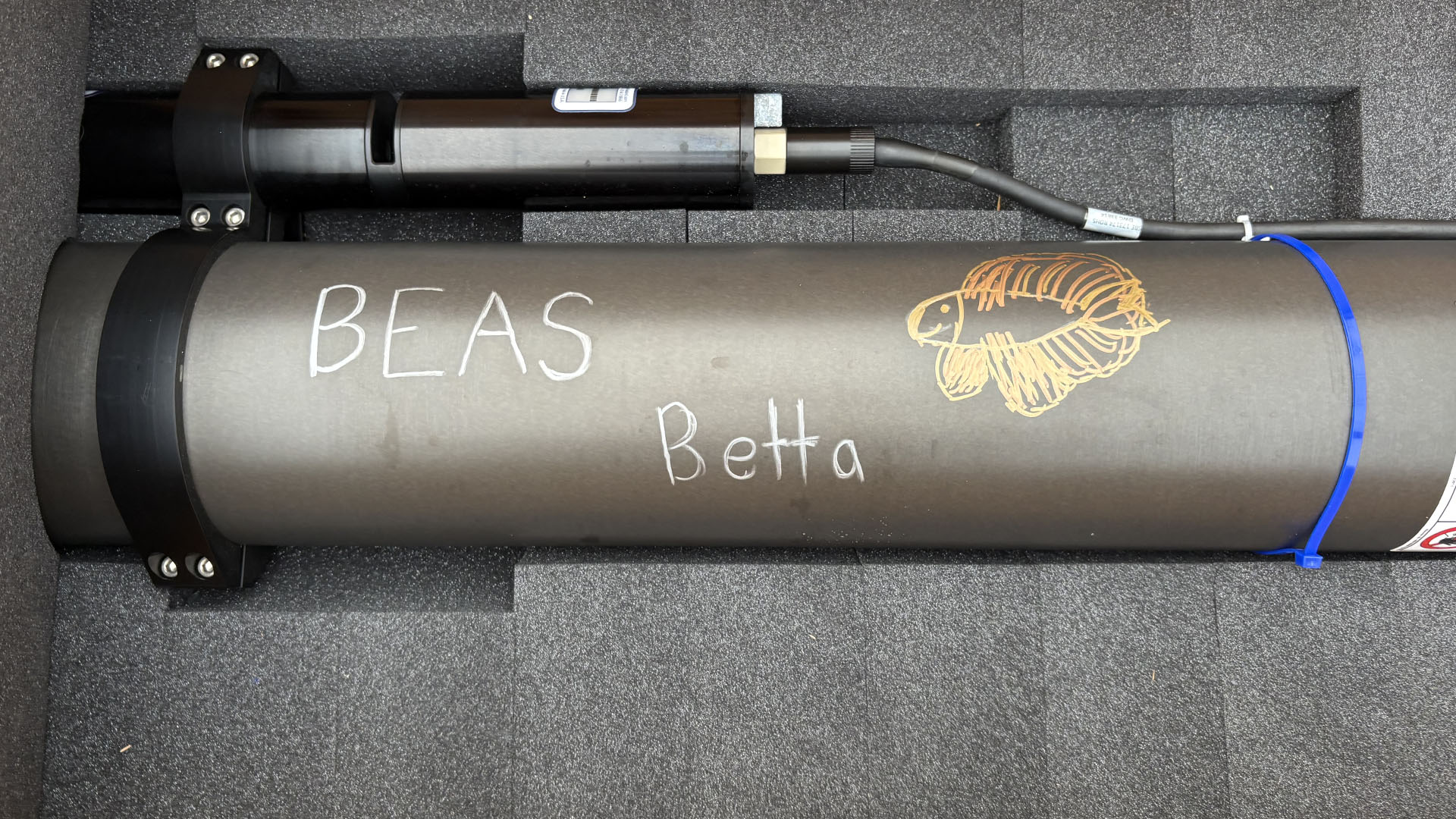
Bea’s Betta decorated; photo by Paige McKay
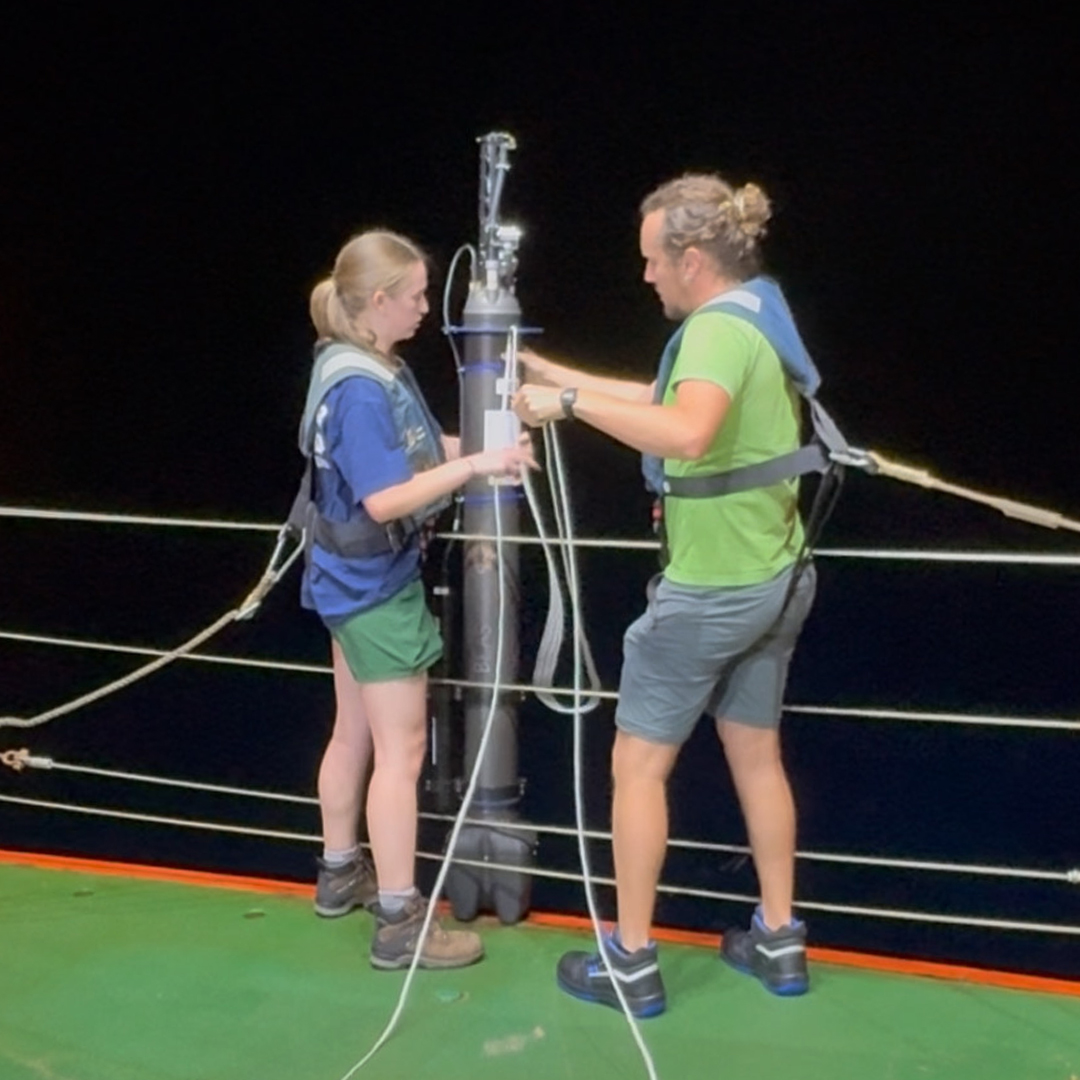
Ion and I deploying Bea’s Betta; photo by Daniel Santana Toscano
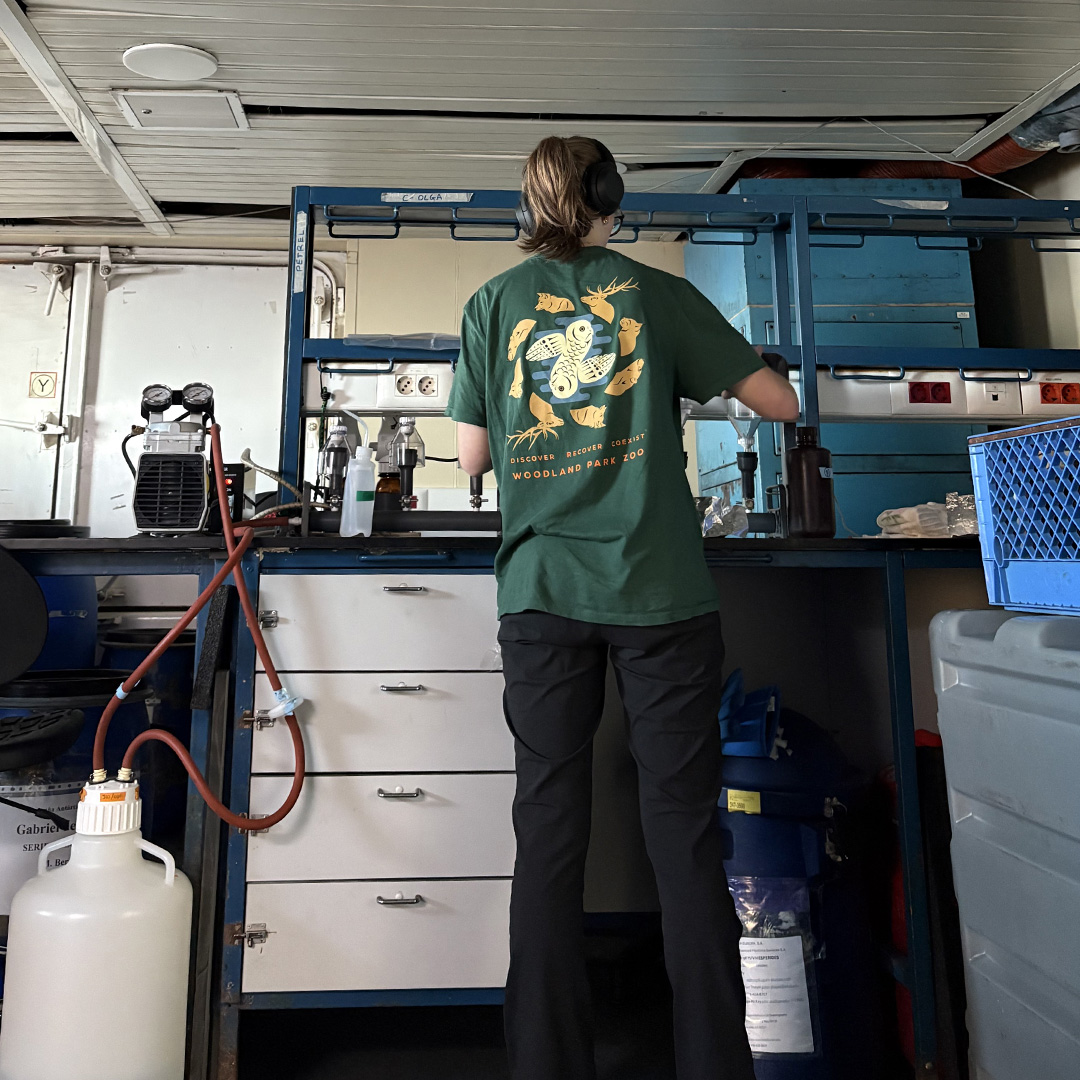
Filtering HPLC/POC samples in the lab; photo by Paige McKay
Right before the deployment, I took water samples from the CTD rosette that is sent down to collect water from various depths of the ocean. This is another part of my responsibility on this cruise that is super important for these deployments. I collect water for pH measurements, High-Performance Liquid Chromatography (HPLC), and Particulate Organic Carbon (POC). pH measures how acidic or basic the ocean is and HPLC/POC measures the amount of plankton and photosynthesis that is happening in this area. Having these water samples helps the Argo team ensure that the sensors on each BGC float are accurately measuring this environment when they first get deployed. These comparisons of lab analysis and sensor readings helps to validate the data of each float so the scientists that use this data can be confident in the measurements they use for their research.
Two of my mentors, my professor, Dr. Sasha Seroy and my boss in the Argo Lab, Rick Rupan have helped me understand just how important the process of data validation is. Through the Ocean Technology Center, they both help students better understand the data that is collected in the ocean—not only how the data is collected, but also why it’s important to understand the environment you are measuring, how your sensor fills these needs, and how to calibrate and double check your sensor’s accuracy before it is deployed. This understanding is not only important for students like me who want to become technicians and work with sensors daily, but also for my peers who want to become research scientists. This knowledge helps them understand what sensors they might need to utilize to fill their scientific objectives, and how to make sure the data they use for their research is representative of the region they are studying.
Both Sasha and Rick have given many students a broader appreciation for ocean technology, and their impact on my time at the University of Washington has been huge. I appreciate them both every day for introducing me to ocean technology, teaching me the basics, answering all of my questions, listening to me when I am stuck on a problem, helping me work though my challenges, and supporting me whenever I seek out other opportunities to learn more about this field.
Sunset on the deployment evening; Photo by Paige McKay
About the Author—Paige McKay is a sophomore at University of Washington School of Oceanography and works in the UW Argo Float Lab.