
6/28/2026
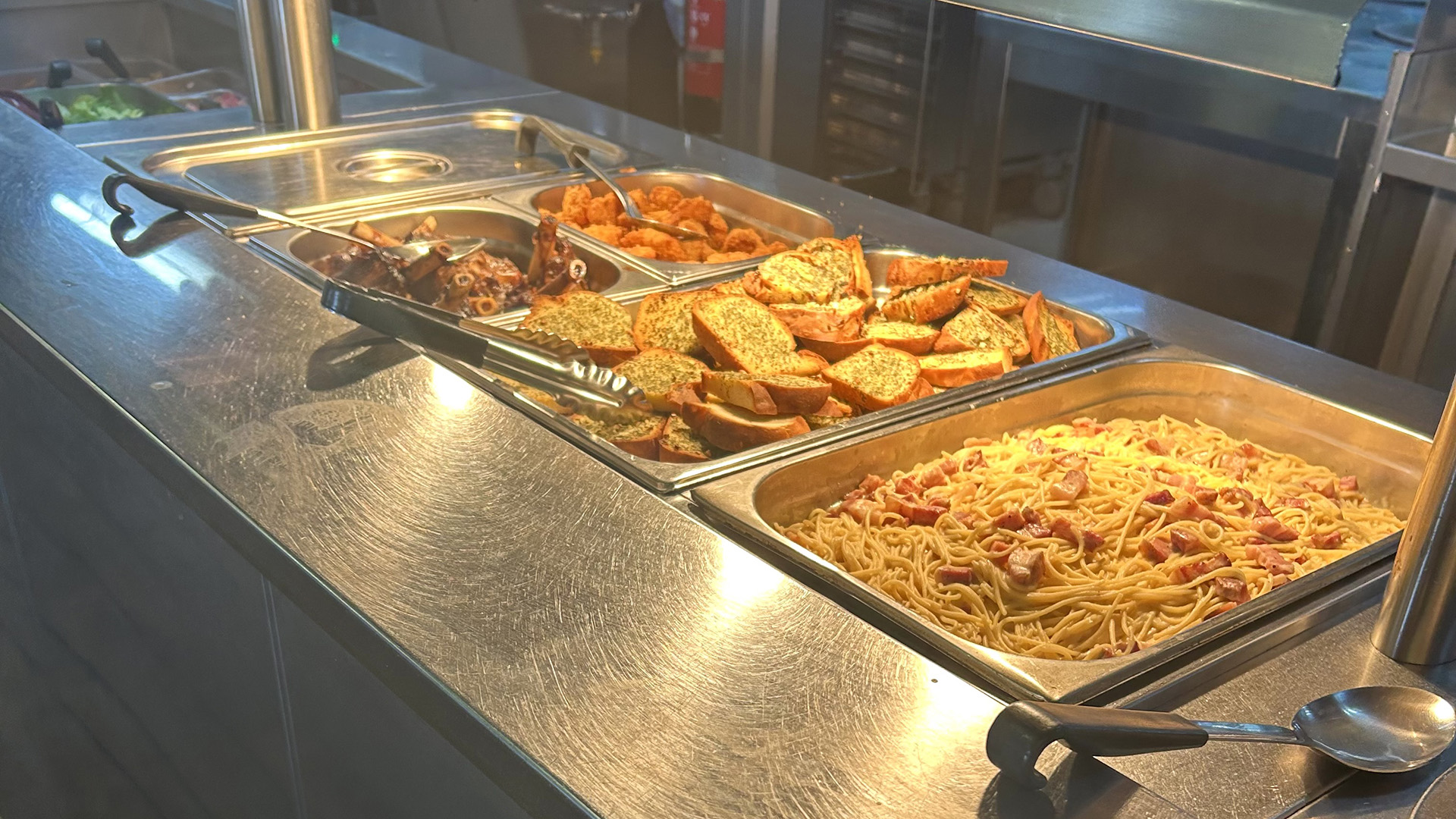
All the floats have been deployed and I’m now just a passenger on the Discovery until our port call in Mindelo. One highlight for me has been meals on the ship. We have warm and cold buffet-style options for breakfast, lunch, and dinner (plus a dessert) that always taste beyond gourmet, along with fresh-baked bread and snacks available any time of day. Never before has a midnight bowl of cereal and a stack of Jaffa cakes hit the same.
The timing of the CTD cast before sunrise means once the rosette is back on deck and the floats deployed, the sun is just starting to poke above the horizon.
We’re a little more than two weeks into the cruise and I’ve had a chance to do a couple loads of laundry – a luxury I’m amazed we have all the way out here. It’s also been fun to get to know people and play games in the ship’s bar. The FIFA World Cup is happening while we’re on board, so important games like England’s matches are played on the TV in the bar as well.
Untethered to any direct work on the ship, I’ve gotten to float around and learn more about the research being done here. The scope for COCO-VOC ranges from measurements in the ocean to the atmosphere, and sometimes a mixture between the two. There are all kinds of research projects happening while we’re underway – starting from the back of the ship, surface microlayer (SML) sampling takes place regularly around midday using mesh screens that are dipped just below the water’s surface then drained into sample bottles. Measurements from this layer can tell researchers about the removal of ozone and production of volatile organic compounds (VOCs) at the sea surface.
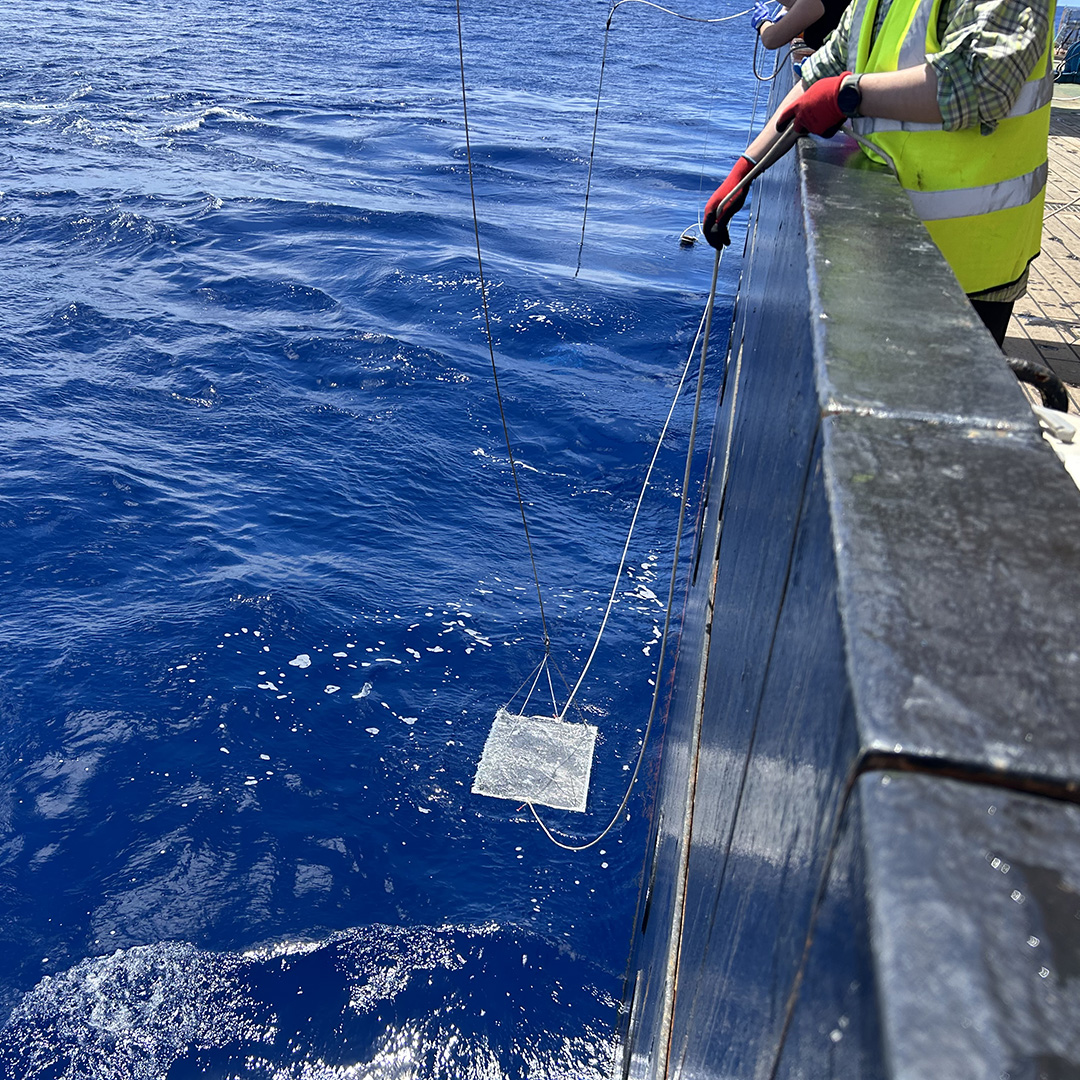
Sea surface microlayer (SML) sampling over the side of the ship directly from the ocean.
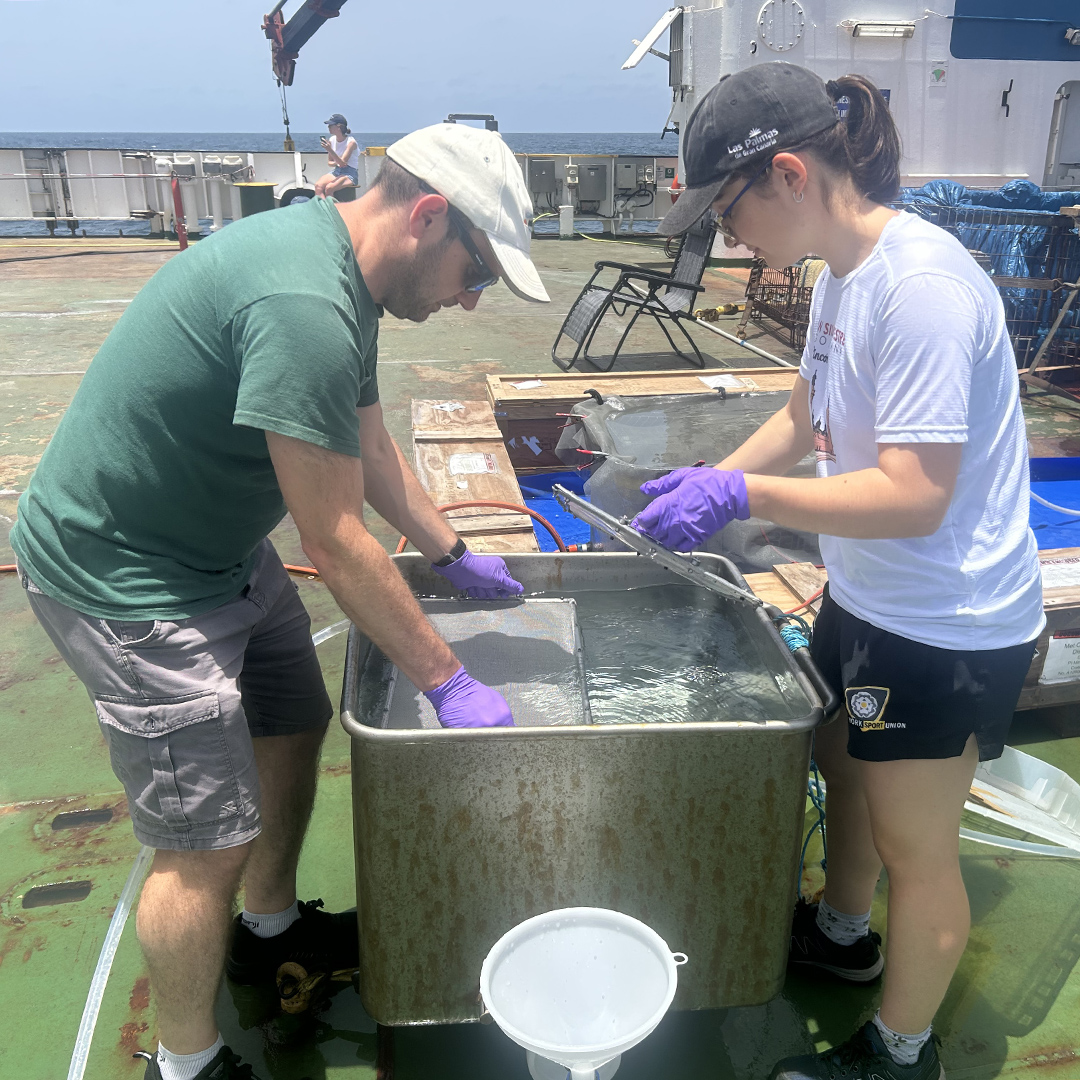
Dr. Thomas Bell and PhD student Irene Monreal-Campos from Plymouth Marine Laboratory (PML) here are taking SML samples using a tank on the deck of the ship, a novel method being tested.
Also concentrated on the back deck of the ship are incubation experiments conducted by researchers from the Institut de Ciències del Mar in Spain. Surface water sampled from the CTD rosette is subjected to a range of treatments and incubated in simulated surface conditions on the ship’s deck. Throughout the day, measurements of the samples for the removal and production of climactically relevant VOCs, including dimethyl sulfide (DMS) and methanethiol (MeSH), shed light on the factors affecting budgets and cycling of these compounds.
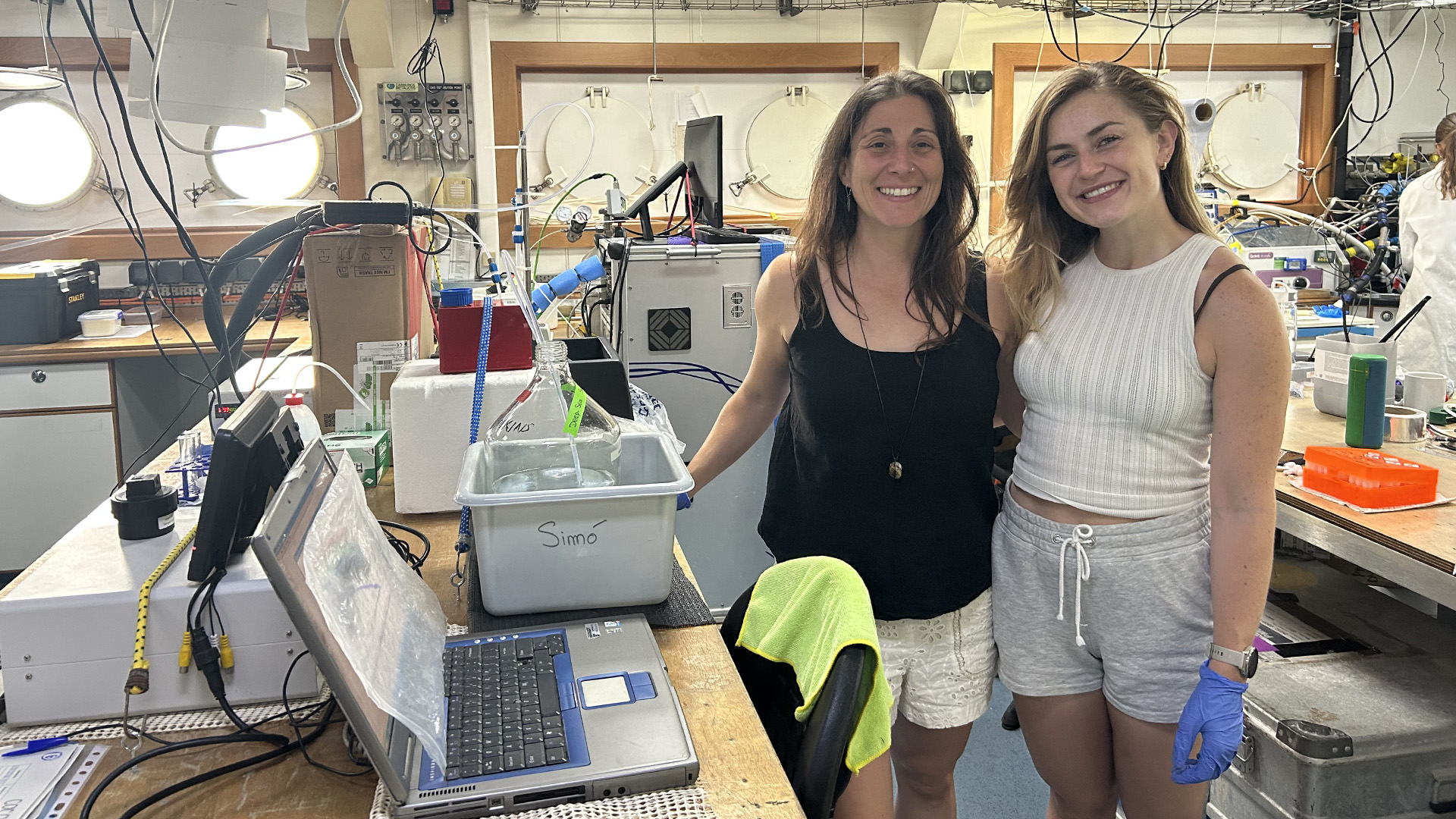
Dr. Liz Deschaseaux (left) and doctoral student Lide Jansen Van Vuuren (right) in the Discovery deck lab after their final incubation sampling of the day.
Working forwards from the back deck, at the very top center point of the ship, radiosonde balloons have and will continue to be released every day of the cruise both at midnight and midday, when atmospheric conditions are most consistent. The balloons are filled with helium and measure temperature, pressure, winds, and humidity as they rise. They’ll help identify where the atmospheric boundary layer sits, which is important to know when thinking about chemical concentrations in the atmosphere. Because any situation can benefit from some whimsy, everyone gets to decorate a balloon and partake in competition for which radiosonde makes it the highest (so far, that’s over 12,000 meters).
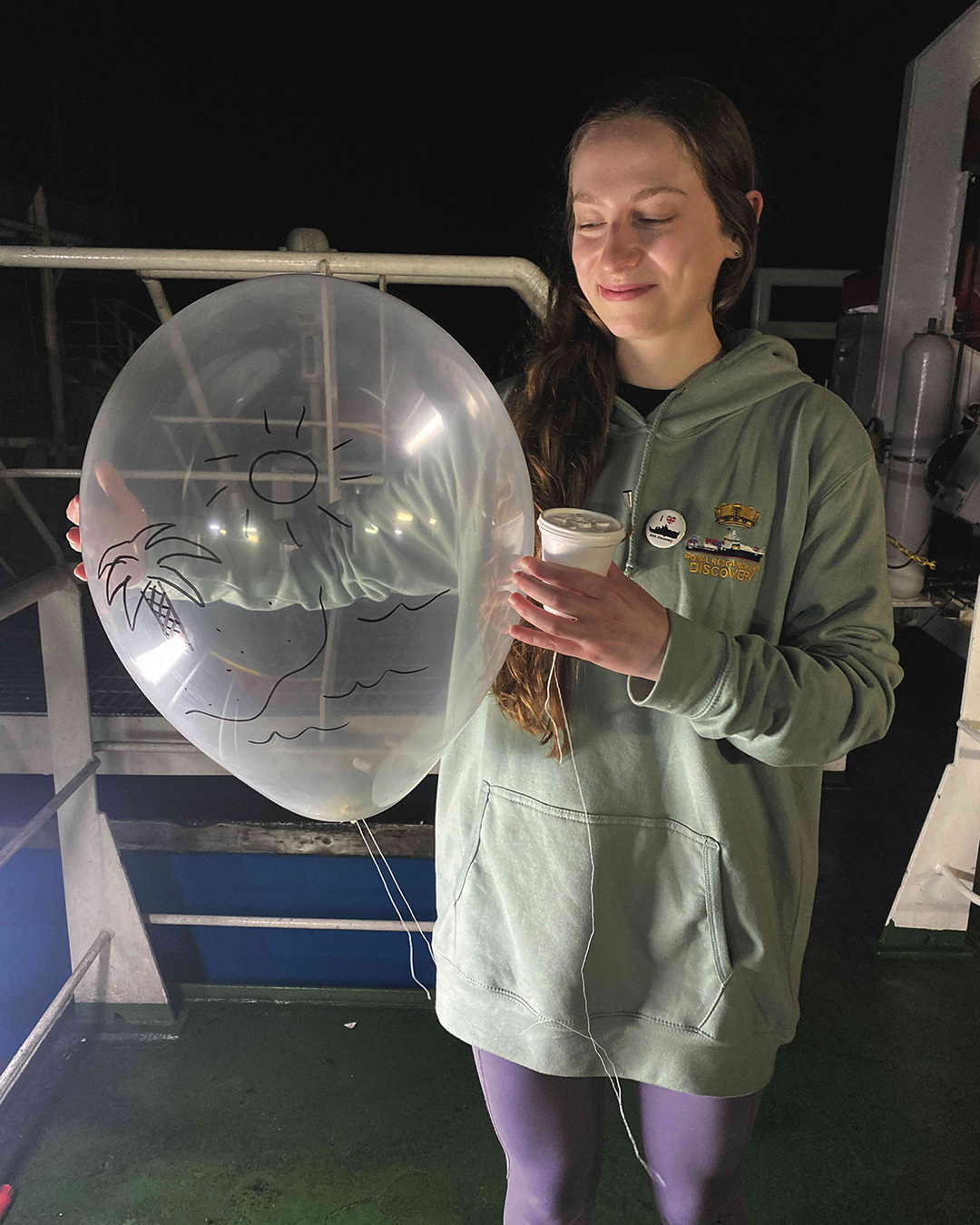
A midnight release with my radiosonde balloon, decorated for the beach I plan to lay out on once we make it to Mindelo.
At the foredeck of the ship, it’s quite busy! There are three large containers situated here which house various instruments from different groups that are conducting atmospheric measurements, where the air is uncontaminated from the ship’s emissions when we’re pointed into the wind. Instruments here range from mass spectrometers, gas chromatographs, laser-induced fluorometers (LIFs), and even a custom-built instrument, all of which measure compounds in the atmosphere like VOCs, nitrous oxides (NOx), sulfur dioxide (SO2), particulates or aerosols, selenium compounds, and hydroxyl radical reactivity.
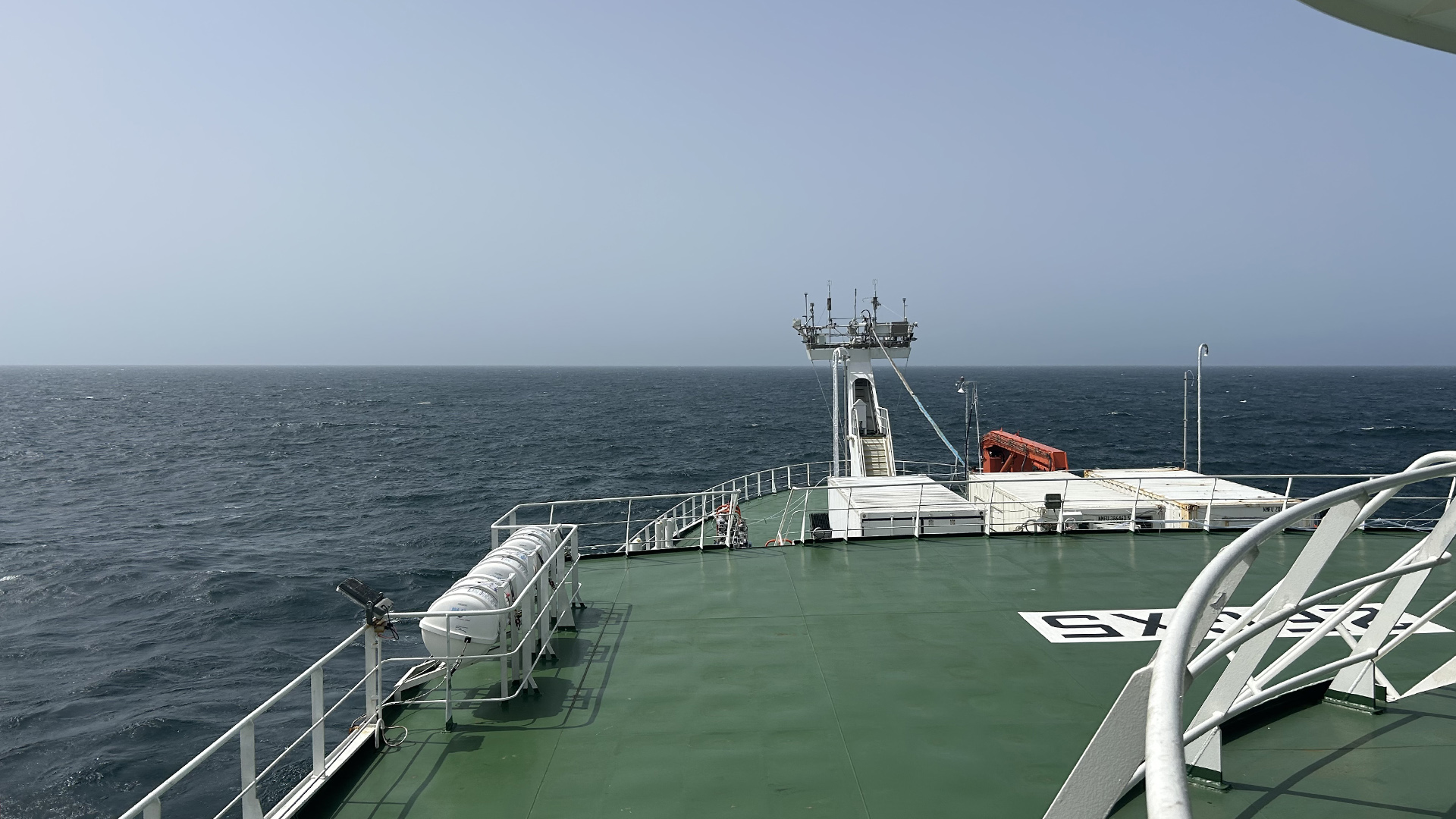
Looking from the bridge onto the Discovery’s foredeck; the three containers and the meteorological platform beyond them.
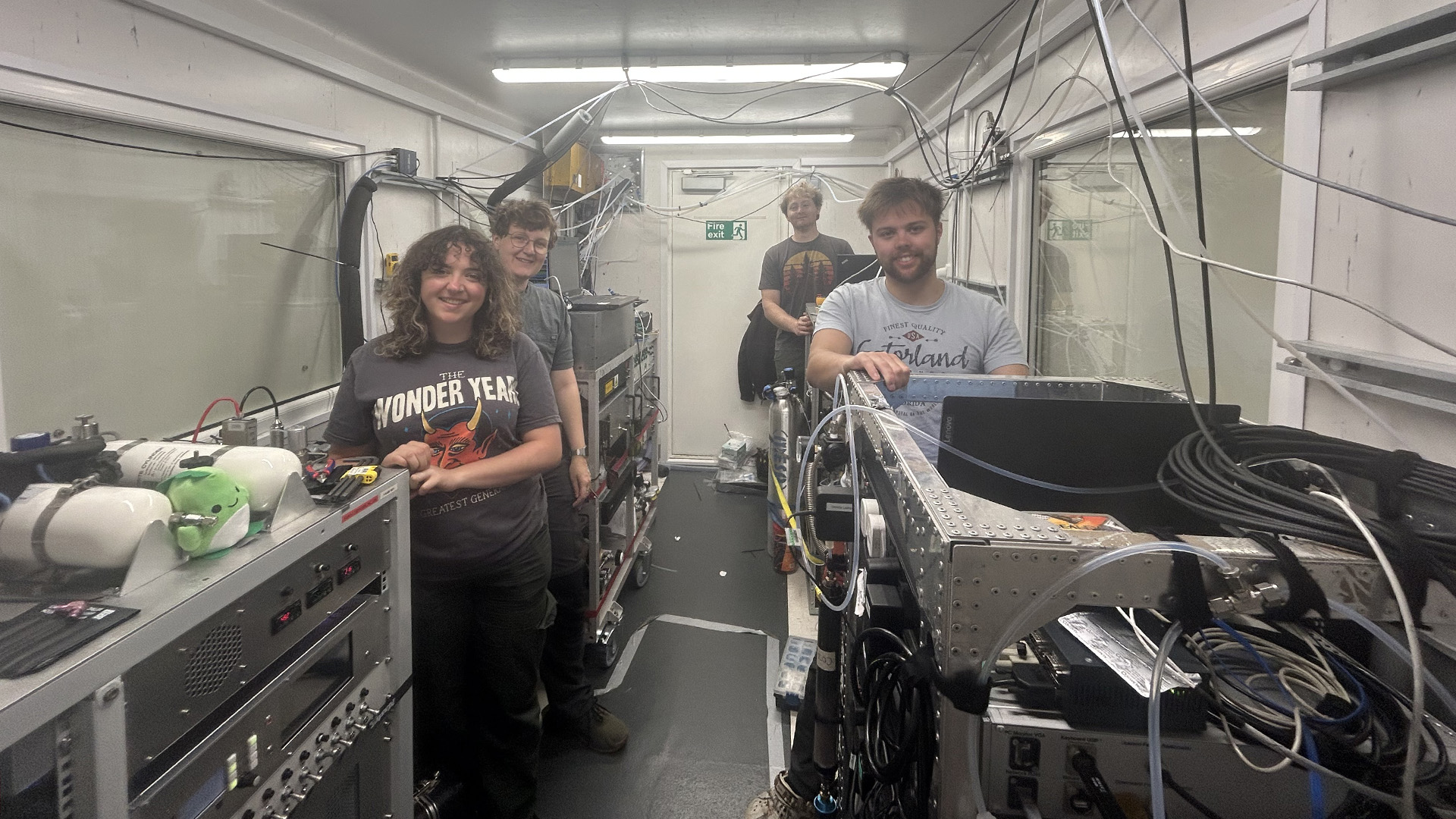
PhD students in the center container on the ship’s foredeck; from left to right: Tara Murphy with the gas-chromatograph mass-spectrometer to measure VOCs, Phin Petherick with two LIFs to measure NOx and SO2, Jared Novelly with a vintage mass spectrometer measuring SO2, and Jake Job with his instrument to measure ozone and NOx.
Some instruments in the containers sample air from the ship’s meteorological platform, a tall structure at the very front of the ship which should have very clean air uncontaminated by the ship’s emissions. This is also where the So-Rad system is that I mentioned in my last post, as well as an aerosol sampler which contains two sizes of filters to capture larger, biological particles and smaller chemical aerosols.
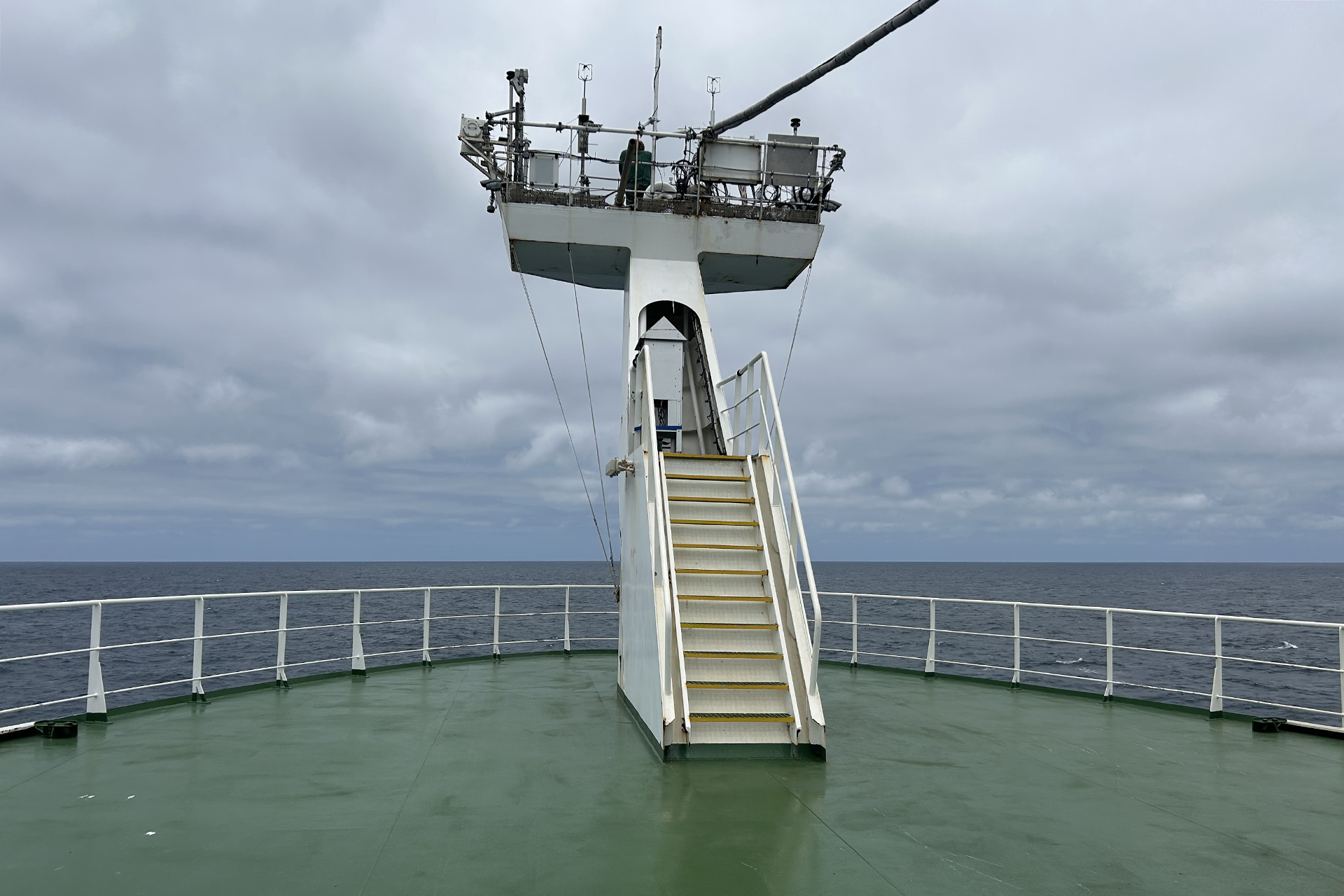
Close-up of the meteorological platform which has a lot of tubing that lead to the containers. The aerosol sampler sits halfway up the platform.
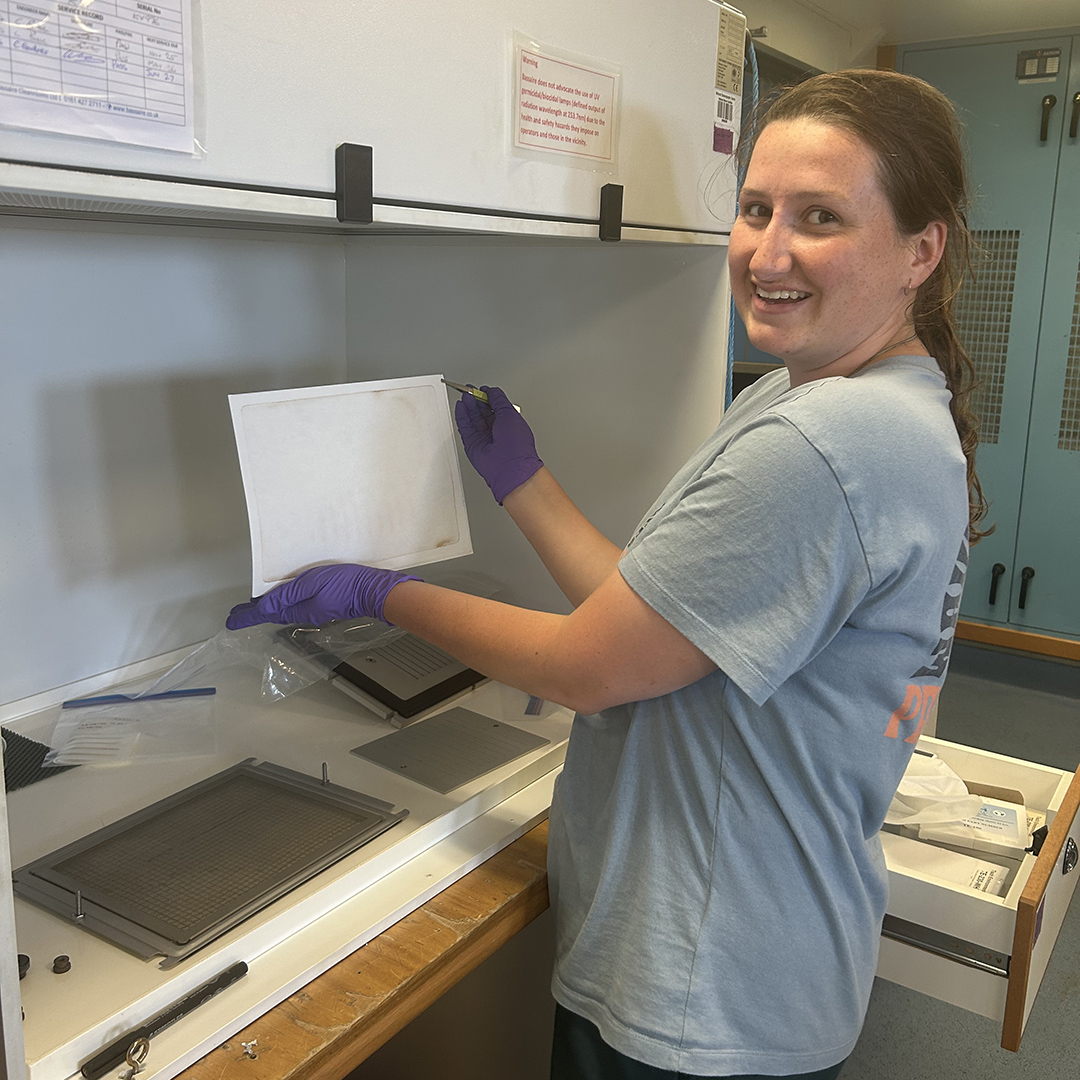
PhD student Kharis Heaven (PML) in the Discovery chem lab packaging up a filter taken from the aerosol sampler.
If you’re interested in learning more about the research within COCO-VOC, check out their website here!
About the Author— Amanda Pinson is a PhD student at Massachusetts Institute of Technology and Woods Hole Oceanographic Institution (MIT-WHOI Joint Program in Oceanography) as part of the Biogeochemical Ocean Observing and Modeling (BOOM) lab, and is onboard as the the Argo float ‘wrangler’ for this cruise.