
The A16S Adventure
Twenty days of icebergs, storms, and water column science across a changing South Atlantic
04/20/2026
Over the past 20 days, we’ve navigated through dense iceberg fields cloaked in fog, outrun storms, zigzagged through a tropical cyclone, and recharged in the warm, heavy air above nutrient-poor (oligotrophic) waters. No two days have looked the same, yet each has been anchored by the steady rhythm of precise, fast-paced science that defines a GO-SHIP cruise. Currently occupying Station 70, we can reflect on the dramatic changes we’ve observed along the A16S line. Just as striking as the shifting conditions at the surface is the science unfolding from the data we’ve collected below.
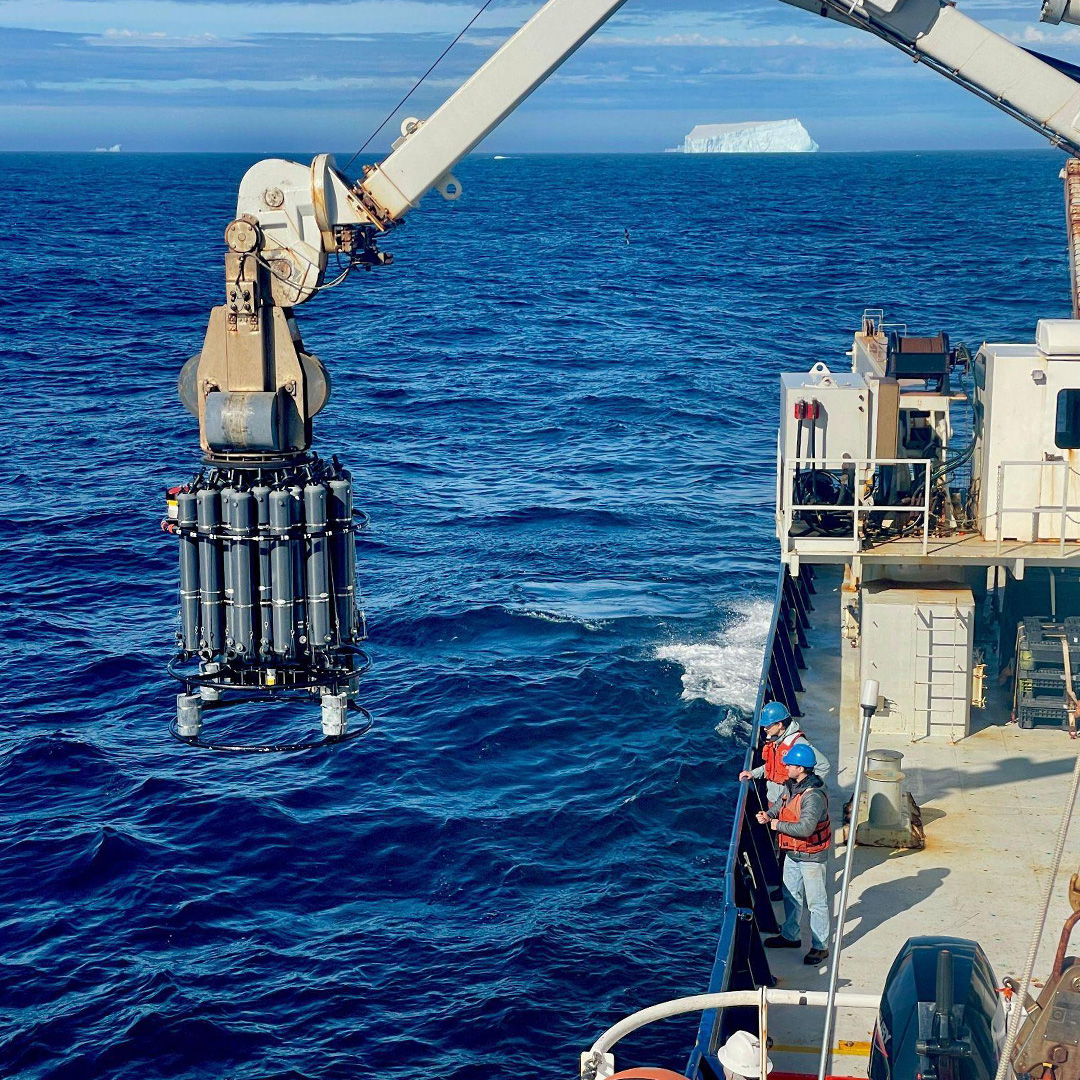
Deploying the CTD rosette while surrounded by icebergs by Star Dressler
At every station, we deploy a CTD rosette (Figure 1), an instrument package equipped with 24 Niskin bottles that collect water at different depths. The CTD is cast (lowered down) to the deep ocean (5,000–6,000 meters) and fires a bottle at various depths between there to the surface. Samples are collected by each team in order to measure a suite of parameters. Each layer reveals a distinct set of physical, biological and chemical conditions. Now, when I told my family I’d be spending months at sea measuring oxygen, they joked about why I had to travel to the middle of the Atlantic to study something so abundant… but measuring dissolved oxygen in our ocean actually reveals a lot about how water moves, ages, and supports life beneath the surface.
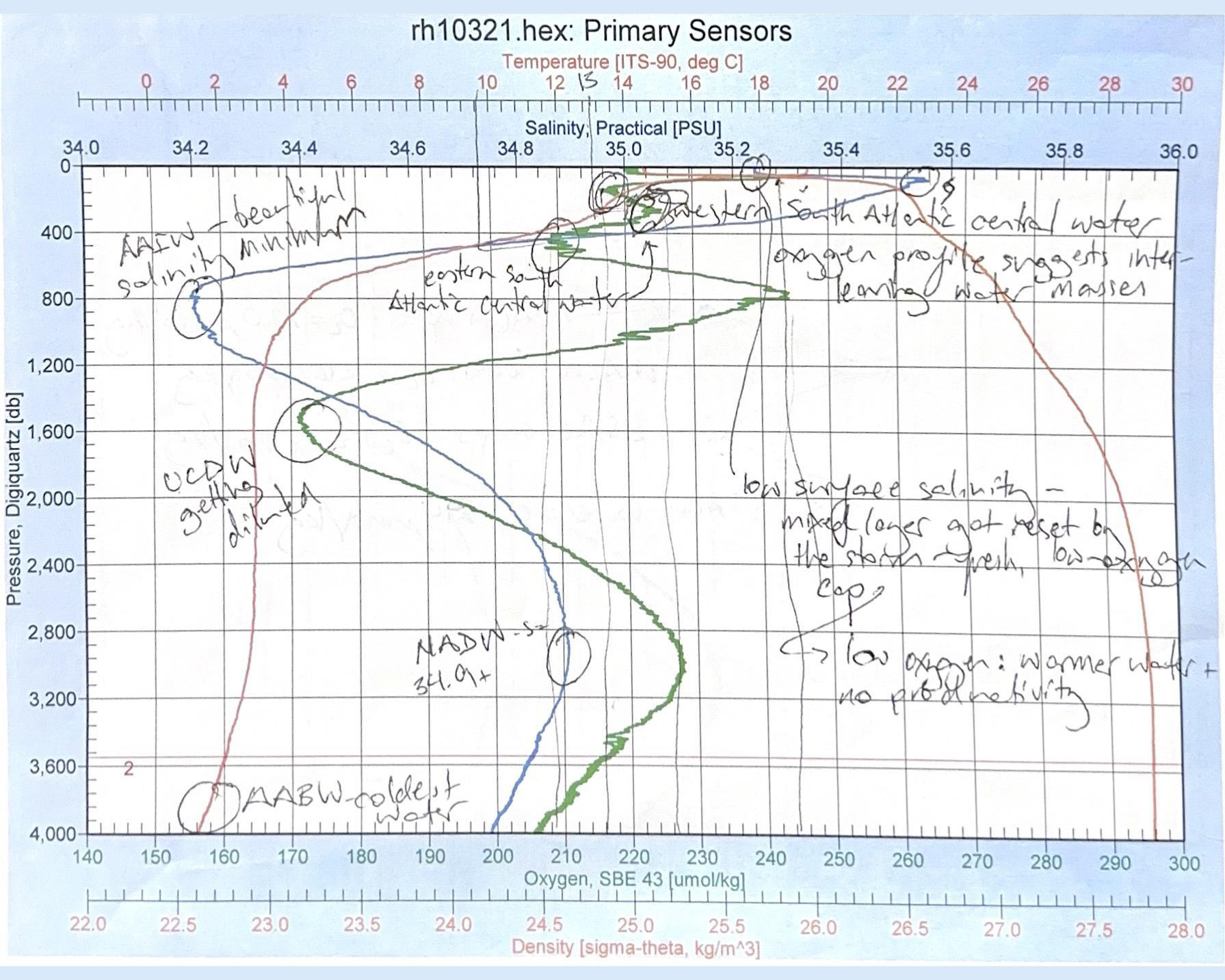
Station 32 profile annotated by Co chief scientist: Colette Kelly
For example, data collected at Station 32 shows a textbook-like image of the South Atlantic water column. At the seafloor, Antarctic Bottom Water (AABW) is sitting cold and dense, some of that water hasn’t seen the surface for hundreds of years. Sampling this niskin is almost always accompanied by numb hands; in these southern stations there was even a hot water bucket to defrost your fingertips after collecting. Above that is North Atlantic Deep Water (NADW), which formed in the North Atlantic and has been slowly moving south ever since. Then closer to the surface is Antarctic Intermediate Water (AAIW) which stands out with a salinity minimum and oxygen maximum, meaning it had more recent contact with the atmosphere. When we measure something like oxygen, we can understand how long that water has been isolated from the surface and how it’s moved around the ocean.
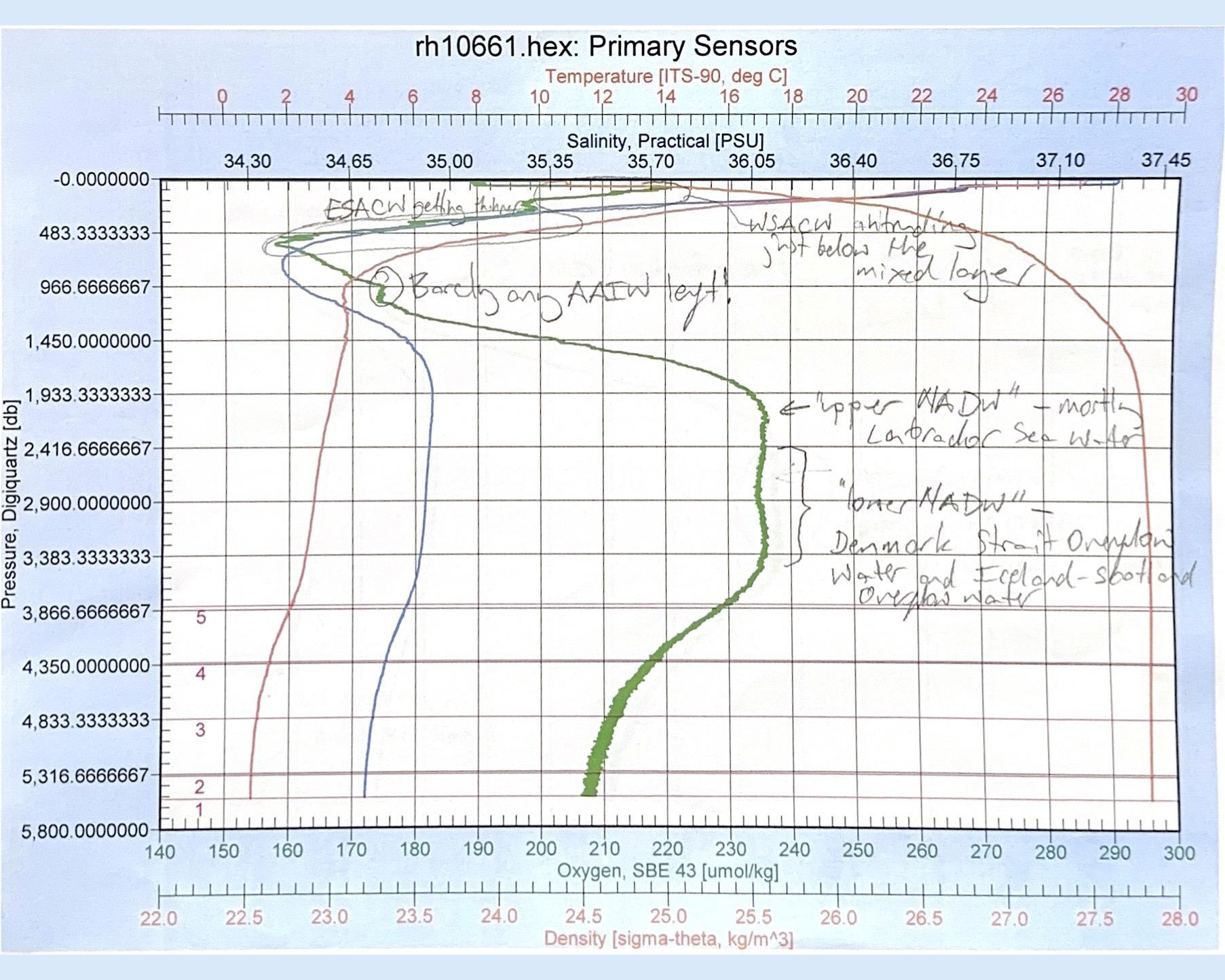
As we move north, we can already see those layers changing. By Station 40, the NADW is “younger” (more recently at the surface), while the AAIW is getting older as it travels and mixes.
So while we see incredible differences through the water column as we progress through our line we also see unique glimmers of excitement from different parameters based on conditions and location. One of the most remarkable aspects of a hydrographic cruise like this is the collaboration across scientific disciplines.
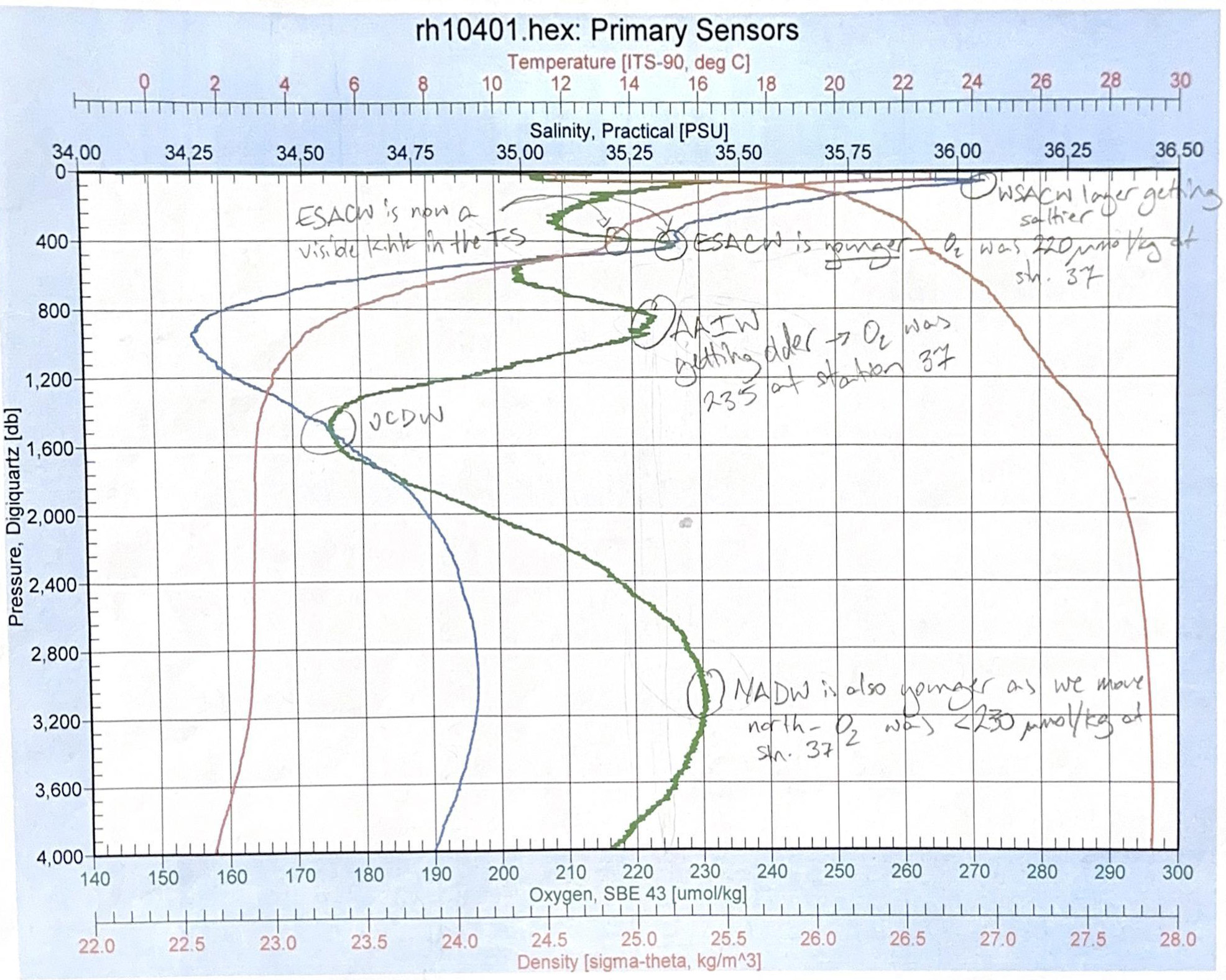
Profiles from stations further north
The icebergs of the South Atlantic created an opportunity for the Revelle crew to show off a navigational feat.
While most days came with thick fog, there were a handful of opportunities to sit at the bow and gaze across a cobalt horizon broken only by icebergs the size of mountains. This abundance of broken ice comes from A23a which is the largest iceberg ever recorded, around the size of Rhode Island. It has now run aground at South Georgia island and is breaking up into the mess we see above. While for our captain these days may have proved stressful these samples create an exciting opportunity for our microbiology team, Star Dressler shared information on increased biomarkers from melting icebergs at certain stations. This is due to the melting bergs creating a stratified surface layer with iron which facilitates the growth of phytoplankton.
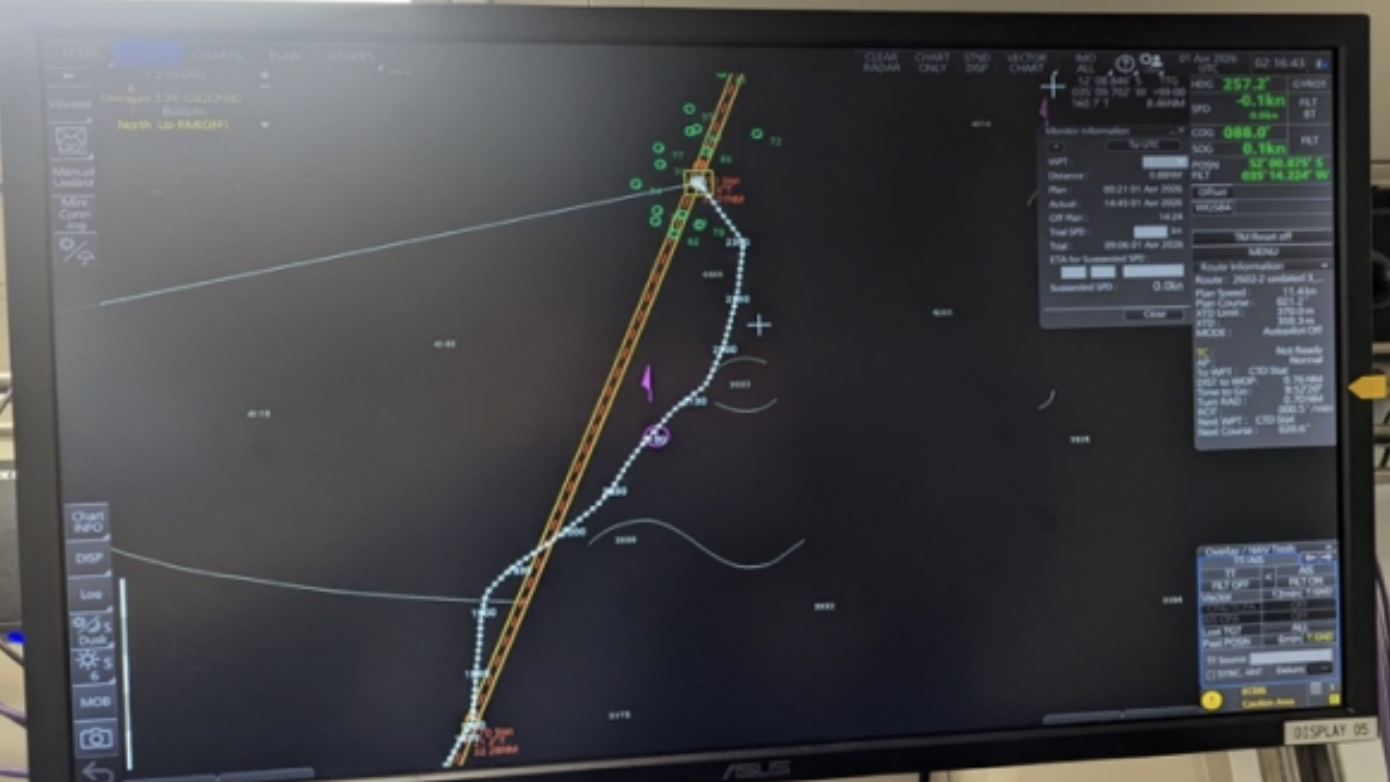
This image shows icebergs in green surrounding the ship at station 8.
As we enter the Southern Atlantic Subtropical Gyre there is low productivity and we see a dominance of tiny cyanobacteria Prochlorococcus which thrive in these types of environments. Although, just because there’s low productivity doesn’t mean there’s no life. We see many opportunistic feeders in these waters. One night we were graced by a school of juvenile Mahi-mahi (Coryphaena hippurus), also known as “peanuts.” As you can see in the attached photo, they have an almost glowing appearance. This is from the iridescent chromatophores which reflect light when they are excited or hunting.
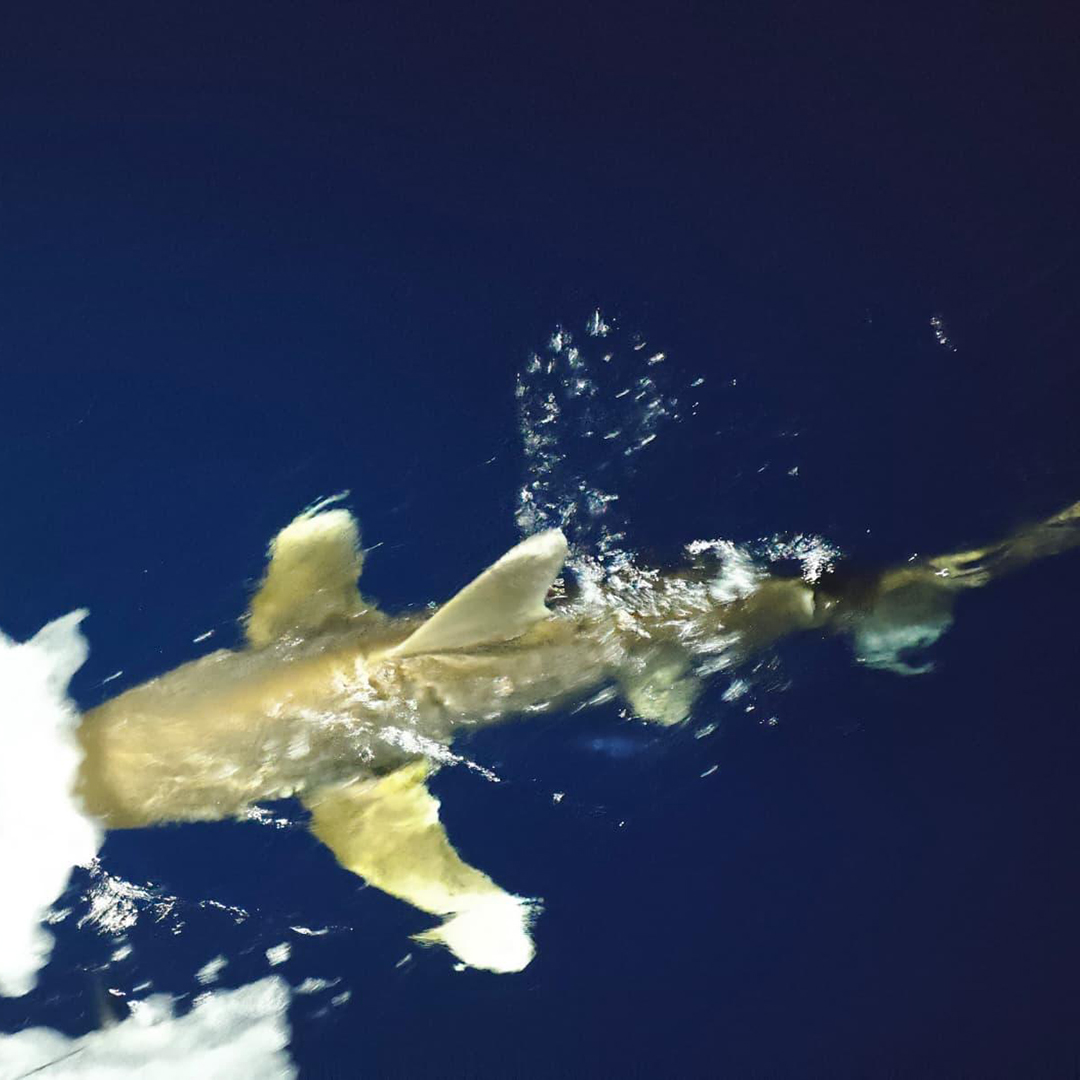
Oceanic white tip by scientist Bo Dong
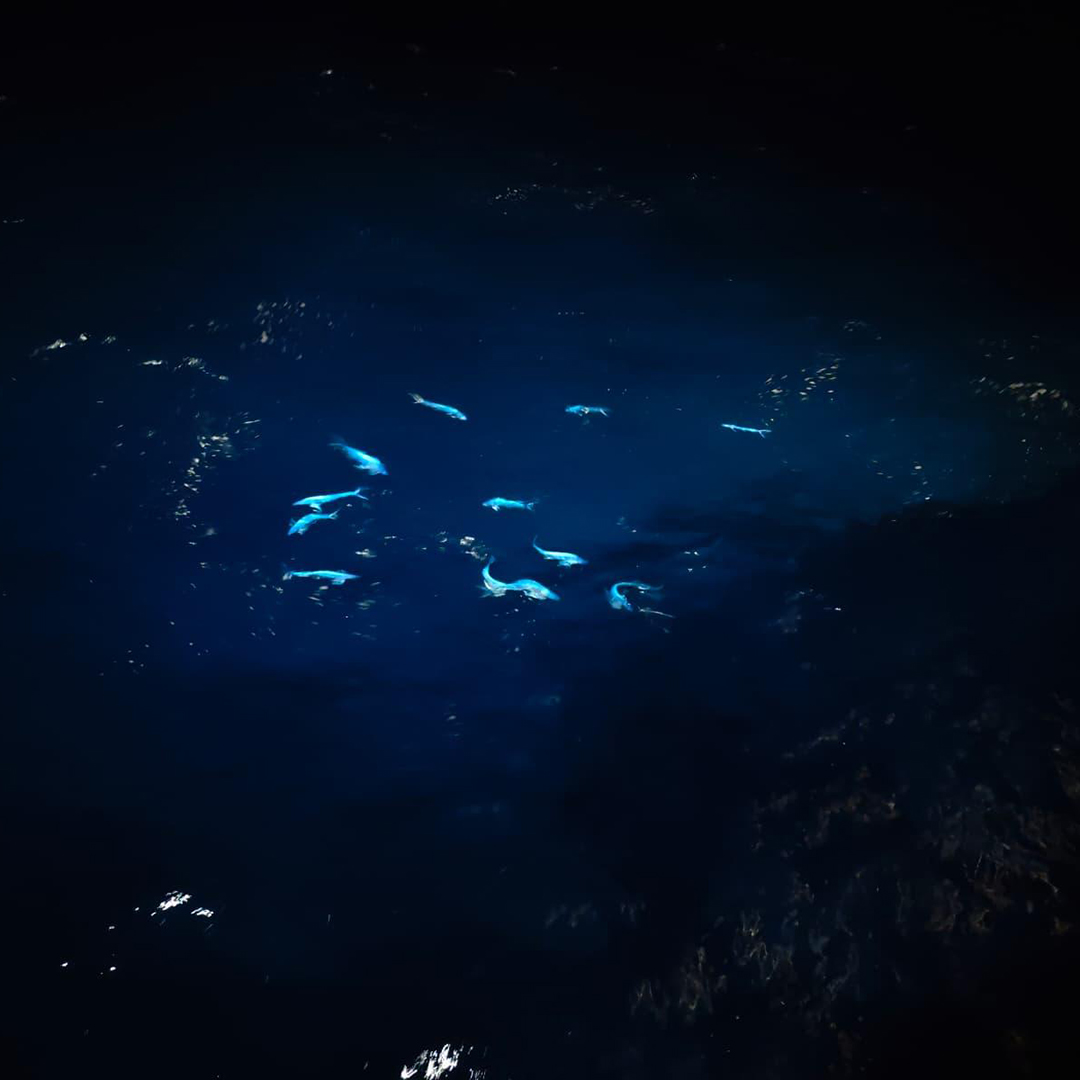
Juvenile Mahi-mahi, or “peanuts,” swimming near the boat. By Songying Tang
This cruise has been a reminder to everyone onboard that true adventure rarely goes according to plan. We have all persevered and learned to embrace a route off course, to do something different is to find something different.
About the Author—Kalia Chalom is currently working as an oxygen analyst aboard U.S. GO-SHIP A16S. She recently graduated from UCSD/SIO in the spring of 2025 with a B.S. in Marine Biology. She’s very excited to be exploring different areas of oceanography and the sea!