
Ship Doors Must Always Be Heavy
On friendship, heavy doors, and crossing oceans — a Japanese student’s first GO-SHIP adventure
04/22/2026
Have you heard of a Japanese man, John Mung (ジョン万次郎)?
He lived in the 19th century. After being shipwrecked in a storm, he was rescued by an American whaling ship. This led him to become the first Japanese person to set foot on the continental United States. After studying navigation techniques there, he became the first Japanese person to sail across the Atlantic and Indian Oceans.
By now, you are probably wondering, “Why has a Japanese history lecture suddenly started?”
I bring him up because he was actually the first Japanese person to set foot on Cape Verde. Cape Verde is the final destination of the A16S cruise. I’m not sure how many Japanese people have visited since his time, but John Mung and I might be the only ones to have arrived there via other countries aboard a U.S. vessel.
For my part, I am a graduate student based in Japan. This is my first time participating in such an international cruise, and it was also my very first time boarding an international flight alone. Consequently, everything – from daily meals to conversations in English – feels like a bold challenge. The GO-SHIP cruise does more than just provide growth opportunities for early-career researchers and students; it also is a “grand adventure” for an Asian kid like me.
These challenging days are incredibly stimulating, and my shipmates are always there to share the excitement with me. Some days, we watch the return of the Artemis II, wash freshly caught squid in seawater, play with giant hula hoops, or gaze at the Milky Way. All of these experiences will surely be etched in my memory as the highlights of my life.
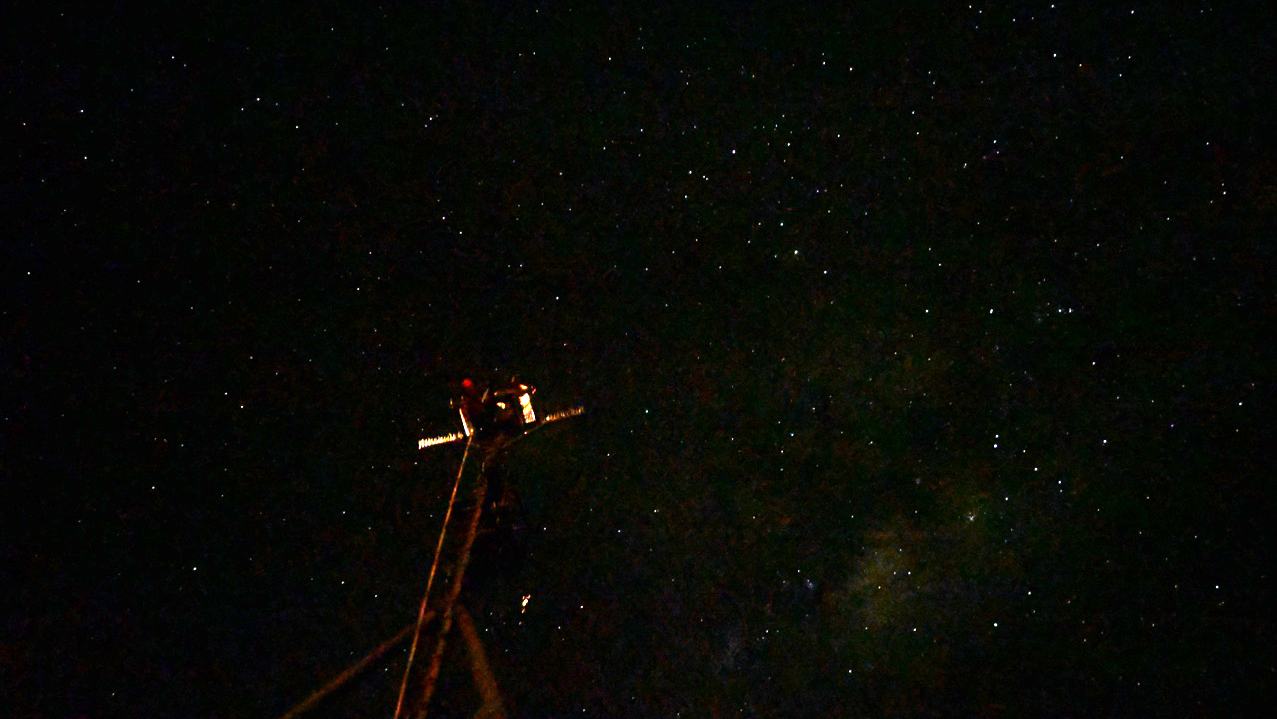
The starry sky around 1:00 AM on April 20. @16S, 25W
What I have learned through this ship life is that while differences in language and nationality cannot be ignored in communication, they are by no means “critical” barriers.
These days, posts on X are automatically translated, and Google Gemini helps me edit my writing, even out in the open ocean (just like this!). While today’s world is far more convenient than the 19th century, I believe that true friendship is simply holding open a heavy metal ship door for someone whose hands are full of samples. This is something that should remain unchanged, regardless of the era. If all the doors on the R/V Roger Revelle were automatic, it would certainly be comfortable. But if that were the case, I might never have had the chance to treat my shipmates to squid sashimi. True connection is found in daily greetings, thoughtfulness, and respect for one another.
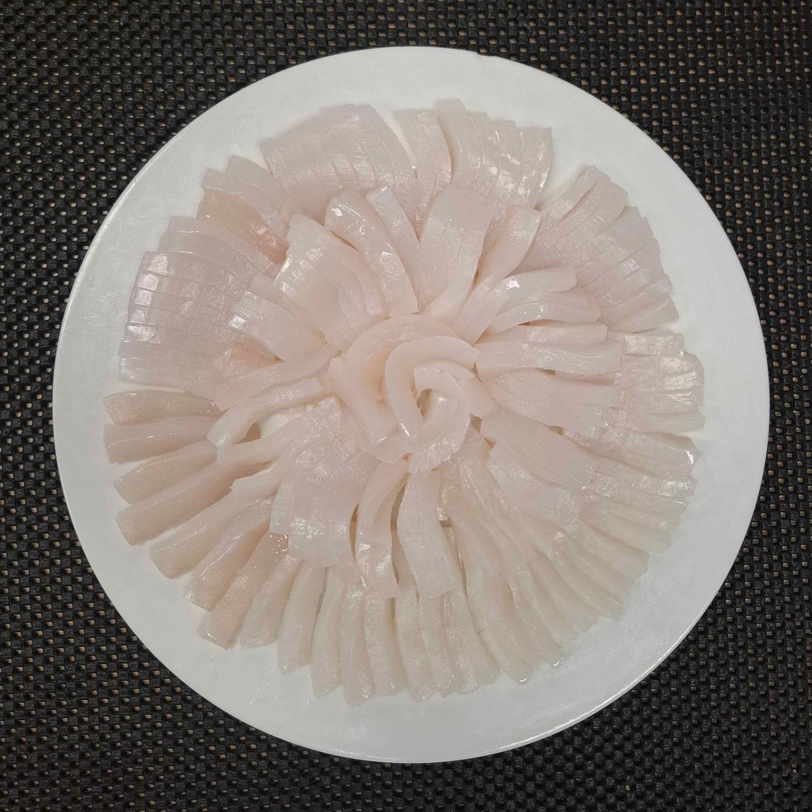
Freshly prepared squid sashimi
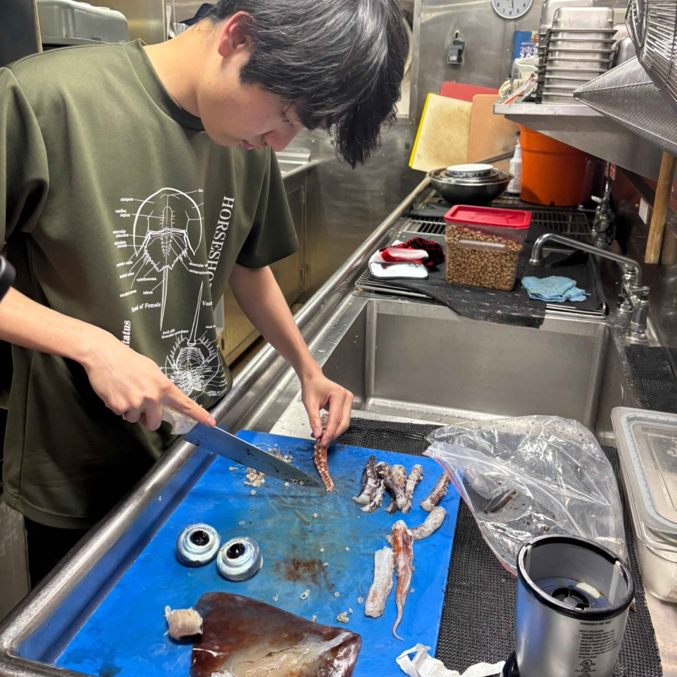
The author preparing the squid. Photo by Reese Barrett
John Mung, upon returning to Japan, contributed greatly to the modernization as an interpreter and educator. Later, when he traveled to the U.S. again as part of an official Japanese delegation, he reunited with his friends and mentors.
As for my own journey, after arriving in Cape Verde, I will have to take connecting flights all the way back to the other side of the earth. However, as long as we remain oceanographers, I am certain we will reunite someday in some city—or perhaps out on the sea. Until then, I will keep dedicating myself to research so that I can show them how much I’ve grown when we finally meet again.
朋有り遠方より来る、亦た楽しからずや。 ― 『論語』より
“Is it not a delight to have like-minded friends come from afar to learn together?” — From The Analects of Confucius
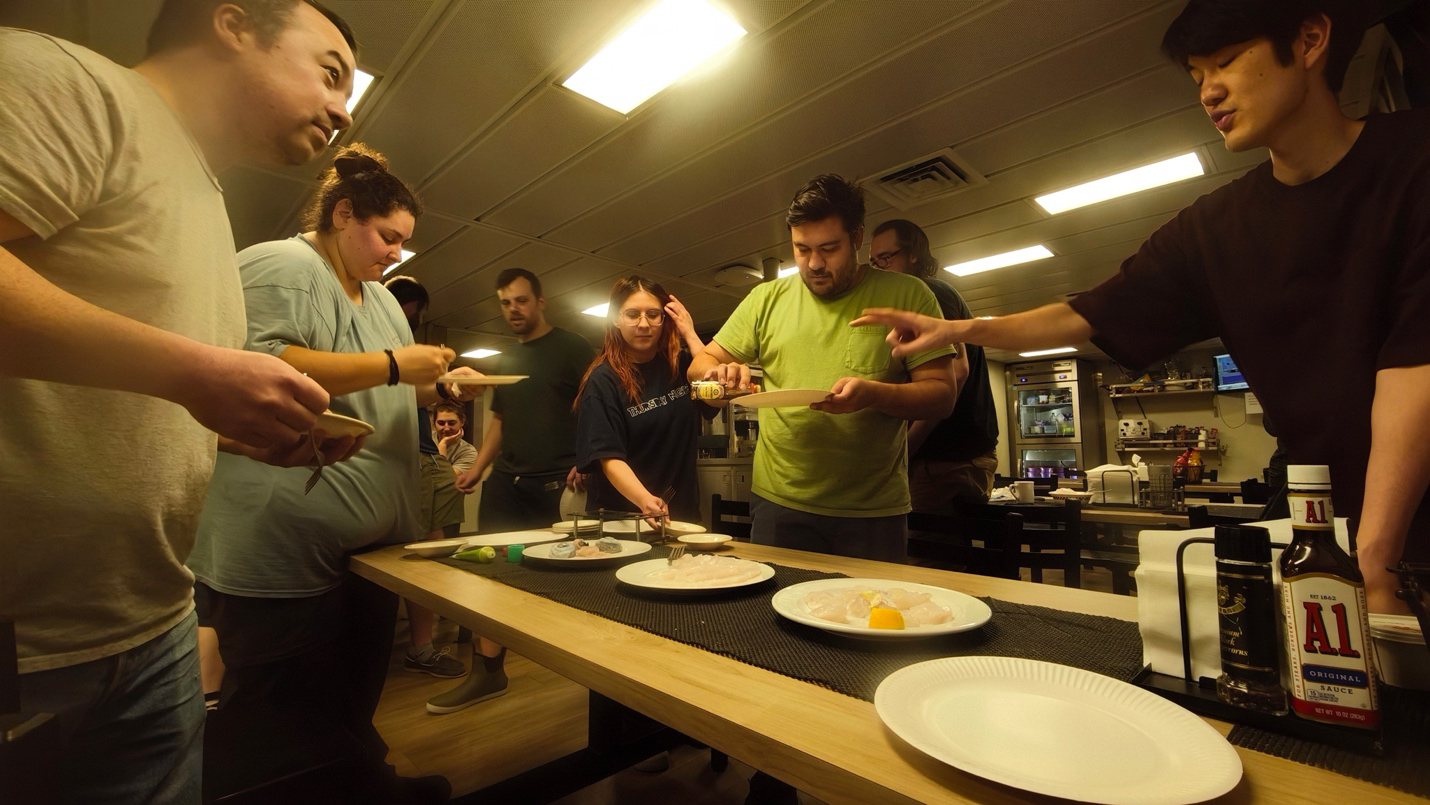
A moment from sashimi party on board. Photo by Bo Dong
About the Author— Haruto Fujishima (藤島 遼人) is a CTD watch stander on the A16S cruise. He is a PhD student in the Department of Geophysics at Tohoku University, specializing in physical oceanography. His research focuses on air-sea interactions in the mid-latitude oceans.