
03/26/2026
On Wednesday March 25th, the R/V Roger Revelle began its second journey eastward through the Strait of Magellan, and we are back underway towards our scientific sampling track through the South Atlantic. The science team is in high spirits and filled with gratitude for our amazing crew, who worked around the clock to successfully fix an engine malfunction that forced a return to port. Upon going back to sea, we were treated to views of a fresh snow dusting in the hills above Punta Arenas, a sign of the changing seasons as we head towards Southern Hemisphere winter.
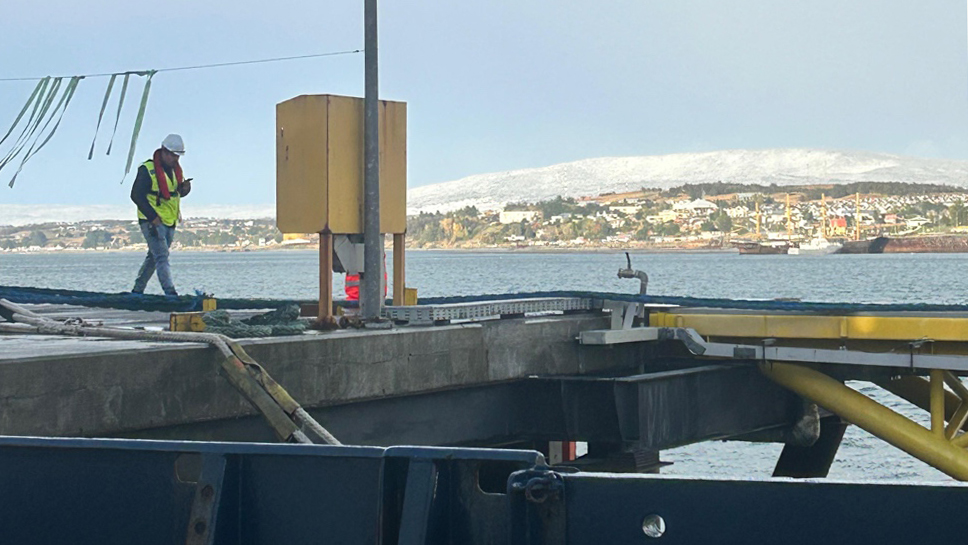
Fresh snow dusting the hills above Punta Arenas
Seasonal change has been a central consideration for the science team as we adapt our plans to accommodate the delayed cruise start. Discussions have often centered on our sampling strategy in the remote Southern Ocean, between 60˚S and 50˚S latitudes. Data we collect in the Southern Ocean is especially valuable, as the region’s dynamics have an outsized influence on the global climate system — a topic I study in my lab back home. Yet, despite this importance, it remains one of the mostly poorly sampled areas among the global oceans, as can be seen in the map below (black and blue colors).
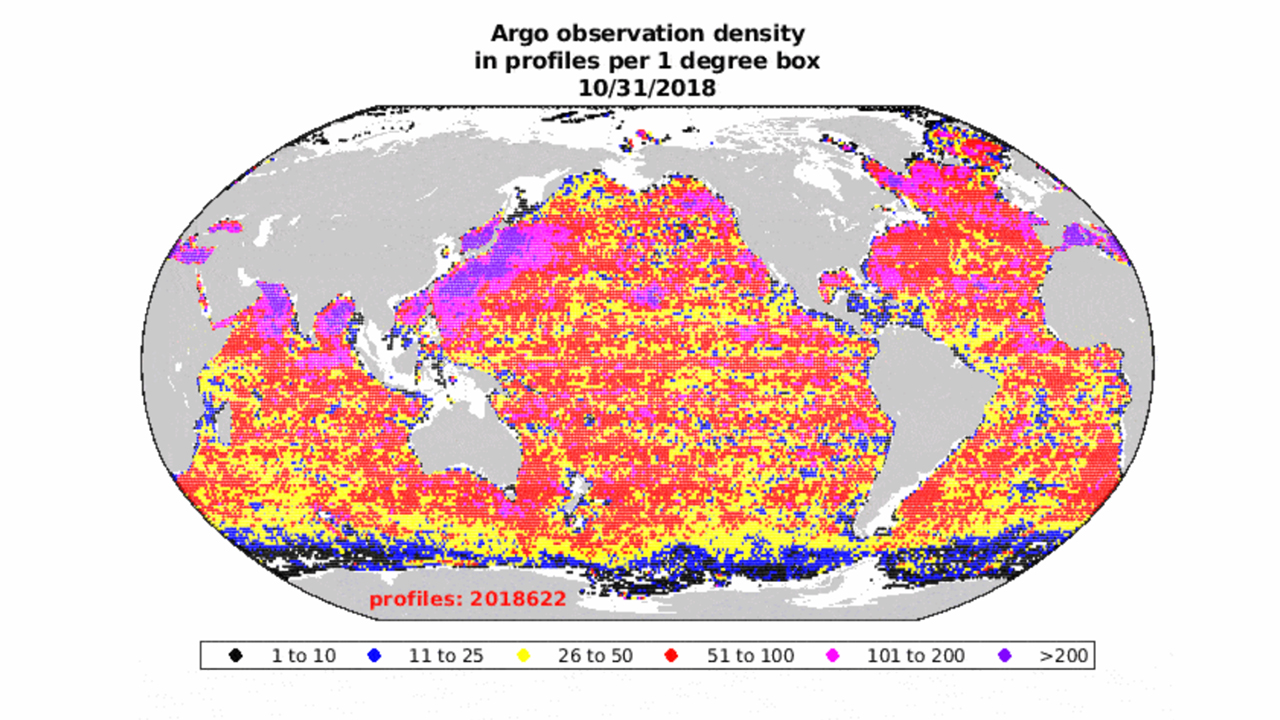
Argo profile visualization produced by Cora Hersch (https://argo.ucsd.edu/outreach/media/argo-animations/)
Lower observational coverage in the Southern Ocean stems from its isolation and harsh conditions, which become more unforgiving as the year progresses. Fortunately, through hard work and careful planning, we have developed a revised sampling route that enables us to balance safety, efficiency, and scientific progress. Here are some of the factors we considered.
The Furious Fifties and the Screaming Sixties
These nicknames for the high latitudes describe the strong westerly (from the west) wind belt that encircles the Southern Ocean. These winds occur over a unique ocean basin geography, which is unbounded by continental landmasses. Accordingly, the fetch, or unobstructed distance for wind to blow over open water, is essentially infinite here, regularly generating swells of over 30 feet. The winds grow stronger approaching austral winter (June, July, August), in part due to a physical relationship called thermal wind balance: as the temperature difference between the pole and the equator grows, the westerly wind strengh also increases. This seasonal cycle motivated our decision to move our first station from 60˚S to 53˚S, where we will still sample the Southern Ocean, but avoid the worst swells that would prevent us from deploying our research tools on the ship deck.
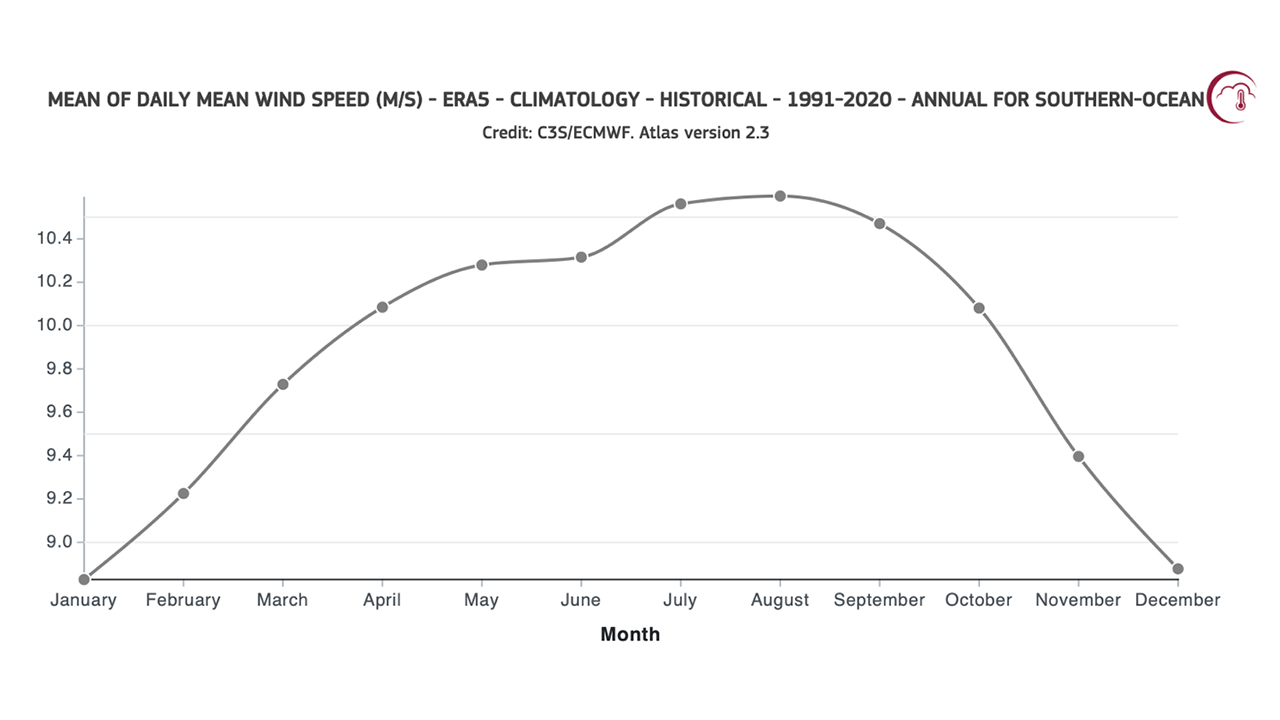
Means of Daily Wind Speed
Icy Waters
The R/V Revelle is a very capable ship, but it is not an icebreaker. Fortunately, sea water has a very high heat capacity, which means the yearly advance of the Antarctic sea ice edge will proceed slowly enough to not come near our sampling stations. The same cannot be said, however, for icebergs. These floating chunks of the Antarctic ice sheet can survive adrift for many summers before melting. The longest lasting Antarctic icebergs follow ocean currents like the clockwise Weddell gyre circulation, which steer them onto a northward path known as “iceberg alley”, aimed straight at both our original and revised sampling lines! Our skilled crew knows how to navigate around these obstacles safely, provided we travel slowly. Thus, by spending less time in iceberg alley, we ensure we have enough time to complete all of our sampling stations before the end of the cruise.
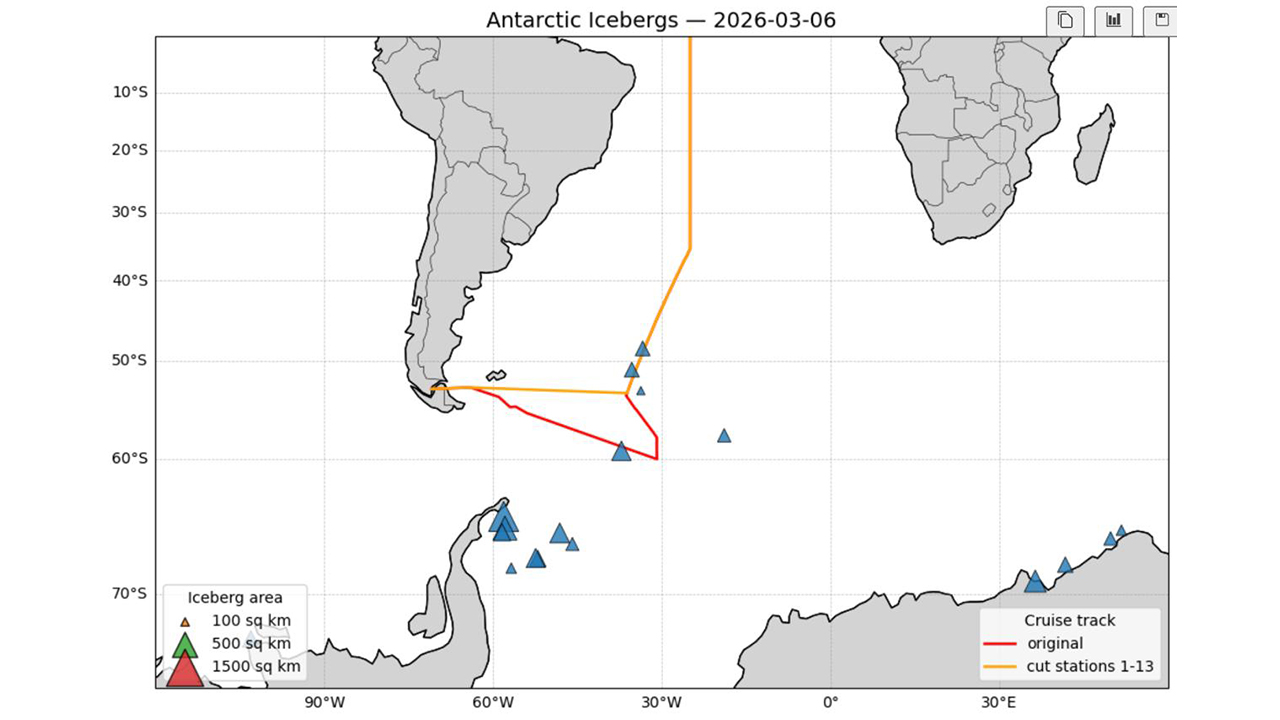
Antarctic Icebergs
When you Love the Ocean, the Ocean Loves you Back
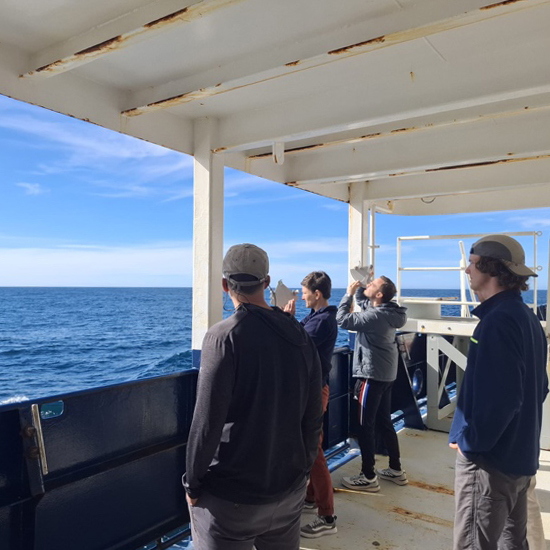
Despite the rough seas, the Southern Ocean is also beautiful, and the science team is fortunate to be able to spend time working in it. We’ve even been lucky enough to have some (relatively) warm, sunny days with calm seas. We take full advantage of these calm days getting fresh air on the deck, and participating in fun activities like a celestial navigation workshop led by chemist Daniel Sandborn (below, left). The best part is, our days at sea are just getting started.
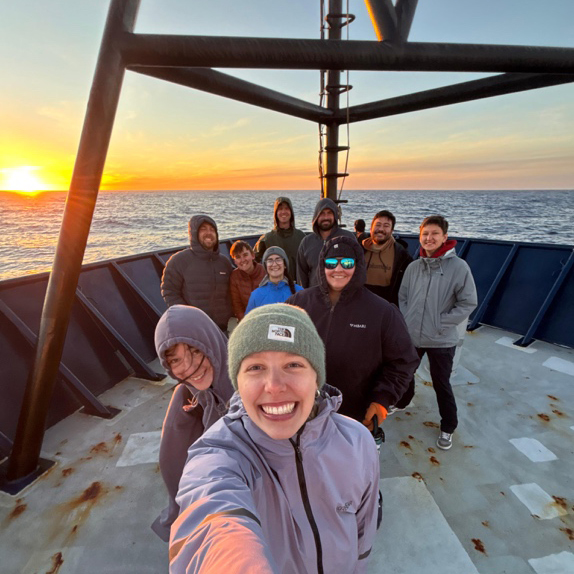
Getting fresh air on the deck of the R/V Roger Revelle. Photo by Reese Barrett
About the Author—Zack Kaufman is a CTD watch stander on the A16S expedition. He is a postdoctoral researcher co-affiliated with Scripps Institution of Oceanography and Temple University’s Ocean Climate Connections Group, where he studies ocean-ice sheet interactions, deep ocean ventilation, and atmosphere-ocean variability using Earth system models and observational data.