
No Bubbles
Aboard the R/V Roger Revelle, a team of scientists brave the roaring 40s to capture a snapshot of our oceans — one bubble-free sample at a time.
03/07/2026
The team and the R/V Roger Revelle have arrived in Punta Arenas, Chile. The anticipation and excitement for what’s to come is palpable from the main deck. The hurried shuffle of unloading boxes to their proper lab spaces, the tetris of shipments onto the Revelle and the question of the century: “Do you get seasick?” My most dreaded question as this is my first time on a cruise and while I wasn’t too worried about seasickness a few weeks ago, I certainly am now. The talk of roaring 40s is enough to make seasoned sailors fill with nervous flutters.
Between the stress of travel, setup, and delayed shipments, some have found windows to sneak over to Torres Del Paine National Park. A wild stretch of Patagonia painted with rolling hills and ice capped peaks, decorated with guanaco, horses, ostriches, pumas and… flamingos??
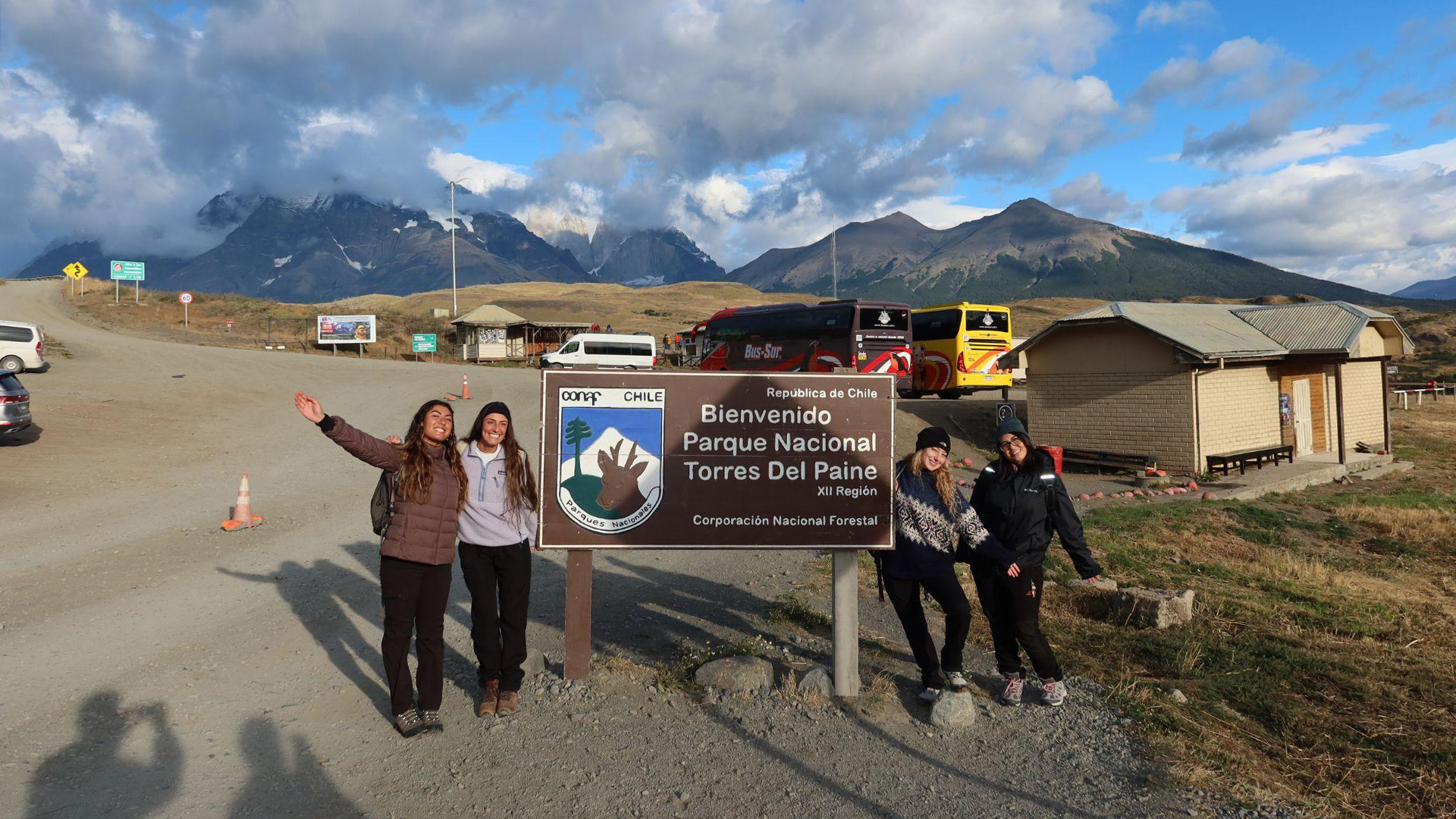
Left to right: Kalia Chalom (oxygen), Skylar Rodriguez (alkalinity) Clara Gramazio (alkalinity) , Joanna Zaragoza (pH)
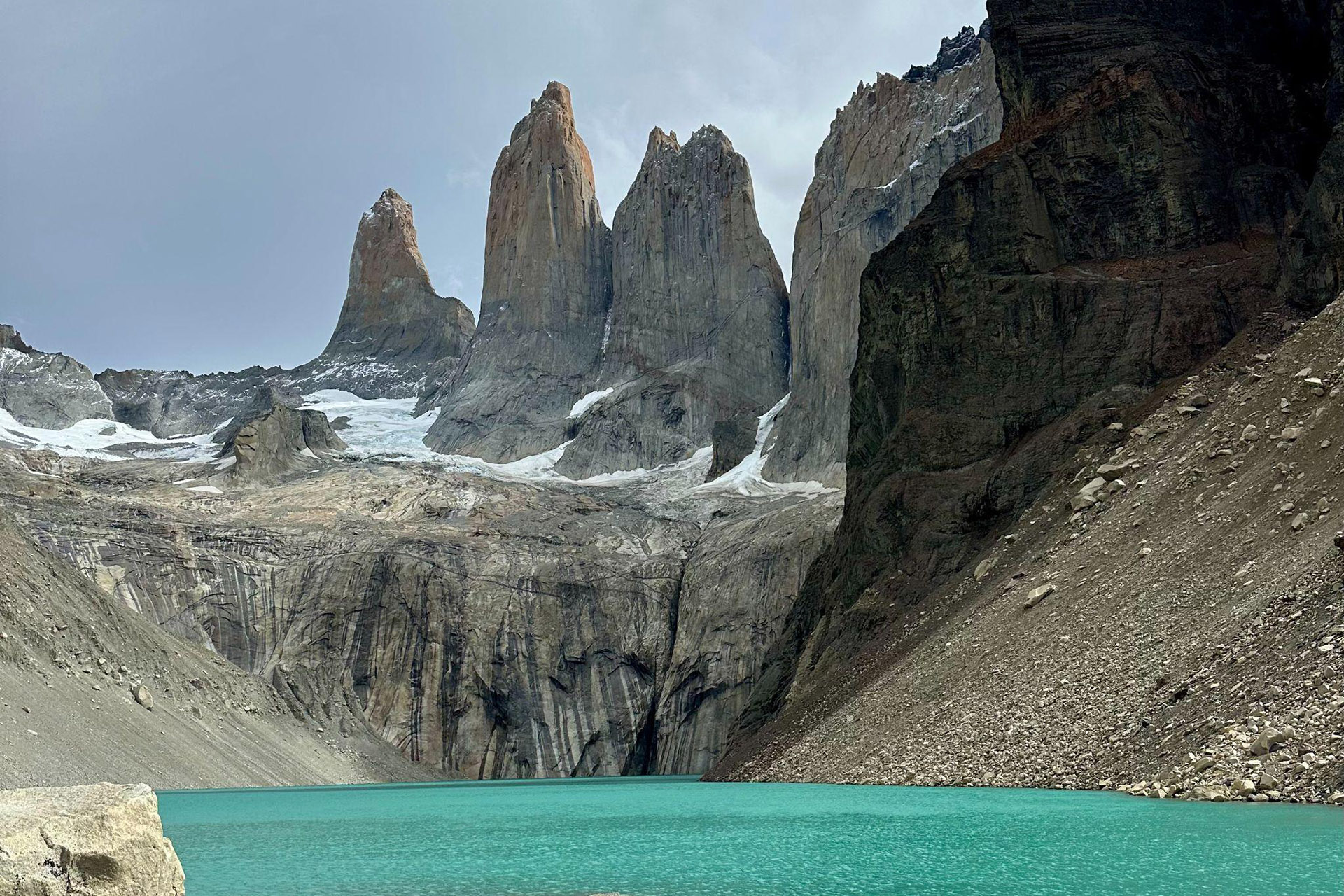
Base of Torres Del Paine by Kalia
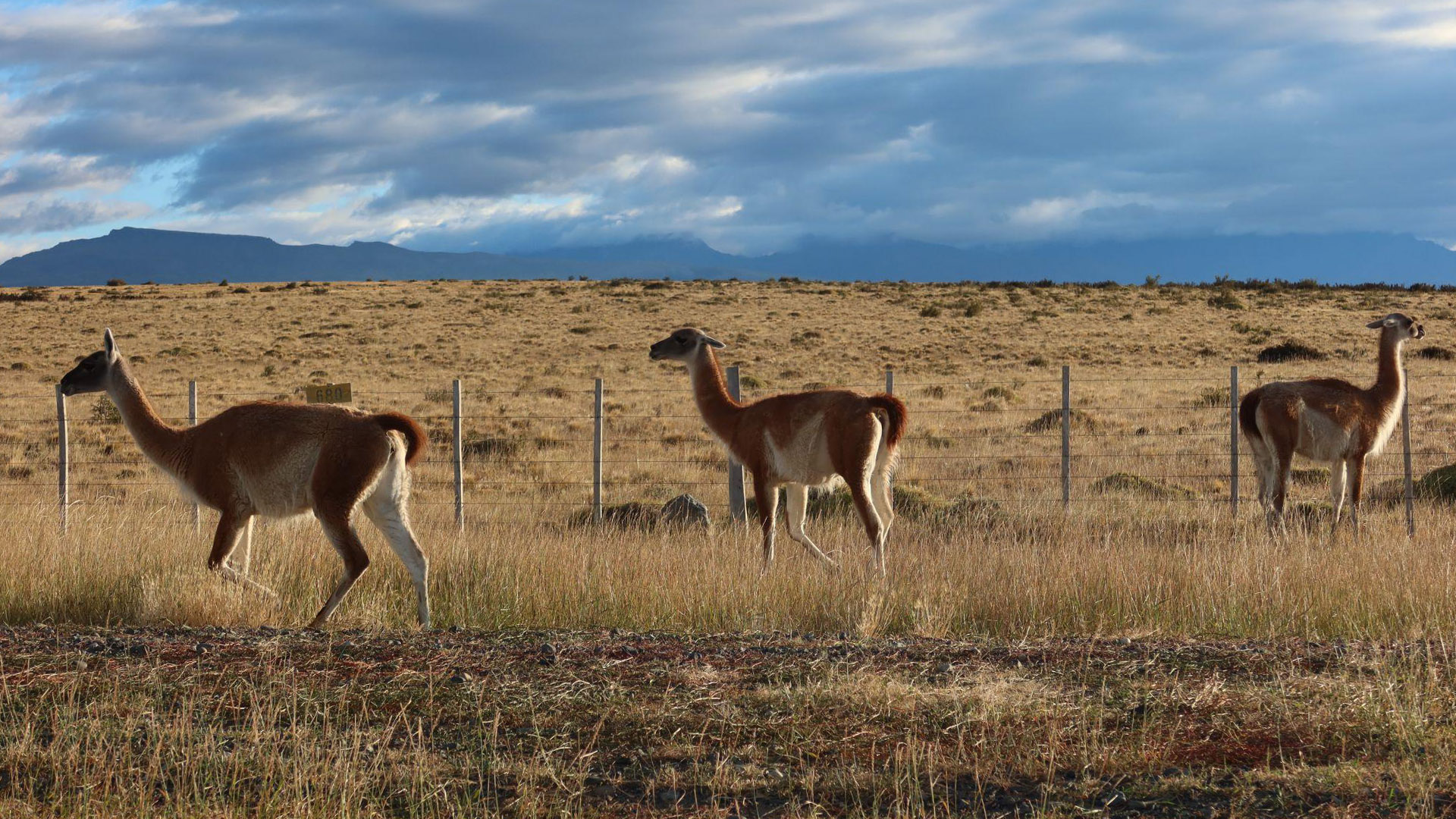
Guanaco in Torres del Paine by Clara Gramazio
So, what’s the point? Why brave stormy seas or invest hundreds of thousands of dollars into equipment? Why are these the parameters we measure?
This cruise is part of U.S. Global Ocean Ship-based Hydrographic investigations program (U.S. GO-SHIP). Hydrography being the measurement of properties of bodies of water, and GO-SHIP being the gold standard. Each member of the science party plays a role in measuring CTDO, salinity, oxygen, nutrients, CFC’s, ocean carbon parameters and various tracers throughout the water column. Each measurement is a part of the puzzle that, when pieced together, creates a very clear image of our oceans. These specific parameters when compared to historical runs of the same lines allow us to study changes. The collection of these samples comes from the CTD rosette which captures water samples with 24 10-liter bottles, each closing at different depths between the surface to just shy of the seafloor. This cruise will also deploy 32 different floats, including BGC floats that will measure biogeochemical properties and Argo floats that provide data on ocean currents, temperature and salinity.
Each GO-SHIP line is repeated approximately every 10 years. This will be the 4th occupation of the A16S line along ~25°W, beginning from 60°S and moving towards the equator until we reach our final destination of Cabo Verde, Africa.
The data that we collect here is used as a reference point, a crucial set of measurements for scientists around the world. So, with that, there’s an immense attention to detail from every role. As an oxygen analyst, for me, that means NO BUBBLES. Something as small and inconspicuous as a little teeny bubble anywhere in the system can create noisy data which is not the standard for GO-SHIP.
The work we do over these next 6.5 weeks will be revisited many times as a reference point, we will see it shine in papers, conferences and policies. This is the opportunity to work together to create a clear picture of our oceans for generations to come. With absolutely no bubbles.
About the Author—My name is Kalia Chalom, I am currently working as an oxygen analyst aboard U.S. GO-SHIP A16S line. I recently graduated from UCSD/ SIO in the spring of 2025 with a B.S. in marine biology. I’m very excited to be exploring different areas of oceanography and the sea!